
The Role of Armed Security in Protecting Kansas City’s High-Profile Events
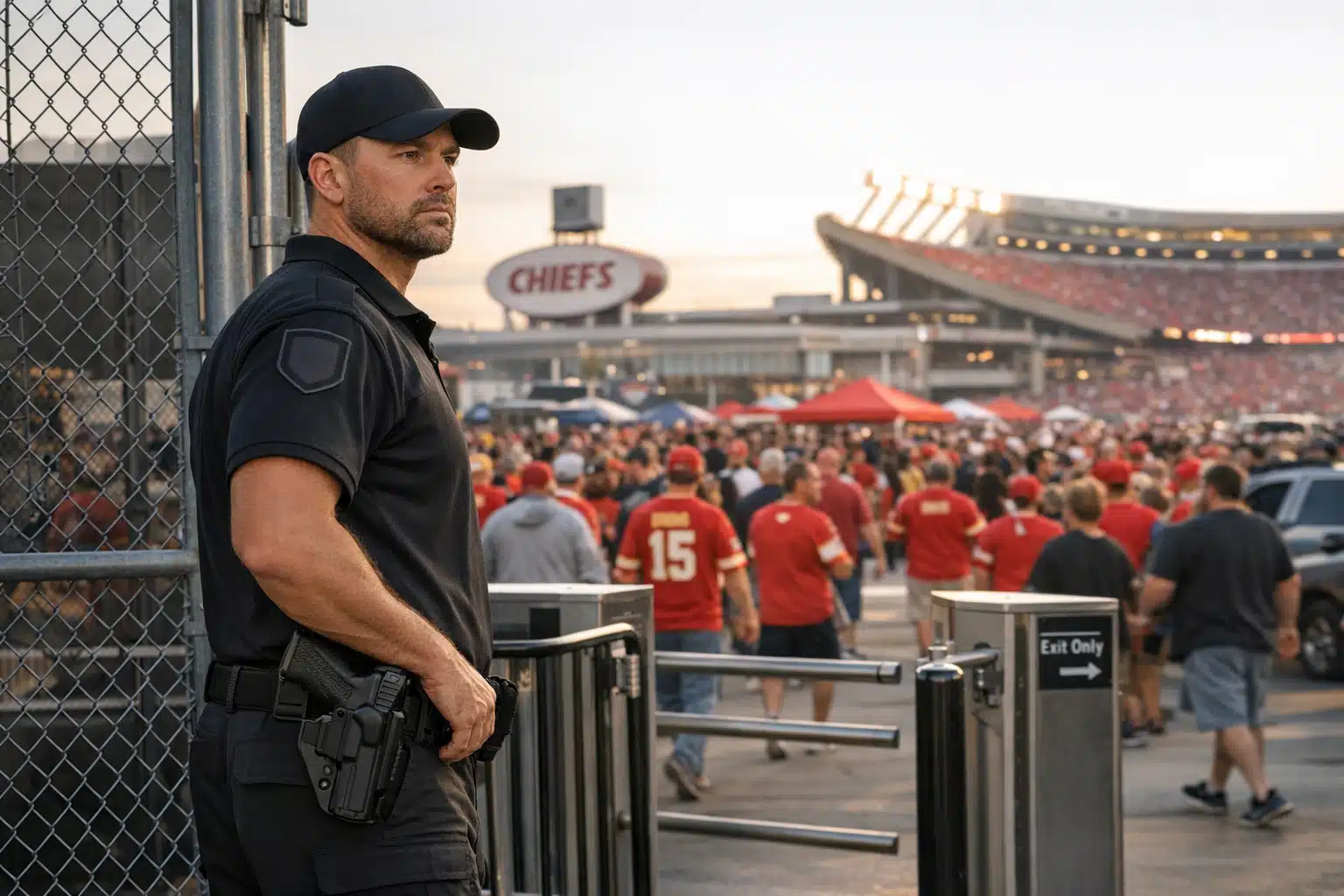
Armed security plays a vital role in ensuring the safety of high-profile events in Kansas City, such as those held at Arrowhead Stadium. With large crowds, armed personnel help deter potential threats, manage emergencies, and provide a visible presence that enhances overall security for attendees.
Why Armed Security Matters for Kansas City’s Biggest Events
Arrowhead Stadium holds more than 76,000 fans on Chiefs game days. That crowd size changes the math on event safety.
Large gatherings draw cash, alcohol, and emotion into one place. Armed security gives event operators a trained response when those elements collide.
This article breaks down where armed officers belong at Kansas City events, what rules apply in Missouri and Kansas, and how venue operators decide their coverage. The goal is practical answers before you sign a contract.
When Armed Security Becomes the Right Call
Armed security is the right call when an event combines large crowds, cash handling, alcohol, or high-value targets. The deciding question is risk, not event size alone.
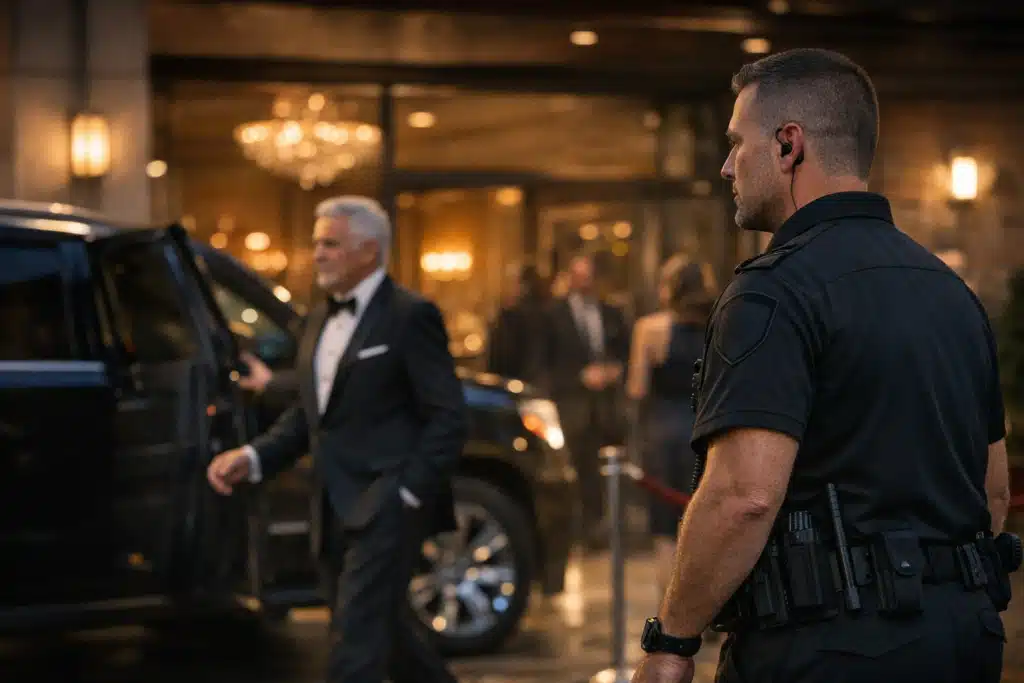
A 200-person corporate awards dinner in the Crossroads may need armed coverage if VIPs attend. A 5,000-person daytime festival might not.
Event Scenarios That Warrant Armed Officers
- Concerts and ticketed shows at T-Mobile Center with cash bars and dense crowds.
- Chiefs and Royals tailgates where alcohol and parking lot disputes raise tension.
- Political rallies and public speakers drawing media and counter-protesters.
- Jewelry shows, gun shows, and cash-heavy expos at the Kansas City Convention Center.
- New Year’s Eve and festival nights in the Power & Light District.
Each scenario shares one trait: the cost of a slow response is too high.
Sports Venue Security and Game Day Risk
Sports venue security requires layered coverage from the parking lot to the concourse. Armed officers anchor that structure at access points and cash collection areas.
Arrowhead and Kauffman Stadium sit side by side at the Truman Sports Complex. Tailgating starts hours before kickoff and stretches across acres of parking.
What Tailgate Monitoring Demands
Tailgate lots are open, mobile, and fueled by alcohol. Fixed cameras miss what foot patrols catch.
Armed officers handle the situations unarmed staff cannot. That includes intoxicated confrontations, vehicle theft attempts, and medical emergencies far from the gate.
For playoff games, the crowd swells and so do the stakes. Visiting fans, ticket scalpers, and counterfeit merchandise sellers add friction.
Protecting Power & Light District Nightlife Events
The Power & Light District packs bars, a live stage, and thousands of guests into a few blocks. Late-night events there carry a distinct risk profile.
Alcohol service runs heavy past midnight. Crowd density makes quick movement hard when an incident breaks out.
How Armed Coverage Supports Crowd Control
- Visible deterrence at entrances discourages weapons and aggression.
- Trained de-escalation stops disputes before they turn physical.
- Coordinated response with KCPD shortens the time to control an incident.
- Controlled egress keeps closing-time crowds from bottlenecking.
Bar and venue operators in the district face liability when fights spill onto the street. Armed officers reduce both the risk and the response time.
BBQ District and Festival Crowd Concerns
Kansas City’s food festivals and barbecue events draw families by day and heavier crowds by night. Cash vendors and outdoor layouts create theft exposure.
Vendor booths handle real money with thin staffing. A single armed officer assigned to the vendor row changes how thieves calculate their odds.
Open festival grounds also lack the natural chokepoints a stadium provides. Officers fill that gap with mobile patrol and fixed posts at money points.
Missouri and Kansas Rules for Armed Event Security
Armed security officers in Missouri must hold proper licensing and firearm authorization. Kansas requires its own licensing under state private security rules.
The metro spans the state line, and that matters. An event at the Kansas Speedway in Wyandotte County falls under Kansas law. An event on the Missouri side does not.
What to Verify Before Hiring
- State licensing for the correct side of the state line.
- Firearm qualification records and current certification.
- Liability insurance covering armed personnel.
- Use-of-force training documented and current.
- Coordination plans with local police for high-profile events.
Skipping verification exposes the venue operator to direct liability. Ask for documents in writing.

 Posted on Google
Midwest Weather and Event Security Planning
Tornado season runs spring into early summer across the Kansas City metro. Outdoor events during those months need a severe weather plan tied to security staffing.
Armed officers do more than handle threats. They direct evacuations, manage panicked crowds, and protect property when a venue clears fast.
A sudden storm at an outdoor concert can turn 10,000 guests toward exits at once. Staff trained for crowd movement prevent injuries during that rush.
How Many Armed Officers Does Your Event Need?
Officer count depends on crowd size, alcohol service, venue layout, and risk level. There is no flat formula, but planning follows a clear method.
Steps to Size Your Security Detail
- Estimate peak attendance, not average attendance.
- Map cash and high-value points that need fixed posts.
- Identify access points requiring screening or control.
- Account for alcohol service and its effect on crowd behavior.
- Plan for weather and medical events outdoors.
- Set a command structure linking officers to one lead.
A site assessment turns these steps into a staffing number. Guesswork costs more than planning.
Pairing Armed Officers With Remote Surveillance
Armed officers cover the ground. Remote video monitoring covers the angles a patrol cannot watch at once.
For large events, a monitored camera network feeds officers real-time alerts. A flagged disturbance in a back parking lot reaches an officer in seconds.
This pairing stretches coverage without doubling staff. It works for festival grounds, stadium lots, and multi-block district events alike.
Choosing a Kansas City Event Security Partner
The right partner knows the metro, the state line rules, and the local police relationships. Generic firms miss the details that matter on game day.
Twin City Security Kansas City staffs licensed armed officers for sports venues, festivals, and district events across both states. Local knowledge shapes every assignment.
A proper plan starts with a site walk and a frank risk review. That conversation tells you what your event truly needs.
Conclusion
Armed security earns its place at Kansas City events when crowds, cash, and alcohol raise the stakes beyond what unarmed staff can manage. From Arrowhead tailgates to Power & Light nightlife, the right coverage depends on real risk and proper licensing on the correct side of the state line.
Contact Twin City Security Kansas City for an event security assessment or monitoring quote. Call 913‑831‑2525, email Kansas@TwinCitySecurity.com, or visit https://www.twincitysecuritykansascity.com.
Sources
- Missouri Division of Professional Registration – Licensing Boards
- National Weather Service – Kansas City/Pleasant Hill Forecast Office
- Kansas City Missouri Police Department – Official Site
- FBI – Uniform Crime Reporting Program
Armed security plays a vital role in ensuring safety at Kansas City's large events, where the combination of crowds, cash, and alcohol can lead to heightened risks. This article outlines the importance of armed officers, the scenarios that warrant their presence, and the legal considerations for event operators.
- Armed security is necessary for events with large crowds, cash handling, and alcohol service. The risk level, rather than just event size, determines the need for armed coverage.
- Specific scenarios like concerts, tailgates, and political rallies require armed officers to manage potential conflicts and ensure quick responses.
- Proper licensing and coordination with local law enforcement are essential for armed security in both Missouri and Kansas, impacting how events are managed.
Recent Posts