
The Importance of Remote Surveillance for Kansas City’s Tornado-Prone Areas
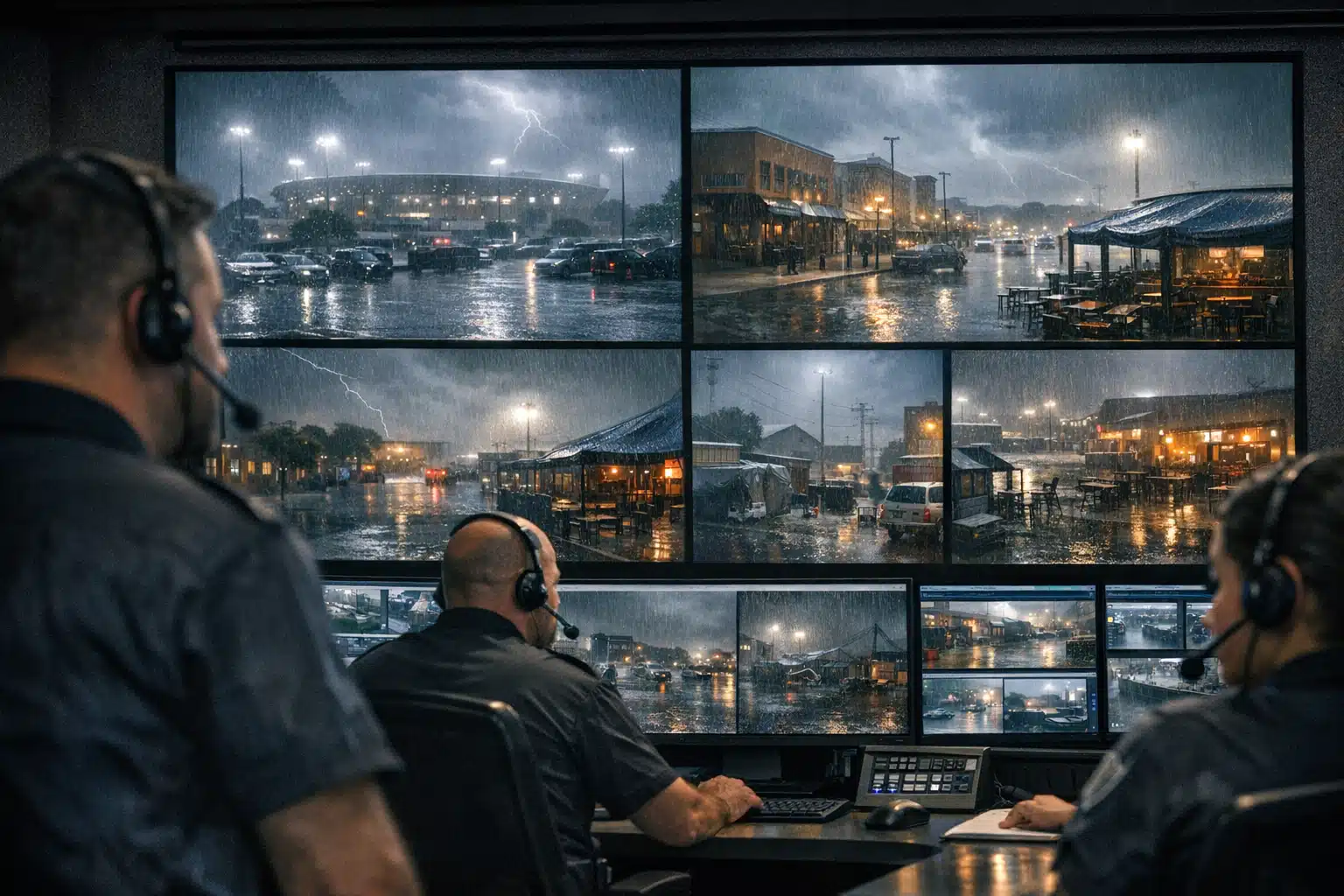
Remote surveillance is crucial in tornado-prone areas like Kansas City as it enhances early warning systems, allowing for timely alerts and better preparedness. This technology helps monitor weather patterns and provides real-time data, which can significantly reduce risks and improve safety during severe weather events.
Why Kansas City Sits in One of the Country’s Highest Tornado Risk Zones
Kansas City averages more than 50 tornado warnings each year across the metro. The region sits inside Tornado Alley’s eastern edge, where warm Gulf air collides with cold Canadian fronts.
Remote surveillance gives property owners a way to watch their sites when nobody can safely stay on location. When sirens sound across Jackson and Johnson counties, staff evacuate. Cameras stay behind and keep recording.
This post walks Kansas City business owners, property managers, and venue operators through building a monitoring setup that holds up during severe weather. You get practical steps, local specifics, and a clear picture of what tornado season demands.
What Tornado Security Means for Kansas City Properties
Tornado security means protecting assets, structures, and people before, during, and after a storm event. It combines weather awareness with monitoring technology and trained response.
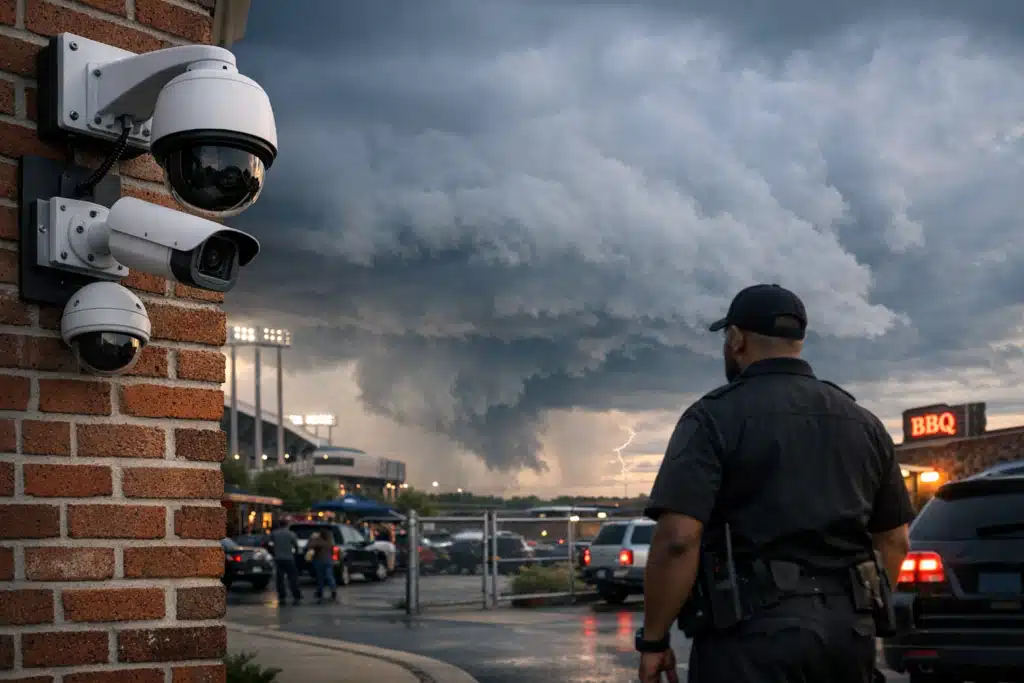
Peak season runs March into June. May remains the busiest month for Missouri and Kansas confirmed tornadoes.
Three risk windows matter most for property owners:
- Before the storm: Looting and theft spike when evacuation orders empty an area.
- During the storm: Wind, hail, and debris damage structures and inventory.
- After the storm: Power outages disable alarms, and displaced crowds create theft openings.
A May 2019 outbreak dropped multiple tornadoes near Kansas City International Airport and Linwood, Kansas. Properties in the path faced days without power. Sites with battery-backed cameras kept eyes on their lots. Sites without them went dark.
How Remote Surveillance Protects Sites When Everyone Evacuates
Remote surveillance lets a monitoring team watch your property from an off-site center miles away from the storm. The team keeps working even when your building must be cleared.
Here is what that looks like during an actual warning:
The moment sirens sound
Your on-site staff move to shelter or leave. Live camera feeds route to a monitoring station outside the storm cell. Operators track your entrances, yards, and inventory in real time.
During the power outage
Cellular-connected cameras with battery backup keep transmitting after the grid fails. A wired-only system goes blind the second the lights cut out. This difference decides whether you have footage or a black screen.
After the all-clear
Operators document damage as it happens. That timestamped footage speeds insurance claims. It also flags anyone entering a compromised structure before you arrive.
Building a Tornado-Ready Surveillance Setup: Step by Step
To protect your Kansas City property against tornado-related loss, follow these steps:
- Map your blind spots. Walk your property. Note loading docks, equipment yards, and rear entrances where theft starts during evacuations.
- Choose cameras with battery and cellular backup. Grid power fails in most severe Kansas City storms. Your cameras must run without it.
- Mount hardware against wind and hail. Use recessed housings and impact-rated domes. Straight-line winds in the metro have topped 90 mph.
- Connect to a remote monitoring center. Live human operators respond faster than a recording nobody watches.
- Set weather-triggered alerts. Tie your system to National Weather Service warnings for the Kansas City forecast zone.
- Test quarterly. Run a backup-power drill before March. Confirm feeds hold when you cut the mains.
Protecting Kansas City Construction Sites During Tornado Season
Construction sites face the sharpest tornado risk in the metro. Open frames, loose materials, and expensive equipment sit exposed with no walls to slow a thief or a gust.
Crossroads and downtown redevelopment zones hold active builds worth millions. When a warning clears the site, copper wire and tools disappear fast.
Remote surveillance covers these sites without risking a guard’s safety in an open field during a storm. Operators watch material staging areas and generator yards from a distance.
Steps for construction managers:
- Position cameras on trailer-mounted towers you can relocate as the build moves.
- Cover fuel tanks and equipment lots, the first targets after evacuation.
- Use solar-and-battery towers where no grid power exists yet.
- Log every warning-day shutdown with timestamped footage for insurers.
Sports Venues, Tailgates, and Storm-Day Crowd Risks
Kansas City sports events draw huge crowds into open lots. A tornado warning during a game or tailgate forces mass movement with little notice.
The Truman Sports Complex parking areas fill hours before kickoff. When severe weather rolls in from the west, tens of thousands need direction toward shelter.
Remote surveillance supports crowd management during weather emergencies:
- Operators spot bottlenecks at exits and shelter routes in real time.
- Camera coverage of tailgate lots flags abandoned vehicles and unattended property.
- Live feeds help event teams direct security staff where crowds pack tightest.
Venue operators pair on-site officers with off-site monitoring. Officers move people. Operators keep watch on the full footprint at once.

 Posted on Google
BBQ District and Retail Protection When Storms Empty the Streets
Kansas City’s food and entertainment districts empty fast when sirens sound. Westport, Power & Light, and the Crossroads clear out, leaving storefronts and patios exposed.
Restaurants along these strips keep outdoor equipment, kegs, and register cash on site. An evacuated block invites smash-and-grab theft during the chaos.
A monitoring team watches these fronts when staff cannot. Operators call police the moment someone breaches a door during a warning. That response time protects inventory a locked door alone cannot.
Apartment Communities and Tenant Safety During Warnings
Apartment property managers carry a duty to tenants when tornadoes threaten. Common areas, parking structures, and storm shelters all need eyes during an event.
Overland Park and south Kansas City complexes house thousands of residents. Managers cannot be everywhere when a warning hits at 2 a.m.
Remote surveillance covers shelter entrances and parking decks around the clock. Operators confirm tenants reach safe areas and flag anyone using the confusion to break into units.
What This Costs and Why It Pays Off
Owners ask about price before anything else. The honest answer depends on your property size, camera count, and coverage hours.
Compare the math against a single loss:
- One stolen construction generator runs $5,000 to $15,000 to replace.
- A looted restaurant loses inventory, register cash, and days of repair downtime.
- An uninsured storm-damage claim without footage can drag on for months.
Remote monitoring often costs less than one full-time on-site guard. It covers more ground and never needs to leave for shelter.
Why Kansas City Property Owners Choose Twin City Security
Twin City Security Kansas City builds monitoring setups for the exact weather this region throws at properties. Our teams know local warning patterns, venue rules, and the risk windows that open when storms clear a site.
We assess your property, map blind spots, and match camera placement to your storm exposure. Our monitoring operators watch feeds live, not just record them for later.
Get a Kansas City Tornado Security Assessment
Severe weather season arrives fast in the metro. Cameras that keep watching when your staff must leave protect your assets when you cannot.
Contact Twin City Security Kansas City for a monitoring quote or property assessment. Call 913‑831‑2525 or email Kansas@TwinCitySecurity.com.
Sources
- National Weather Service – Kansas City/Pleasant Hill Forecast Office
- NOAA Storm Prediction Center – Severe Weather Climatology
- National Weather Service – Tornado Safety
Kansas City experiences over 50 tornado warnings annually, making remote surveillance essential for property protection during severe weather. This technology allows property owners to monitor their sites even when staff must evacuate, ensuring safety and security.
- Remote surveillance helps monitor properties during tornado warnings, providing real-time oversight when staff evacuate. Operators can track entrances and inventory, ensuring security even during power outages. Implementing a monitoring setup can prevent theft and damage, making it a wise investment for property owners.
- Why Kansas City Sits in One of the Country’s Highest [...] Why Kansas City Sits in One of the Country’s Highest Tornado Risk Zones Kansas City averages more than 50 tornado warnings each year across the metro.
- The region sits inside Tornado Alley’s eastern edge, where warm Gulf air collides with cold Canadian fronts.
Recent Posts