
Security Guard Licensure in Kansas City: What Business Owners Need to Know
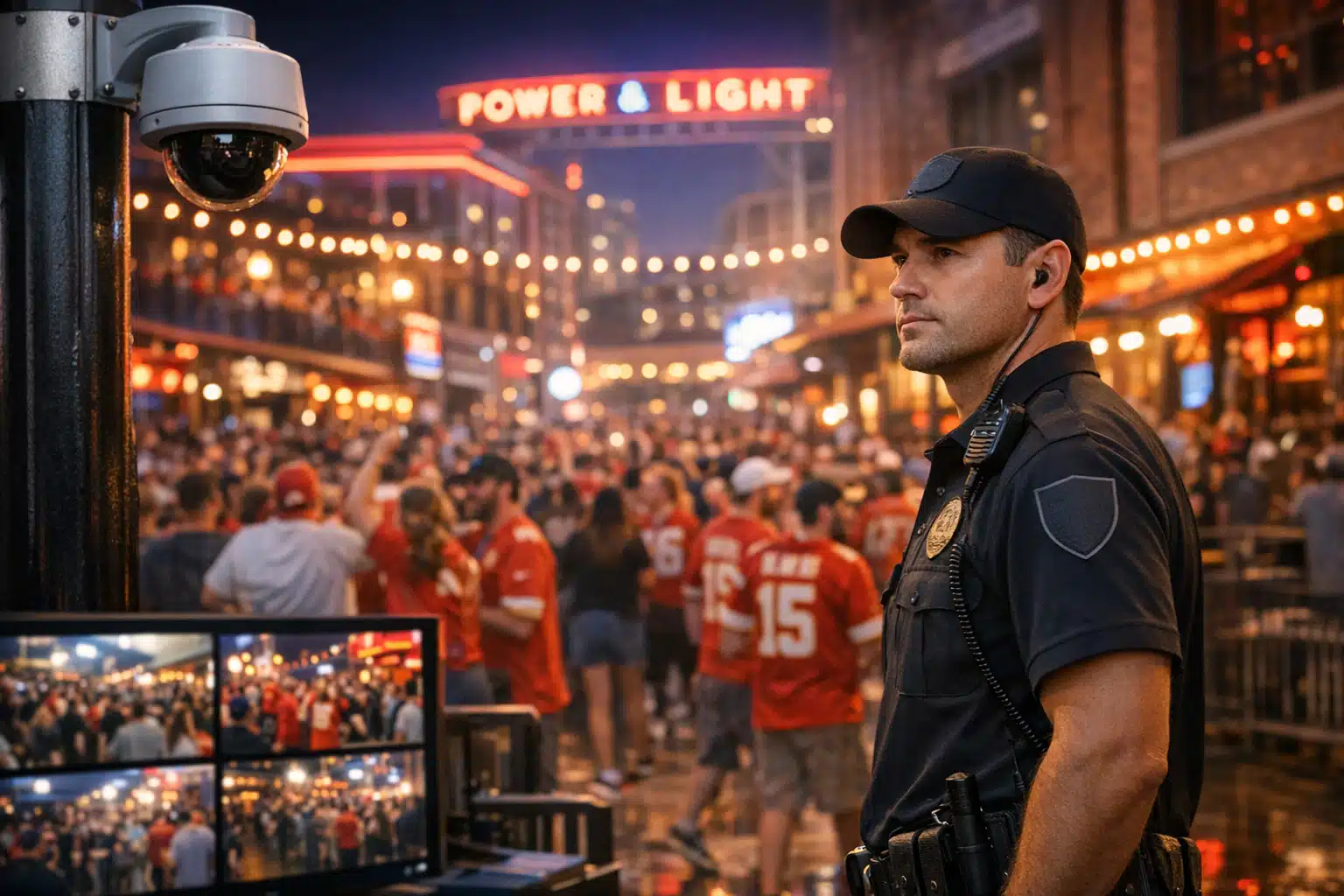
In Kansas City, security guard licensure requires compliance with Missouri's strict standards, which include background checks, training, and certification. Business owners must ensure that the security personnel they hire are properly licensed to effectively address the unique security challenges faced in various local settings.
Kansas City businesses face unique security challenges, from protecting Power & Light District establishments during Chiefs celebrations to securing Crossroads construction sites during tornado season. Whether you need guards for the Country Club Plaza retail spaces or remote monitoring for Westport entertainment venues, understanding security guard licensure requirements ensures you hire qualified professionals who meet Missouri’s strict standards.
Business owners who skip this verification step risk liability issues, insurance complications, and inadequate protection during critical situations.
Missouri Security Guard Licensure Requirements for Kansas City Operations
Missouri requires all security guards working in Kansas City to obtain state licensure through the Board of Private Investigator and Private Fire Arms Instructor Examiners. This applies to guards at Kauffman Stadium, Sprint Center events, BBQ district restaurants, and apartment complexes throughout the metro area.
Basic licensing requirements include:
- 18 years of age minimum
- High school diploma or equivalent
- 40-hour pre-licensing training course
- Background check through Missouri State Highway Patrol
- Fingerprinting at approved locations
- $100 application fee plus fingerprinting costs
Guards cannot begin work until they receive their temporary license number. The full license arrives within 30-45 days if all requirements are met.
Armed Guard Additional Requirements
Kansas City venues requiring armed security face stricter standards. Armed guards must complete an additional 20-hour firearms training course and demonstrate shooting proficiency at a state-approved range.
Many Chiefs tailgating areas, high-value construction sites, and late-night entertainment districts prefer armed guards during peak activity periods.
Training Standards That Impact Kansas City Security Quality
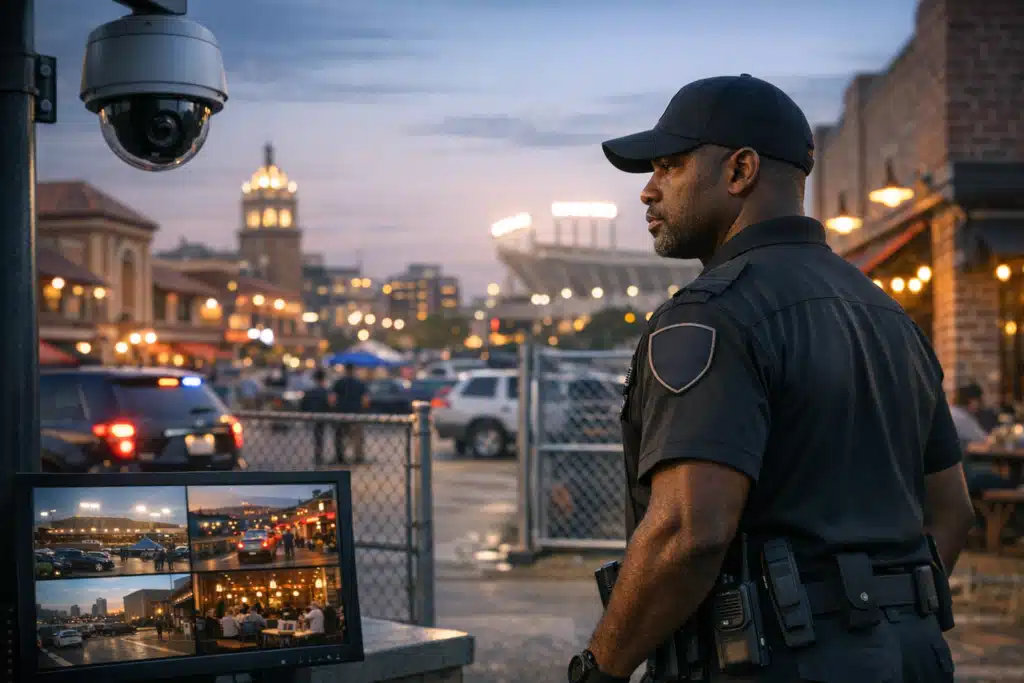
Missouri’s 40-hour training requirement covers specific scenarios relevant to Kansas City businesses. Guards learn crowd control techniques essential for Royals games, emergency procedures for severe weather events, and theft prevention strategies for retail environments.
Core training modules include:
- Legal authority and limitations in Missouri
- Report writing and documentation
- Emergency response procedures
- Customer service and communication
- Observation and patrol techniques
- Crime scene preservation
- Use of force continuum
- Radio communications protocols
This training directly translates to better performance during real incidents. Licensed guards understand when they can detain suspects, how to document incidents for insurance claims, and proper procedures for coordinating with Kansas City Police Department.
Continuing Education Requirements
Licensed guards must complete 8 hours of continuing education annually to maintain their certification. This ensures they stay current on Missouri law changes, new security technologies, and evolving threat patterns affecting Kansas City businesses.
Verification Process for Kansas City Business Owners
Smart business owners verify guard licenses before signing contracts. Missouri maintains an online database where you can confirm active licensing status using the guard’s license number or full name.
Red flags to watch for include:
- Guards who cannot provide license numbers immediately
- Expired licenses (check the expiration date)
- Companies that cannot produce training certificates
- Guards who started work before receiving temporary licenses
Reputable security companies like Twin City Security Kansas City provide license verification for all assigned guards before deployment to your location.
Insurance and Liability Considerations
Unlicensed security guards void most business insurance policies. If an incident occurs involving an unlicensed guard, your insurance company may deny claims and hold you liable for damages.
Kansas City businesses have faced lawsuits exceeding $500,000 when unlicensed guards used excessive force or failed to respond appropriately during emergencies.
Kansas City Regulations Beyond State Licensure
While Missouri handles individual licensing, Kansas City maintains additional regulations affecting security operations. The city requires permits for certain security activities and mandates specific training for guards working large events or sensitive locations.
City-specific requirements include:
- Special event permits for guards at outdoor festivals
- Coordination protocols with KCPD for downtown venues
- Crowd control certification for venues exceeding 500 capacity
- Emergency evacuation training for high-rise buildings
The Power & Light District has particularly strict standards due to high foot traffic and alcohol service. Guards working this area often need additional crowd management training beyond state minimums.
Multi-State Considerations for Metro Businesses
Kansas City businesses operating in both Missouri and Kansas face complex licensing issues. Kansas has separate licensing requirements, and guards cannot work across state lines without proper certification in both states.
This affects businesses with locations in Overland Park, Olathe, or other Kansas suburbs who want consistent security coverage throughout their operations.

 Posted on Google
Choosing Licensed Security Providers in Kansas City
Professional security companies handle licensing compliance for their employees, removing this burden from business owners. However, not all companies maintain the same standards or verification processes.
Questions to ask potential security providers:
- Can you provide current license numbers for assigned guards?
- How do you handle continuing education requirements?
- What happens if a guard’s license expires during our contract?
- Do you maintain backup licensed guards for coverage gaps?
- How quickly can you verify guard credentials?
Companies that hesitate to answer these questions or cannot provide immediate verification likely cut corners on compliance.
Cost Impact of Proper Licensing
Licensed guards command higher rates than unlicensed individuals, but the cost difference is minimal compared to potential liability exposure. Most Kansas City businesses pay $18-25 per hour for licensed unarmed guards and $25-35 per hour for armed personnel.
The small premium for licensed professionals protects against much larger financial risks from insurance claims, lawsuits, and regulatory penalties.
Remote Monitoring as Licensed Security Alternative
Some Kansas City businesses opt for remote video surveillance with licensed monitoring personnel instead of on-site guards. This approach still requires proper licensing for monitoring staff but often costs 60-70% less than physical guard presence.
Remote monitoring works particularly well for construction sites, parking facilities, and after-hours retail protection where immediate physical response is less critical than detection and documentation.
Benefits include:
- 24/7 coverage with licensed security professionals
- Multiple location monitoring from central stations
- Recorded evidence for insurance and legal proceedings
- Weather-independent operation during Kansas storms
- Integration with existing alarm systems
Twin City Security Kansas City provides both licensed on-site guards and remote monitoring solutions, allowing businesses to choose the most appropriate protection level for their specific needs and budget constraints.
Compliance During Emergency Situations
Licensing requirements remain in effect during emergency situations, including severe weather events common in Kansas City. Businesses cannot temporarily hire unlicensed individuals to provide security during tornado warnings, flooding, or other crisis situations.
Smart businesses establish relationships with licensed security providers before emergencies occur. This ensures immediate access to qualified personnel when protection needs suddenly increase.
Understanding security guard licensure requirements protects Kansas City businesses from liability while ensuring qualified protection. Licensed guards provide better service, proper documentation, and legal compliance during both routine operations and emergency situations. For comprehensive security assessments tailored to your Kansas City location and compliance requirements, contact Twin City Security Kansas City at 913-831-2525 or Kansas@TwinCitySecurity.com.
Sources
- Missouri Department of Commerce and Insurance – Board of Private Investigator and Private Fire Arms Instructor Examiners
- Missouri Revised Statutes Chapter 324 – Private Security Services
- Kansas City Missouri – Business Licenses and Permits
Kansas City businesses must navigate specific security guard licensure requirements to ensure they hire qualified professionals. Understanding these regulations helps protect against liability issues and ensures effective security measures are in place.
- All security guards in Kansas City must obtain state licensure, including a background check and training course. Guards cannot work until they receive their temporary license number.
- Armed guards face additional training requirements, including firearms proficiency and a 20-hour course. Licensed guards must also complete 8 hours of continuing education annually.
- Business owners should verify guard licenses through Missouri's online database to avoid liability issues and ensure compliance with local regulations.
Recent Posts