
Security Tips for Managing Tornado Warnings at Kansas City Sports Venues
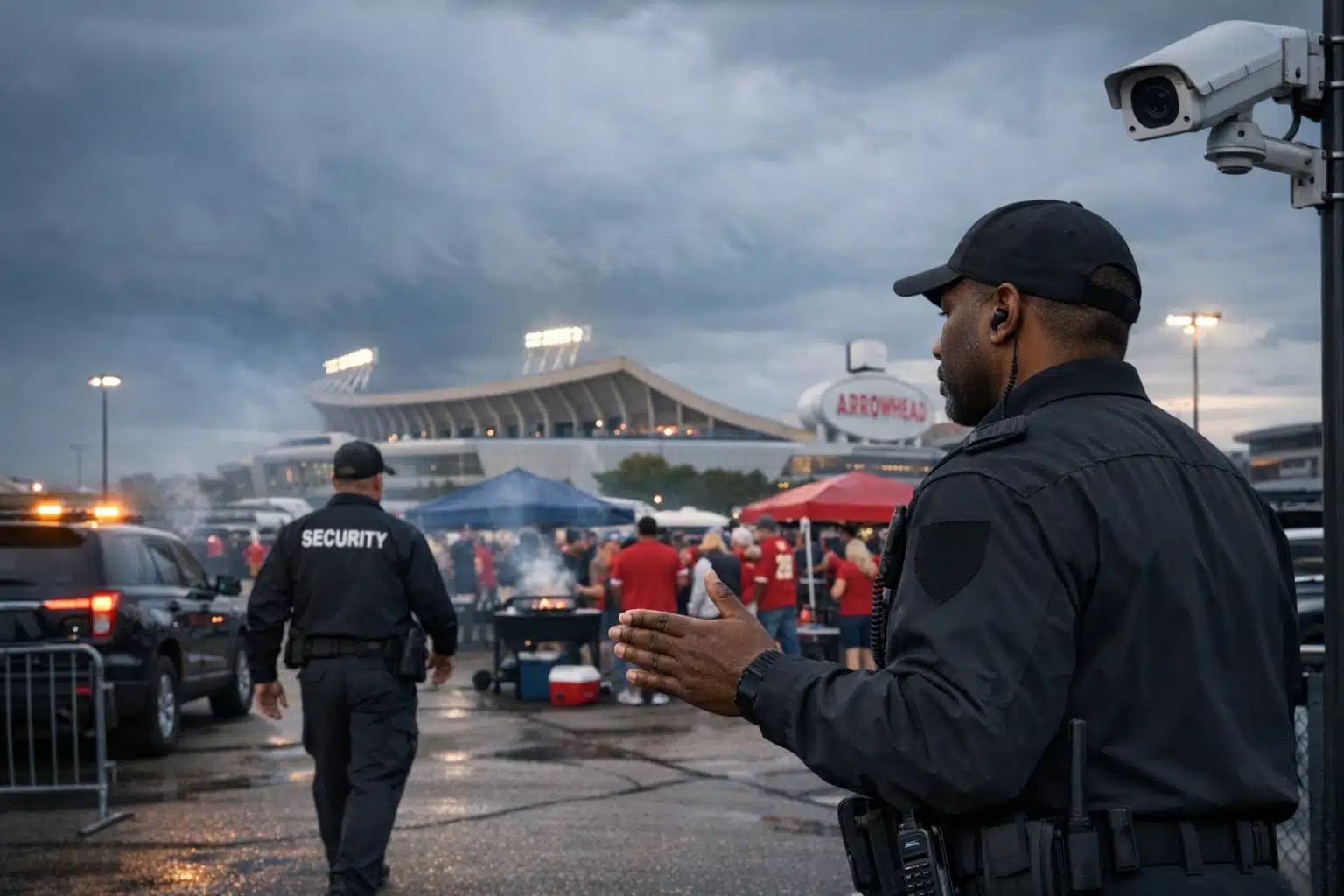
To effectively manage tornado warnings at Kansas City sports venues, it is important to have a clear emergency plan in place. This includes designating safe areas, ensuring staff are trained to assist patrons, and utilizing public address systems to communicate updates. Regular drills can also help prepare everyone for a swift response.
Why Tornado Warnings Change the Rules for Kansas City Sports Venues
Kansas City sits inside Tornado Alley. The metro averages several severe weather watches every spring and summer.
That reality makes sports venue security different here than in most cities. A stadium filled with 40,000 fans becomes a shelter management problem the moment sirens sound.
Arrowhead and Kauffman Stadium sit in an open parking sea off I-70. Tailgate crowds spread across acres with little overhead cover.
This post breaks down how venue operators mix crowd control with storm response. The goal is one plan that handles both threats at once.
How Tornado Warnings Affect Sports Venue Security Planning
Tornado warnings arrive fast in the Midwest. The National Weather Service may give a stadium only 10 to 15 minutes of lead time.
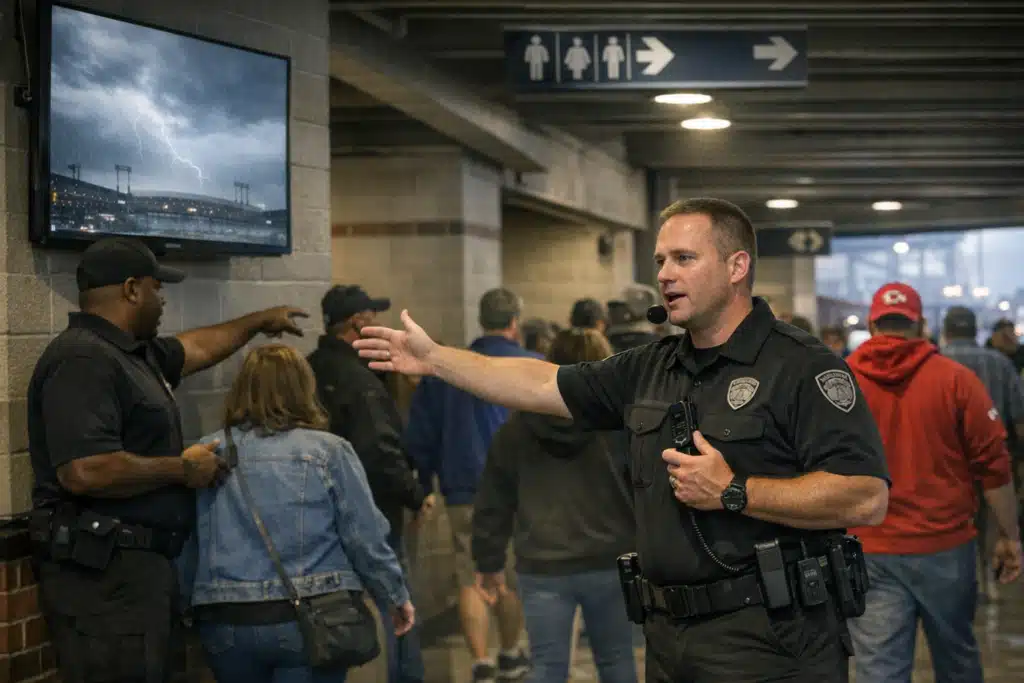
During that window, security teams must move thousands of people safely. Panic causes more injuries than the storm itself.
Sports venue security plans in Kansas City should answer three questions:
- Where do fans shelter? Concourses, restrooms, and interior corridors work better than open seating bowls.
- Who gives the order? One command voice prevents conflicting instructions across a 60,000-seat facility.
- How do tailgaters get inside? Parking lot crowds need clear routes to hard structures.
A venue that skips these steps risks stampedes at exits and entrances.
The Tailgate Problem Unique to Kansas City
Arrowhead’s tailgate culture runs deep. Fans arrive hours early and set up in open lots.
When a warning hits, those lots offer zero protection from flying debris. Grills, tents, and coolers become projectiles in 70 mph winds.
Security staff need pre-marked shelter routes from every parking zone. Signage and trained spotters guide crowds before conditions worsen.
Building a Combined Storm and Security Command Plan
Venue safety works best when weather and security run from one command post. Splitting these functions creates delays.
Follow this step-by-step framework for Kansas City venues:
- Assign a weather monitor. One staffer watches radar and NWS alerts during every event.
- Set trigger points. Decide the exact alert level that starts shelter movement.
- Map interior shelter zones. Identify spaces rated to hold your peak crowd count.
- Rehearse the announcement. Scripted PA messages reduce confusion and calm nerves.
- Station guards at choke points. Stairwells and ramps need staff to keep flow steady.
- Log the all-clear. Confirm the warning has expired before releasing crowds.
Remote video monitoring supports each step. Cameras let a command center track crowd density in real time.
Why Remote Surveillance Matters During Storms
On-site guards cannot see every corner of a large venue at once. Remote camera feeds fill that gap.
Operators spot bottlenecks forming at concourse entrances. They redirect staff before a crush develops.
During a tornado warning, this visibility saves minutes. And minutes decide safety when a funnel cloud approaches.
Protecting Parking Lots and Perimeter Areas
Parking areas hold both people and property during severe weather. Both need protection.
Theft rises when crowds scramble for cover. Unattended vehicles and vendor stands become targets.
Twin City Security Kansas City recommends these perimeter measures:
- Mobile camera trailers covering open lots near Arrowhead and Kauffman.
- Lighting checks since storms often knock out power to sections.
- Vendor lockdown protocols for cash stands and merchandise carts.
- Post-storm sweeps to catch looting once the warning lifts.
The Power & Light District and Crossroads face similar risks during event nights. Outdoor venues there share the same open-air weakness.
Lessons From Kansas City Event Districts
Downtown entertainment zones pack thousands into tight blocks. When storms roll in, sidewalks clog fast.
Security teams in the Power & Light District use nearby garages as shelter. Guards direct foot traffic into stairwells and interior levels.
Westport bars and Country Club Plaza retailers apply the same logic. Interior space beats open patios every time.

 Posted on Google
Training Staff for Dual-Threat Events
Guards trained only for crowd control miss weather cues. Cross-training fixes that gap.
Every event staffer should know:
- The venue’s specific shelter locations and capacity limits.
- How to read a tornado watch versus a tornado warning.
- The chain of command for evacuation orders.
- First aid basics for storm-related injuries.
A watch means conditions favor tornadoes. A warning means one has been spotted or shows on radar.
Staff who confuse the two waste time. Clear definitions keep responses sharp.
Coordinating With Local Emergency Services
Kansas City venues should build relationships with area responders before storm season. Jackson County and Wyandotte County agencies coordinate large-event response.
Share your shelter plan with local fire and police. They move faster when they know your layout.
What Kansas City Venue Operators Should Do Now
Storm season peaks between March and June across Missouri and Kansas. Planning ahead beats reacting under pressure.
Start with these actions:
- Audit your current shelter capacity against peak attendance.
- Test PA systems and backup power before the season.
- Add remote camera coverage to blind spots.
- Schedule a staff drill combining crowd and weather scenarios.
A single tornado warning during a sold-out game tests every weakness in your plan. Fix those gaps in calm weather.
Partner With Twin City Security Kansas City
Managing crowds and storms at the same time takes trained eyes and proven protocols. Sports venue security in Tornado Alley demands both.
Twin City Security Kansas City combines on-site guards with remote video monitoring built for Midwest weather. Our teams help venues plan shelter routes, staff choke points, and protect property during severe storms.
Call 913‑831‑2525 or email Kansas@TwinCitySecurity.com for a Kansas City security assessment. You can also visit https://www.twincitysecuritykansascity.com.
Sources
- National Weather Service – Kansas City/Pleasant Hill Forecast Office
- National Weather Service – Tornado Safety
- NOAA Storm Prediction Center – Severe Weather Data
Kansas City sports venues face unique challenges during tornado warnings due to their location in Tornado Alley. Effective security planning is essential to ensure the safety of large crowds during severe weather events.
- Venue operators must develop clear shelter plans for fans to avoid panic during tornado warnings. Security teams need to coordinate with local emergency services to enhance response efficiency.
- Training staff to recognize weather alerts and understand evacuation protocols is critical for crowd safety. Cross-training can help staff manage both crowd control and weather emergencies effectively.
- Remote video monitoring can identify crowd bottlenecks and improve safety during storms. This technology allows for real-time adjustments to crowd management strategies.
Recent Posts