
Ensuring Safety in Kansas City Sports Venues: A Guide for Stadium Operators
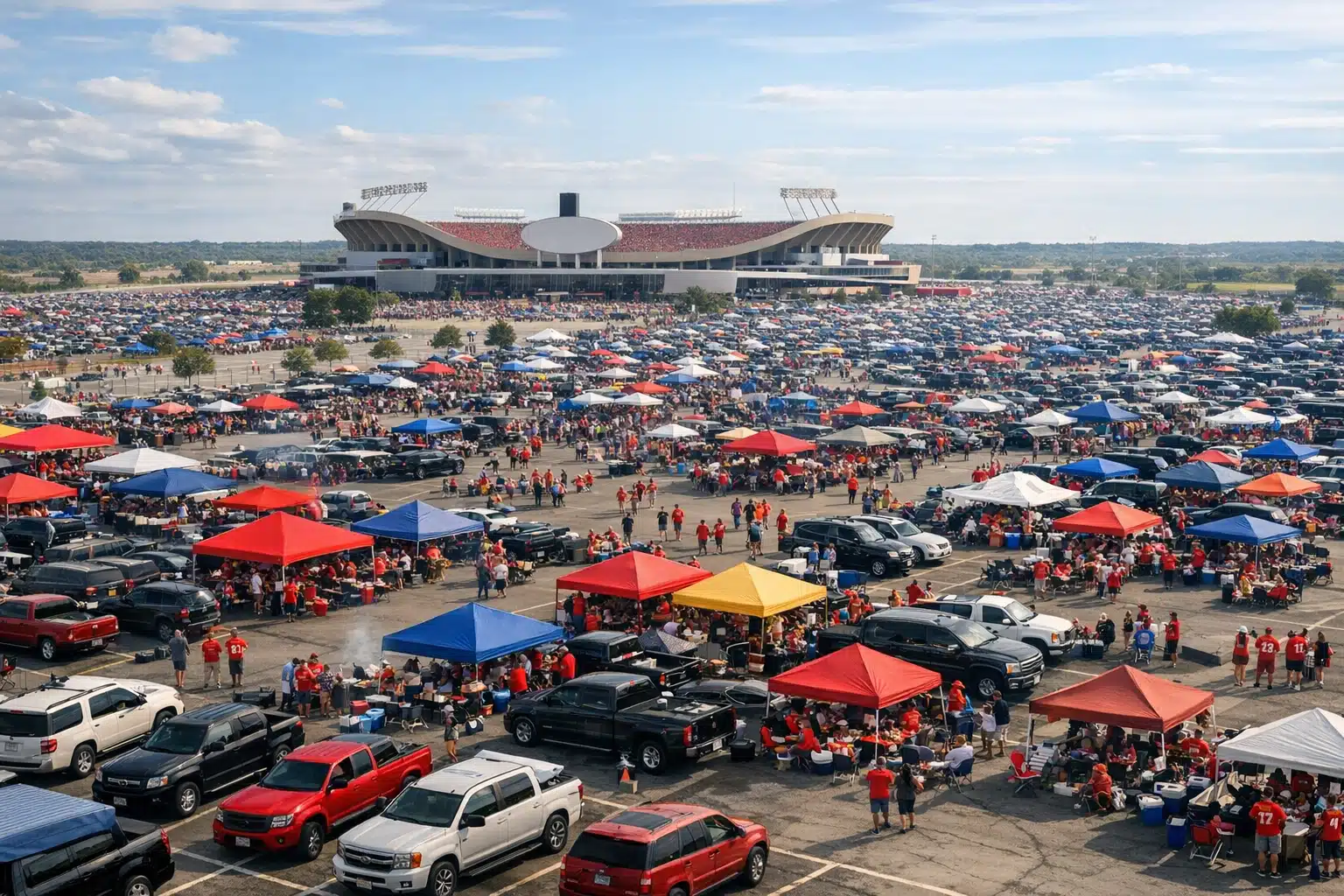
Sports venues in Kansas City encounter various safety challenges, including managing large crowds during events, handling massive tailgating operations, and preparing for severe weather threats that may necessitate quick evacuations. These factors require stadium operators to implement effective security measures to ensure the safety of attendees.
When 76,000 Chiefs fans pack Arrowhead Stadium on game day, the security challenges extend far beyond typical crowd control. Kansas City’s major sports venues face unique risks from massive tailgating operations in parking lots to severe weather threats that can force rapid evacuations of tens of thousands of people.
Sports venue security in Kansas City requires specialized protocols that address everything from pre-game crowd buildup to post-event traffic flow management. Stadium operators must coordinate with multiple agencies while maintaining positive fan experiences.
Understanding Kansas City Sports Venue Security Challenges
Kansas City’s sports venues present distinct security scenarios that differ significantly from other entertainment facilities. Arrowhead Stadium and Children’s Mercy Park each handle over 30 events annually with attendance ranging from 18,000 to 76,000 people.
The tailgating culture around Arrowhead creates extended security perimeters. Fans arrive 4-6 hours before kickoff, establishing temporary communities across 150 acres of parking lots. This means security operations must begin before dawn and extend well past the final whistle.
Weather-Related Security Protocols
Missouri’s severe weather patterns add complexity to stadium safety planning. Tornado watches occur frequently during spring soccer seasons at Children’s Mercy Park. Lightning delays can strand 70,000+ people in Arrowhead’s concourses for extended periods.
Effective weather protocols require:
- Real-time meteorological monitoring with direct National Weather Service coordination
- Rapid communication systems to reach all areas simultaneously
- Shelter-in-place procedures for different threat levels
- Evacuation routes that account for mobility-impaired guests
Sports Venue Security Technology Integration
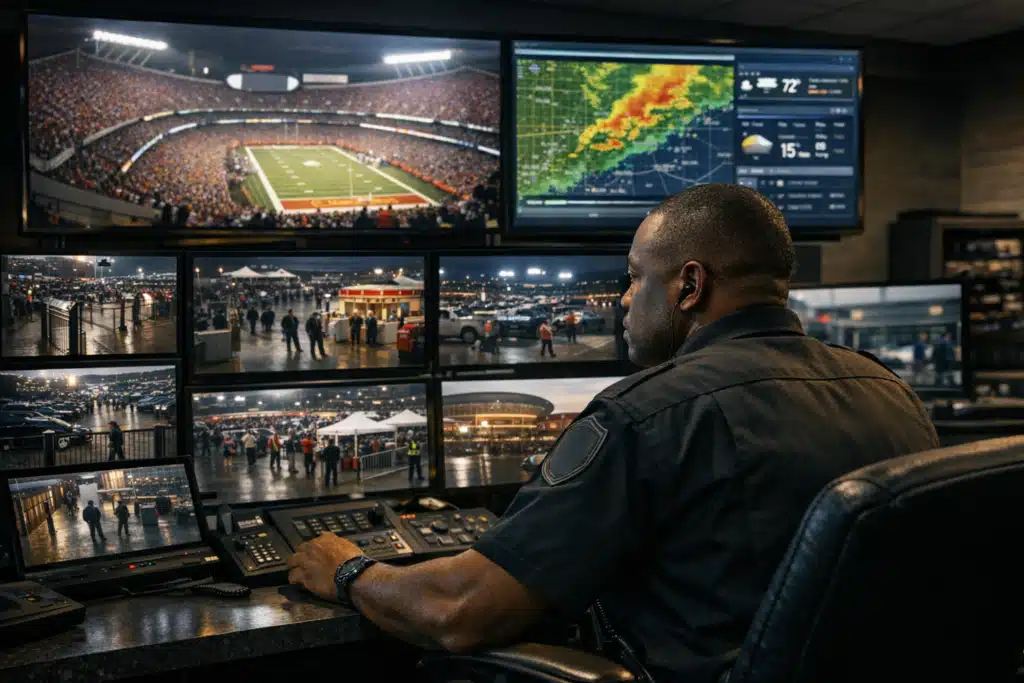
Modern stadium security relies heavily on integrated technology systems that provide comprehensive situational awareness. Video surveillance forms the backbone of these operations, but Kansas City venues require specialized configurations.
Perimeter and Parking Lot Monitoring
Arrowhead’s massive parking operation spans multiple lots across Interstate 70. Remote video surveillance systems monitor these areas starting 6 hours before events. Cameras must provide clear identification capabilities in varying light conditions.
Key surveillance zones include:
- Entry and exit points for vehicle and pedestrian traffic
- Tailgating areas where alcohol-related incidents commonly occur
- Perimeter fencing to prevent unauthorized access
- Emergency vehicle routes that must remain clear
Twin City Security Kansas City deploys wireless camera systems that can be repositioned based on crowd flow patterns. These systems integrate with existing security operations centers to provide seamless monitoring coverage.
Access Control and Credentialing Systems
Sports venues employ multiple credentialing levels from general admission to media, VIP, and operational staff. Each level requires different access permissions throughout the facility.
Electronic access control systems track movement in real-time. This capability becomes critical during emergencies when security teams need immediate headcounts for specific building sections.
Crowd Management Strategies for Game Day Operations
Successful crowd management begins hours before the first fan enters the venue. Kansas City’s sports facilities have refined their approaches through decades of hosting major events.
Pre-Game Security Deployment
Security staffing scales dramatically on event days. A typical Chiefs game requires 200+ security personnel compared to 15-20 for daily facility operations.
Deployment timeline follows this pattern:
- 6 hours before kickoff – Perimeter security and parking lot teams deploy
- 4 hours before kickoff – Gate security and screening teams arrive
- 2 hours before kickoff – Full interior security deployment complete
- 30 minutes after kickoff – Reduced staffing at entry points, increased concourse presence
This staged approach ensures adequate coverage during peak arrival periods while managing labor costs effectively.
Managing High-Risk Periods
Certain game situations create elevated security risks. Playoff games, rivalry matchups, and prime-time broadcasts generate more intense crowd energy. Weather delays can turn routine events into security challenges.
During a 2019 playoff game, Arrowhead’s security team managed a two-hour lightning delay that kept 76,000 fans in the facility past midnight. The incident highlighted the importance of having extended security protocols and additional staffing reserves.
Emergency Response Coordination
Sports venues serve as potential mass casualty incident sites, requiring comprehensive emergency response planning. Kansas City venues coordinate with multiple agencies including KCPD, Kansas City Fire Department, and Jackson County Emergency Management.
Multi-Agency Communication Systems
Effective emergency response depends on seamless communication between venue security, local law enforcement, and emergency medical services. Radio interoperability allows all agencies to communicate directly during incidents.
Command post locations are pre-designated with backup power and multiple communication methods. These positions provide overview capabilities for the entire venue and surrounding areas.
Medical Emergency Protocols
Large crowds generate predictable medical emergencies. Heat-related illnesses spike during summer events. Alcohol-related incidents increase during evening games.
Kansas City venues maintain on-site medical facilities staffed with paramedics and nurses. Ambulance staging areas allow rapid transport to nearby hospitals including Saint Luke’s and Truman Medical Centers.

 Posted on Google
Tailgating Area Security Management
Tailgating represents a unique security challenge specific to football venues. The tradition creates temporary communities with their own social dynamics and potential conflict points.
Mobile Patrol Strategies
Static security posts cannot effectively cover 150 acres of parking areas. Mobile patrols using vehicles and bicycles provide better coverage and response capabilities.
Patrol routes focus on:
- High-density tailgating areas where conflicts are more likely
- Alcohol sales locations to monitor intoxication levels
- Traffic flow points to prevent congestion and maintain emergency access
- Fence lines and restricted areas to prevent unauthorized access
Incident De-escalation Techniques
Tailgating incidents often involve alcohol and team loyalties. Security personnel require specific training in de-escalation techniques that preserve the festive atmosphere while maintaining safety.
Successful approaches emphasize engagement over enforcement. Security teams build rapport with regular season ticket holders who establish consistent tailgating locations.
Technology Integration for Enhanced Security
Modern sports venue security incorporates advanced technology solutions that enhance human security capabilities rather than replacing them.
Behavioral Analytics and Crowd Monitoring
Video analytics software can identify abnormal crowd patterns or individual behaviors that warrant security attention. These systems excel at detecting fights, medical emergencies, or suspicious packages.
Integration with existing camera networks provides automated alerts to security personnel. This capability proves especially valuable during high-attendance events when human operators cannot monitor every camera feed simultaneously.
Mobile Security Applications
Security teams use mobile applications for incident reporting, communication, and real-time information sharing. These tools allow supervisors to track personnel locations and coordinate responses more effectively.
Fan-facing security apps provide anonymous reporting capabilities. Attendees can report suspicious activities or request assistance without drawing attention to themselves.
Post-Event Security Operations
Security responsibilities continue well after the final whistle. Post-game periods present unique challenges as large crowds exit simultaneously while maintaining celebratory or disappointed emotions.
Controlled Egress Procedures
Staggered release procedures prevent dangerous crowd crush situations at exit points. VIP and club seat holders typically exit first, followed by staged releases of different seating sections.
Parking lot security remains active for 2-3 hours post-game. Traffic management and continued tailgating activities require ongoing monitoring and occasional intervention.
Kansas City sports venues demand sophisticated security approaches that blend technology, personnel deployment, and local expertise. Weather preparedness, crowd management, and multi-agency coordination form the foundation of effective stadium safety operations.
Twin City Security Kansas City provides specialized security services designed for Kansas City’s unique venue requirements. Our team understands local challenges from severe weather protocols to tailgating culture management.
Contact us at 913‑831‑2525 or Kansas@TwinCitySecurity.com to discuss your venue’s security needs and develop customized protection strategies.
Sources
- Department of Homeland Security – Soft Targets and Crowded Places Security Planning
- National Weather Service – Outdoor Lightning Safety Guidelines
- National Fire Protection Association – Life Safety Code for Assembly Occupancies
Kansas City sports venues face unique security challenges that require specialized protocols to ensure safety during events. Stadium operators must manage crowd control, weather threats, and coordination with multiple agencies while maintaining a positive fan experience.
- Security operations begin well before game day, especially with large crowds and tailgating activities. Effective crowd management strategies are essential for safety and efficiency.
- Weather-related protocols are critical, as severe conditions can lead to rapid evacuations and require real-time monitoring and communication systems.
- Technology integration enhances security, allowing for better surveillance and incident reporting, which is vital during high-attendance events.
Recent Posts