
Choosing the Right Security for Kansas City’s Busy Crossroads District
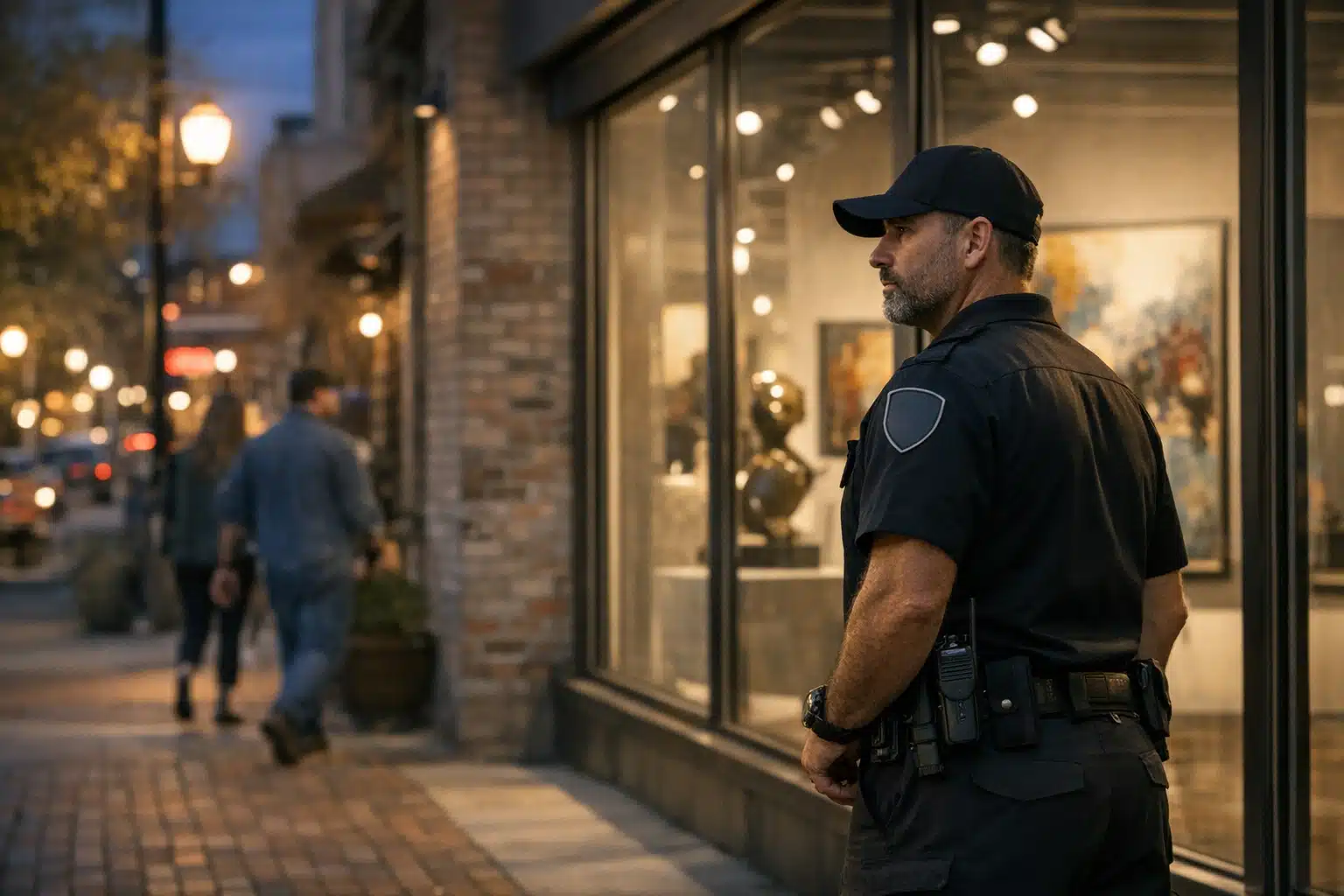
Security in Kansas City's Crossroads District is vital due to the large crowds that gather during events like First Fridays. With art galleries, restaurants, and studios attracting visitors, effective security measures help ensure safety and protect property, allowing for a vibrant and enjoyable atmosphere for everyone.
Why Crossroads District Security Differs From the Rest of Kansas City
The Crossroads Arts District draws thousands of visitors during First Fridays each month. Art galleries, restaurants, and studios open their doors to dense crowds after dark.
That volume creates a specific problem. Crossroads District security must handle pedestrian congestion, open storefronts, and mixed-use buildings at the same time.
Kansas City property owners here face concerns that differ from the Plaza or Overland Park. Gallery inventory, outdoor sculpture, and street-level glass all sit exposed during peak hours.
This post covers the real risks, staffing choices, and monitoring setups that fit the district. You will finish knowing what to ask before hiring anyone.
The Specific Risks Facing Crossroads Businesses
Crossroads properties share three pressure points. Each one shapes how you protect the block.
1. High-Value, Low-Security Retail
Galleries display original art worth thousands per piece. Many operate in converted warehouses with large windows and single points of entry.
Smash-and-grab attempts rise when valuable goods sit visible from the sidewalk. Studios closing late also leave staff walking to lots alone.
2. First Friday Crowd Surges
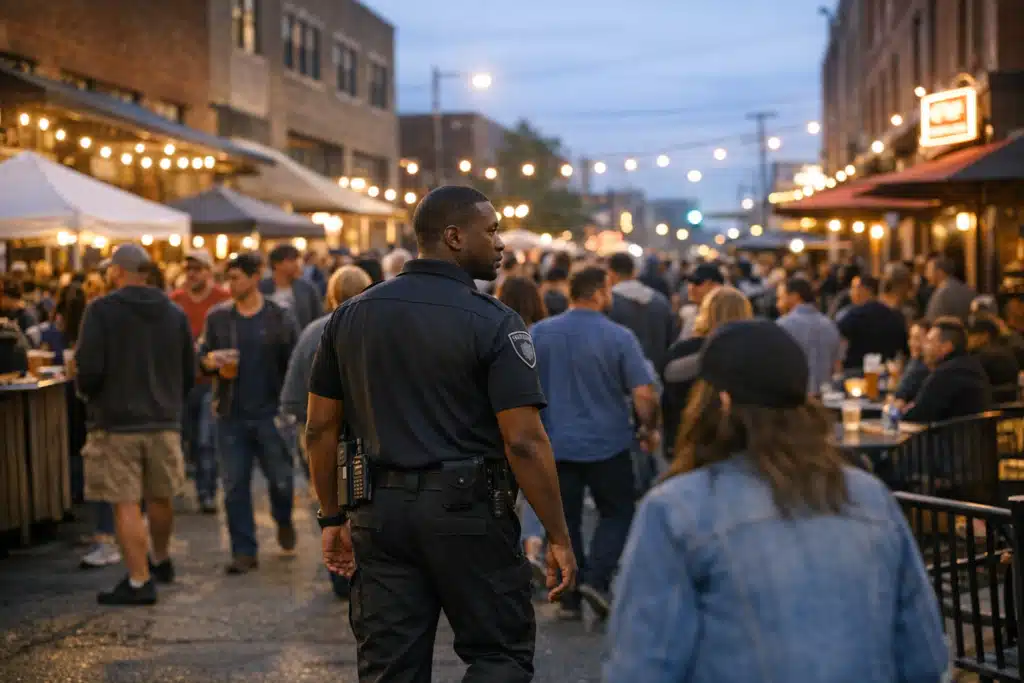
First Fridays pack Baltimore, Walnut, and Grand into standing-room streets. Crowds this size hide theft, vandalism, and altercations.
Restaurants managing patios and pop-up vendors on sidewalks lose sightlines fast. A single unmonitored entrance becomes a soft target.
3. Overnight Vacancy in Mixed-Use Buildings
Many Crossroads buildings mix ground-floor retail with upper-floor lofts and offices. After hours, the retail level empties while residents remain above.
Loading docks, alley entrances, and shared stairwells invite trespassing and graffiti when no one watches them.
On-Site Guards vs. Remote Video Monitoring for the Crossroads
Crossroads District security works best when you match the method to the moment. Two approaches cover most properties here.
When On-Site Guards Make Sense
A uniformed guard fits high-contact settings. Choose on-site coverage for:
- First Friday events with heavy foot traffic and open doors
- Gallery openings where staff greet guests and watch inventory
- Late-night restaurant closings that require escorts to parking
- Multi-tenant lobbies needing access checks after business hours
A visible guard deters most opportunistic theft. Presence alone changes how people behave near open entrances.
When Remote Surveillance Fits Better
Remote video monitoring covers wide areas at lower cost. It fits:
- Overnight vacant retail floors after closing
- Loading docks and back alleys prone to dumping and tagging
- Parking lots serving studios and offices
- Rooftop and equipment areas targeted for copper and HVAC theft
Live agents watch feeds and speak through on-site speakers. They warn intruders and call Kansas City police before damage spreads.
Pairing Both for Full Coverage
Many Crossroads properties use guards during events and cameras overnight. This split keeps costs down without leaving gaps.
A gallery might staff a guard for a Friday opening, then rely on monitored cameras until Monday.
How to Plan Crossroads District Security Step by Step
Follow this order to build coverage that matches your property.
- Map your exposure. List every entrance, window, dock, and dark corner.
- Rank by value and risk. Mark where cash, inventory, or people concentrate.
- Match the method. Assign guards to contact points and cameras to open areas.
- Set event rules. Plan separate staffing for First Fridays and private openings.
- Test response times. Confirm how fast monitoring agents act on alerts.
- Review quarterly. Adjust as tenants, seasons, and events change.
Write these down before you request quotes. A clear map gets you accurate pricing instead of guesses.
Midwest Weather and Its Effect on Crossroads Coverage
Kansas City weather shapes security planning more than owners expect. Storm season runs heavy from March into June.
Tornado warnings clear streets fast and shut down power. Camera systems without battery backup go dark exactly when you need them.
Ask any provider two questions:
- Do cameras run on backup power during outages?
- Do monitoring centers stay staffed during severe storms?
Winter ice adds another concern. Slick sidewalks near gallery entrances raise liability, and guards can flag hazards before customers slip.
What Crossroads Business Security Costs Depend On
Pricing varies with three inputs. Knowing them helps you compare bids fairly.
1. Hours and Coverage Type
On-site guards cost more per hour than remote monitoring. Event-only guard shifts run cheaper than around-the-clock posts.
2. Property Size and Camera Count
More entrances and blind spots mean more cameras. Larger galleries and multi-tenant buildings need wider coverage.
3. Response Requirements
Verified-response monitoring costs more than recording alone. It also stops incidents live instead of after the fact.
Effective business security in the Crossroads rarely means the most expensive plan. It means matching spend to real exposure points.

 Posted on Google
Missouri Licensing You Should Verify
Kansas City requires guard companies to hold proper licensing. Before signing, confirm the following:
- Company licensing through the City of Kansas City’s regulated occupations rules
- Guard-level permits for each officer assigned to your site
- Liability insurance that covers on-site incidents
Ask for documents in writing. A qualified provider shares them without hesitation.
Common Mistakes Crossroads Owners Make
Three errors show up repeatedly across the district.
Skipping First Friday planning. Owners treat event nights like regular hours and get overwhelmed by crowds.
Recording without watching. Cameras that only store footage help after a loss, not during one.
Ignoring alleys and docks. Rear access points cause more break-ins than front doors in this district.
Fixing all three costs less than one serious theft or vandalism claim.
Building a Security Plan That Grows With the District
The Crossroads keeps adding restaurants, studios, and residents each year. Your coverage should expand at the same pace.
Start with your highest-risk points. Add monitoring zones as new tenants and foot traffic arrive.
A provider that reviews your setup each quarter keeps pace with change. That review matters most as new construction opens along Grand and Baltimore.
Get a Crossroads District Security Assessment
Crossroads District security works when it matches First Friday crowds, gallery inventory, and overnight vacancy risks. Guards handle contact points, and remote monitoring watches open areas around the clock.
Twin City Security Kansas City builds coverage plans for high-traffic areas like the Crossroads. Call 913‑831‑2525 or email Kansas@TwinCitySecurity.com for an assessment and monitoring quote.
Sources
- National Weather Service – Kansas City/Pleasant Hill Forecast Office
- Kansas City Missouri Police Department – Crime Statistics
- City of Kansas City, Missouri – Regulated Businesses and Licensing
Crossroads District security is uniquely tailored to address the specific challenges posed by high foot traffic, valuable art displays, and mixed-use buildings. Businesses in this area must consider various security methods to protect against theft and vandalism while accommodating large crowds during events.
- Crossroads properties face unique risks such as high-value art and pedestrian congestion during events. Security must adapt to these challenges to protect assets effectively.
- On-site guards are effective during busy events, while remote video monitoring is suitable for overnight coverage and less trafficked areas.
- Planning security involves mapping exposure points, matching methods to risks, and regularly reviewing strategies to keep pace with changes in the district.
Recent Posts