
How to Integrate Security Systems with Emergency Protocols for Kansas City Businesses
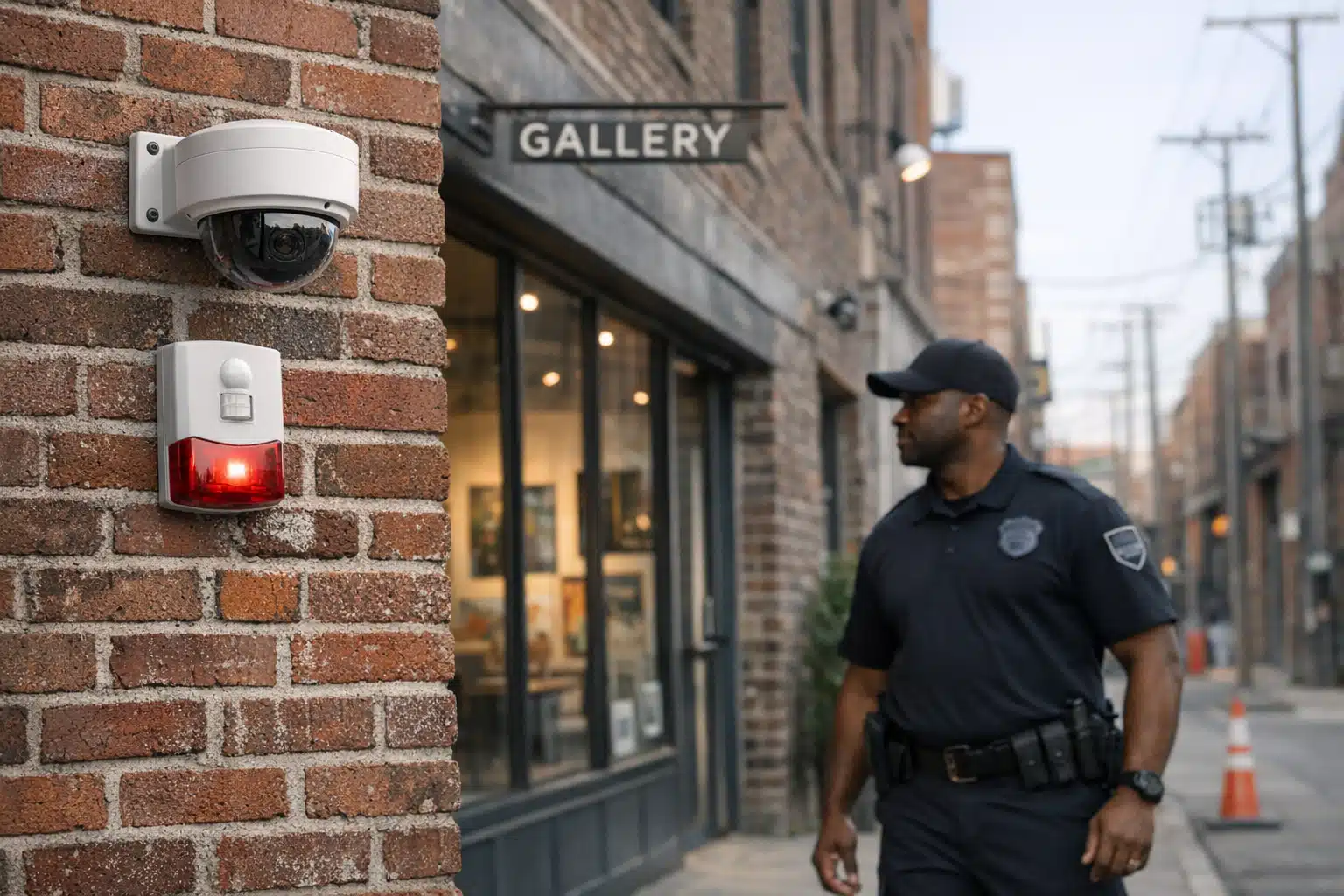
To integrate security systems with emergency protocols in Kansas City, businesses should ensure that their cameras, alarms, and security personnel operate as a cohesive unit. This involves linking physical security measures with response plans, allowing for a coordinated reaction to emergencies such as tornado warnings or crowd control during events.
Kansas City sees more than 50 tornado warnings in a typical year across the metro, and that weather risk sits alongside game-day crowds and retail theft. For business owners, emergency protocols only work when your cameras, alarms, and guards act as one connected system. This post explains how to link physical security with response planning, with examples from the Power & Light District, Crossroads, and Overland Park.
You will get a step-by-step method, local scenarios, and questions to ask before hiring a security partner.
Why Emergency Protocols and Security Systems Must Work Together
A camera that records a break-in but triggers no response is a record, not protection. Real safety comes from connecting detection to action.
Security systems integration means your alarms, video feeds, access control, and on-site guards share information and respond as a unit.
Kansas City businesses face mixed threats:
- Severe weather — tornadoes, ice storms, and flash flooding from spring through early summer
- Event crowds — Chiefs and Royals traffic, Power & Light District nightlife surges
- Retail and property crime — break-ins across Westport and Crossroads after closing hours
- Construction theft — copper and equipment loss at active sites in Overland Park and downtown
Each threat needs a different response. A connected system routes the right one fast.
Step-by-Step: How to Integrate Security Systems With Emergency Protocols
Follow this sequence to connect your equipment with a clear response plan.

Step 1: Map Your Specific Risks by Location
Start with what your property faces. A Crossroads art gallery has different needs than a River Market warehouse.
Write down your top three threats. For a Plaza retailer, that might be after-hours burglary, fire, and severe weather.
Each risk gets its own response path. Skip generic checklists and name real scenarios.
Step 2: Connect Detection to a Single Response Point
Every sensor should report to one monitored hub. Fragmented alarms slow everything down.
Link these feeds together:
- Video surveillance cameras at entrances and blind spots
- Motion and glass-break sensors
- Access control logs from doors and gates
- Fire and smoke detection
- Weather alert systems tied to local National Weather Service data
When one triggers, the monitoring team sees the full picture and acts.
Step 3: Define Who Responds and How
Detection means nothing without an assigned action. Write down exact steps for each alert type.
For example, a glass-break alarm at a Westport bar at 2 a.m. should:
- Pull up live camera feeds for the monitoring operator
- Verify the threat in seconds
- Dispatch an on-site guard or notify Kansas City police
- Alert the owner by phone and text
A verified alarm gets faster police response than an unverified one.
Step 4: Build Weather Response Into the System
Kansas City weather demands its own plan. A tornado warning changes how a building operates within minutes.
Tie weather alerts to your protocols. When a warning hits Jackson or Johnson County, staff and guards should already know the move.
For a downtown office, that means directing people to interior stairwells and away from glass. Remote monitoring confirms the building is clear.
Step 5: Test the Full Chain Regularly
A plan on paper fails under pressure. Run drills that move from alert to response.
Schedule quarterly tests. Time how long it takes from trigger to action, then fix the slow points.
Protecting Power & Light District Venues During Events
Sports venue and entertainment security requires crowd planning layered onto standard protection. Game days and concerts flood the district with people.
Connected systems handle the surge better. Cameras track crowd density while guards manage entry points.
A venue near the T-Mobile Center should plan for:
- Crowd choke points at exits after events end
- Medical emergencies in dense areas with clear access lanes
- Fight or theft response with guards positioned by camera coverage
- Evacuation routes mapped and tested before large events
Remote operators spot trouble across multiple feeds before it spreads. Guards on the ground move on that information.
Securing Kansas City Barbecue Districts and Retail Strips
Restaurant rows and retail strips face theft, vandalism, and after-hours break-ins. High foot traffic during the day shifts to empty, dark blocks at night.
For a barbecue spot or shop, connect closing routines to your monitoring. When the last employee arms the system, remote operators take watch.
Practical steps for restaurant and retail owners:
- Place cameras over registers, kitchens, and rear entrances
- Set access control so only managers open after hours
- Link motion sensors to live video verification
- Schedule guard patrols during high-risk closing windows
Verified video cuts false alarms and gets real threats a faster response.
Construction Site Protection Across the Metro
Construction theft costs Kansas City builders heavily each year. Copper wire, tools, and heavy equipment vanish from open sites overnight.
Remote video surveillance covers ground that guards alone cannot. Cameras with motion detection watch perimeters around the clock.
For an active site in Overland Park or downtown, connect:
- Perimeter cameras with night vision and motion triggers
- Audio warnings that operators activate when intruders appear
- On-site guards dispatched for verified threats
- Weather monitoring to protect materials before storms hit
Operators who speak through on-site speakers stop most intrusions before any loss.

 Posted on Google
Missouri and Kansas Rules That Affect Your Plan
Security regulations differ across the state line. A business with locations in both Missouri and Kansas must follow each set.
Licensed guards, alarm permits, and camera placement rules vary by city. Kansas City, Missouri requires alarm registration to reduce false-alarm penalties.
Check local permit rules before installing systems. A local security partner already knows these requirements.
Questions to Ask Before Hiring a Security Partner
Before signing with any provider, get clear answers. The right questions reveal whether a company can connect systems to real response.
- How fast do your operators verify and respond to an alarm?
- Do you provide both remote monitoring and on-site guards?
- Can your system handle weather alerts for the Kansas City metro?
- How do you test emergency protocols after setup?
- Are your guards licensed in both Missouri and Kansas?
Clear answers point to a partner who treats integration as the standard.
Bringing It Together for Your Business
Connected security beats scattered equipment every time. When detection, response, and weather planning act as one, your Kansas City business reacts in seconds instead of minutes.
Twin City Security Kansas City builds these connected setups for venues, restaurants, construction sites, and retail across the metro. Call 913‑831‑2525 or email Kansas@TwinCitySecurity.com for a Kansas City security assessment or monitoring quote.
Sources
- National Weather Service – Kansas City/Pleasant Hill Forecast Office
- Kansas City Missouri Police Department – Crime and Safety Resources
- FBI – Uniform Crime Reporting Program
- Missouri Secretary of State – Business and Licensing Information
Kansas City businesses face various threats, including severe weather and retail crime, making it essential to integrate security systems with emergency protocols. This guide outlines a step-by-step approach to connect physical security measures with effective response planning.
- Businesses must map specific risks to tailor their security responses effectively. Each threat, from tornadoes to retail theft, requires a unique action plan.
- Integrating detection systems ensures that alarms and cameras work together, allowing for quick and informed responses to incidents.
- Regular testing of the security system is necessary to identify and fix slow points, ensuring a swift reaction during emergencies.
Recent Posts