
The Benefits of Integrating Concierge Security with Remote Monitoring in Kansas City
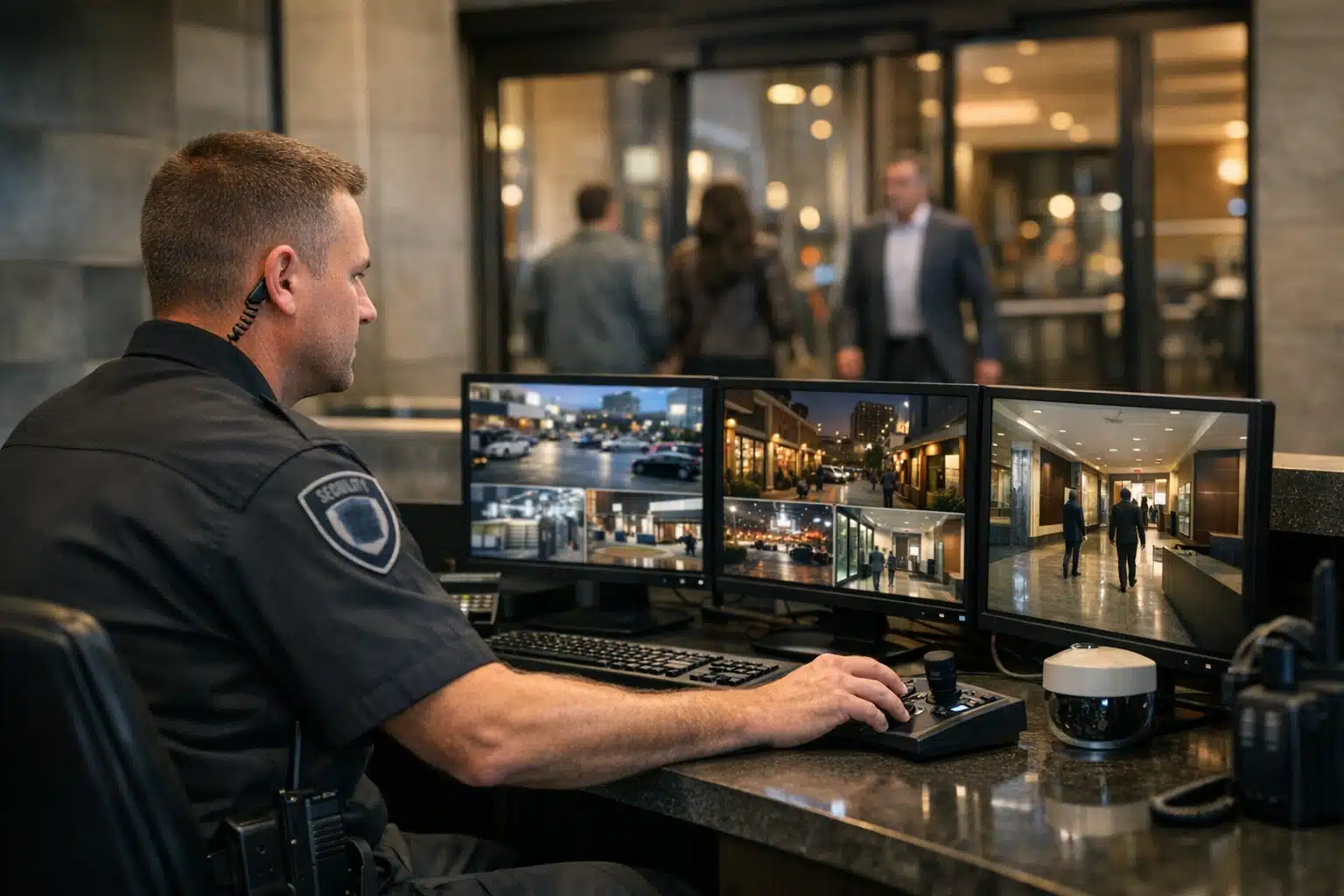
What Concierge Security and Remote Monitoring Do Together
Kansas City reported over 27,000 property crimes in a recent year, according to FBI figures. That number spikes around large events at the Power & Light District and Arrowhead Stadium.
Concierge security puts a trained officer at your front desk, lobby, or entrance. Remote monitoring adds cameras watched by off-site operators around the clock.
This post breaks down how the two work as one system. You will learn where each method fits, what it costs to skip integration, and how Kansas City properties benefit.
Why Concierge Security Alone Leaves Gaps
A single officer covers one location at a time. During a Chiefs game surge or a Westport weekend crowd, that limit shows fast.
An officer stationed at a Country Club Plaza lobby cannot watch a rear loading dock. Blind spots become theft points.
Common gaps in guard-only coverage
- Rear entrances and alley access behind retail rows
- Parking structures during shift changes
- After-hours periods when staffing drops
- Multiple buildings across one apartment community
Cameras fill those gaps. But cameras with nobody watching miss live threats too.
Why Remote Monitoring Alone Falls Short
Remote monitoring catches events on screen. It cannot open a door, greet a visitor, or physically stop a trespasser.
A camera records a break-in at a Crossroads gallery. Without an on-site presence, response still waits for police arrival.
Video helps after the fact. Concierge security acts in the moment. Together, they close both timing and coverage gaps.
How Integrated Concierge Security Works in Kansas City
Integration means your on-site officer and your remote operators share information in real time. One team, two vantage points.
A game-day example at a Power & Light property
Picture a mixed-use building near the Power & Light District on a Saturday. Foot traffic climbs as tailgaters spill in.
- Remote operators scan camera feeds across garages and side streets.
- They spot a group forcing a service entrance on the north side.
- Operators radio the lobby concierge officer instantly.
- The officer intercepts before entry, while operators log footage.
The concierge officer never left the lobby unmanned. The remote team never lost sight of the perimeter.
Where Integration Protects Kansas City BBQ Districts
BBQ-district retail and restaurant clusters face specific theft patterns. Deliveries, cash handling, and late closings create risk windows.
A concierge officer manages the front dining flow and greets guests. Remote monitoring watches walk-in coolers, back lots, and dumpster areas.
Risk windows worth covering
- Early morning deliveries before staff arrive
- Cash drops during dinner rush
- Closing routines when one worker locks up alone
- Patio and outdoor seating after events let out
An operator can flag a loitering vehicle behind the building. The officer responds or calls police with a live description.
Handling Midwest Weather With a Combined System
Kansas City sits in tornado alley. Severe storms and ice events shut down normal operations several times a year.
During a tornado warning, an on-site officer moves people to shelter zones. Remote operators keep watching property nobody can safely reach.
Storm-season roles for each team
- Concierge officer: directs occupants, checks shelter areas, aids evacuation.
- Remote operators: monitor exterior cameras, flag flooding or downed lines.
- Both: document damage for insurance and post-storm claims.
After the storm, empty construction sites stay covered. Remote monitoring watches equipment when guards handle other priorities.

 Posted on Google
Cost Benefits of Pairing the Two Methods
Staffing every entrance with guards costs more than most Kansas City budgets allow. Cameras extend one officer’s reach across a full site.
You pay for one concierge post plus remote coverage. You avoid paying for four or five separate guard stations.
What integrated coverage typically saves
- Fewer guard posts needed for the same square footage
- Lower overnight costs using remote coverage after hours
- Faster incident response reducing loss and liability
- Verified alarms that cut false police-response fees
Overland Park apartment managers see this math clearly. One lobby officer plus remote cameras beats staffing every building gate.
What Kansas City Property Owners Should Ask Before Hiring
Not every provider connects guards and cameras into one workflow. Ask direct questions before you sign.
- Do your remote operators communicate with on-site officers live?
- Are your officers licensed under Missouri and Kansas rules?
- How fast do operators verify and escalate an event?
- Can you cover both Missouri and Kansas locations?
- What happens during a storm or power loss?
Clear answers signal a provider that runs both methods as one system. Vague answers signal two disconnected products.
Local Rules Kansas City Operators Must Know
Security officers in Missouri follow licensing standards that vary by city. Kansas City, Missouri requires officer registration for many roles.
Camera placement must respect privacy laws in both states. Recording public entrances is allowed; recording private areas without notice is not.
A provider working both sides of the state line should know each set of rules. That knowledge protects you from compliance problems.
Bringing It Together for Your Property
Concierge security gives Kansas City properties a live, human presence at the point of contact. Remote monitoring watches everything that one officer cannot see at once. Paired correctly, they cut costs, close blind spots, and speed response.
Twin City Security Kansas City builds integrated concierge and remote monitoring programs for venues, BBQ-district businesses, construction sites, and apartment communities. Call 913‑831‑2525 or email Kansas@TwinCitySecurity.com for a Kansas City security assessment.
Sources
Recent Posts