Protecting Kansas City’s Cold Storage Facilities: Security Best Practices
To secure cold storage facilities in Kansas City, implement access control measures, install surveillance systems, and conduct regular security audits. Additionally, train staff on security protocols and establish emergency response plans to protect high-value inventory from theft and damage.
Why Cold Storage Facilities Face Distinct Security Risks in Kansas City
Kansas City sits at the crossroads of I-35 and I-70, making it a national hub for refrigerated warehousing and food distribution. That location draws high-value inventory into facilities across Riverside, the West Bottoms, and the Kansas City, Kansas industrial corridor.
Strong cold storage security protects more than product. It guards against spoilage losses that can reach six figures within hours of a single breach or power failure.
This post breaks down the risks these facilities face and the steps that keep them protected year-round.
What Makes Cold Storage Different From Standard Warehousing
A cold storage breach carries consequences a dry warehouse never faces. An open dock door in July can raise freezer temperatures fast enough to ruin an entire shipment.
Three risks separate these sites from typical warehouses:
- Temperature-sensitive inventory that spoils within hours of a failure
- High-theft cargo like pharmaceuticals, seafood, and premium meats
- Equipment vulnerability where a tampered compressor causes total loss
A thief does not always need to remove product. Disabling a refrigeration unit overnight can destroy a warehouse’s contents by morning.
Cold Storage Security Best Practices for Kansas City Facilities
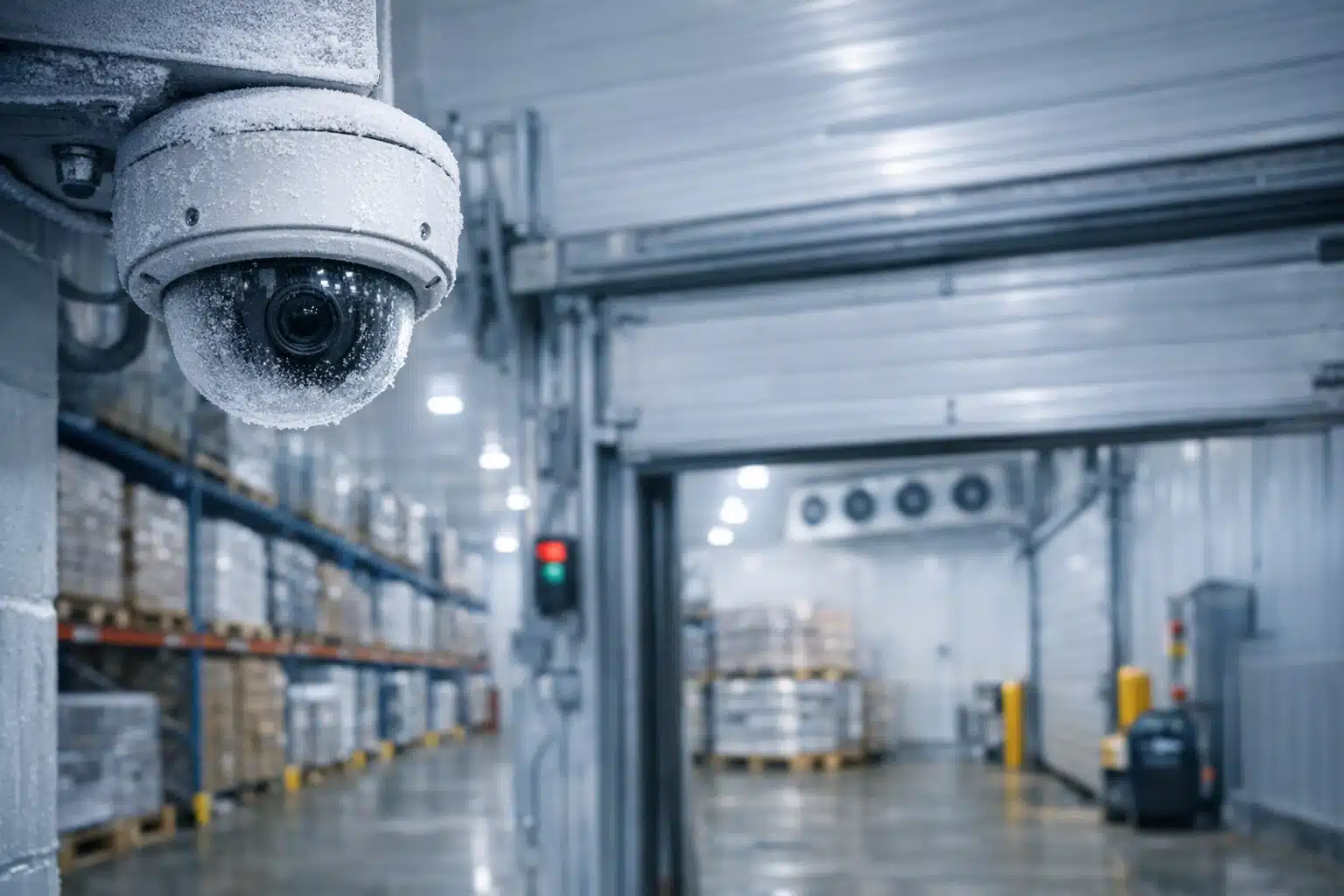
Effective protection starts with technology built for sub-zero conditions. Standard cameras and sensors fail inside freezer environments.
Below are the best practices that hold up in real Kansas City operating conditions.
1. Install Freezer-Rated Surveillance Equipment
Consumer-grade cameras fog, freeze, and die inside a blast freezer. Facilities need cameras rated for operation at negative 40 degrees Fahrenheit.
Place cameras at every dock door, loading bay, and refrigeration control panel. Blind spots near compressor rooms invite tampering that goes unnoticed for hours.
2. Deploy Remote Video Monitoring Around the Clock
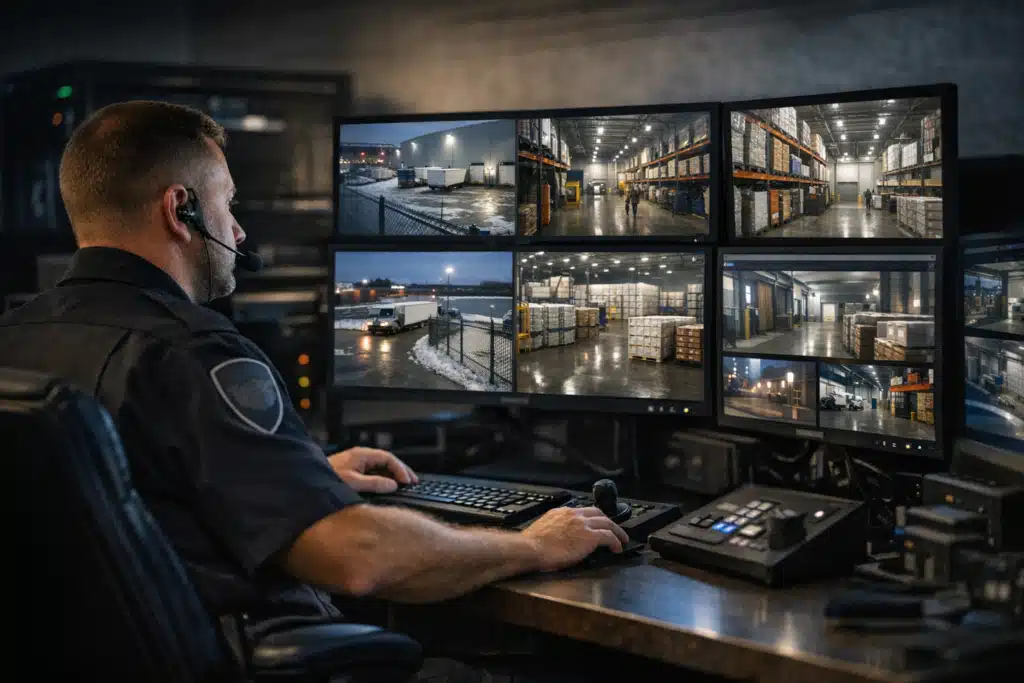
Remote monitoring catches problems a nightly patrol would miss. A trained operator watches live feeds and responds to motion the moment it registers.
This matters most during off-hours. Most cold storage theft in Midwest distribution zones happens between midnight and 5 a.m., when facilities run skeleton crews.
Remote operators can:
- Verify every after-hours dock arrival against scheduled deliveries
- Trigger voice-down warnings when someone enters a restricted zone
- Dispatch KCPD or on-site guards with confirmed visual evidence
3. Control Access at Every Entry Point
Access control limits who reaches your product and your refrigeration systems. Key cards and PIN pads create a record of every entry.
Restrict compressor and control rooms to a short list of named staff. A driver picking up a pallet has no reason to stand near your refrigeration controls.
Follow these access steps:
- Assign individual credentials to every employee and contractor
- Revoke access the same day a worker leaves
- Log and review all entries to sensitive zones weekly
- Require dual authorization for freezer and compressor rooms
4. Monitor Temperature and Security Together
Temperature alarms and security systems should feed the same monitoring station. A sudden temperature spike at 3 a.m. may signal a break-in, not just equipment failure.
When both systems connect, one operator sees the full picture. They can review camera footage the instant a freezer alarm triggers.
Preparing Cold Storage Sites for Midwest Weather Threats
Kansas City weather creates security gaps that thieves exploit. Ice storms knock out power, and tornado season brings sirens that pull staff attention away.
Power Loss and Backup Planning
A power outage can disable cameras, alarms, and freezers at once. Every cold storage site needs battery backup for its surveillance system.
Confirm your monitoring stays live during a grid failure. A camera system that dies with the lights protects nothing during the moments you need it most.
Tornado Season Vulnerabilities
Kansas City averages severe storm warnings across April through June. When sirens sound, staff move to shelter, and dock areas sit unwatched.
Remote monitoring keeps eyes on the facility when people cannot. Operators track the building during the storm and flag any damage or forced entry afterward.
Winter Access Hazards
Ice buildup on exterior doors and gates can jam access controls. Test your entry systems before each winter to confirm they lock and log correctly in freezing conditions.
Building Layered Protection for Long-Term Results
No single tool protects a cold storage facility on its own. The strongest sites stack multiple layers that cover each other’s gaps.
A layered setup includes:
- Perimeter cameras that catch approach and loitering
- On-site guards for physical response during high-risk shifts
- Remote operators who verify events and cut false alarms
- Access control that records and restricts every entry
- Integrated alarms that link temperature and intrusion data
Guards handle what cameras cannot. A live officer stops a theft in progress and reassures overnight staff working alone in remote loading zones.
Matching Protection to Facility Size
A small cold storage operation near the River Market needs a different setup than a regional distribution center in Edgerton. Start with a walk-through that maps your dock count, freezer zones, and shift schedules.
That assessment shows where your gaps sit. It also keeps you from paying for coverage you do not need.

 Posted on Google
What to Ask Before Hiring a Cold Storage Security Provider
The right provider knows refrigerated environments, not just standard warehouses. Ask direct questions before you sign.
- Do your cameras carry ratings for sub-zero freezer operation?
- Can your monitoring station integrate my temperature alarms?
- How fast do operators respond to an after-hours dock alert?
- Do you provide backup power for surveillance during outages?
- Are your guards trained for food-grade facility protocols?
A provider who answers these clearly understands the risks you carry. Vague answers signal a company built for retail or office work, not cold storage.
Conclusion
Cold storage security in Kansas City requires freezer-rated equipment, around-the-clock remote monitoring, and access control that covers refrigeration systems. Layering these protections defends against theft, tampering, and Midwest weather threats that can wipe out inventory overnight.
Twin City Security Kansas City assesses your facility and builds protection that fits your docks, freezers, and shifts. Call 913‑831‑2525, email Kansas@TwinCitySecurity.com, or visit https://www.twincitysecuritykansascity.com for a Kansas City security assessment.
Sources
- FBI – Uniform Crime Reporting Program
- FDA – Sanitary Transportation of Human and Animal Food
- National Weather Service – Kansas City/Pleasant Hill
Cold storage facilities in Kansas City face unique security challenges due to their high-value inventory and specific operational needs. Implementing tailored security measures is essential to protect against theft and spoilage losses.
- Cold storage facilities require specialized security equipment that can operate in sub-zero temperatures.
- Remote monitoring is crucial for detecting issues during off-hours when theft is most likely to occur.
- Access control systems should be in place to restrict entry to sensitive areas and maintain a log of all access.
Recent Posts