
The Role of Remote Surveillance in Protecting Kansas City’s Nightlife Scene
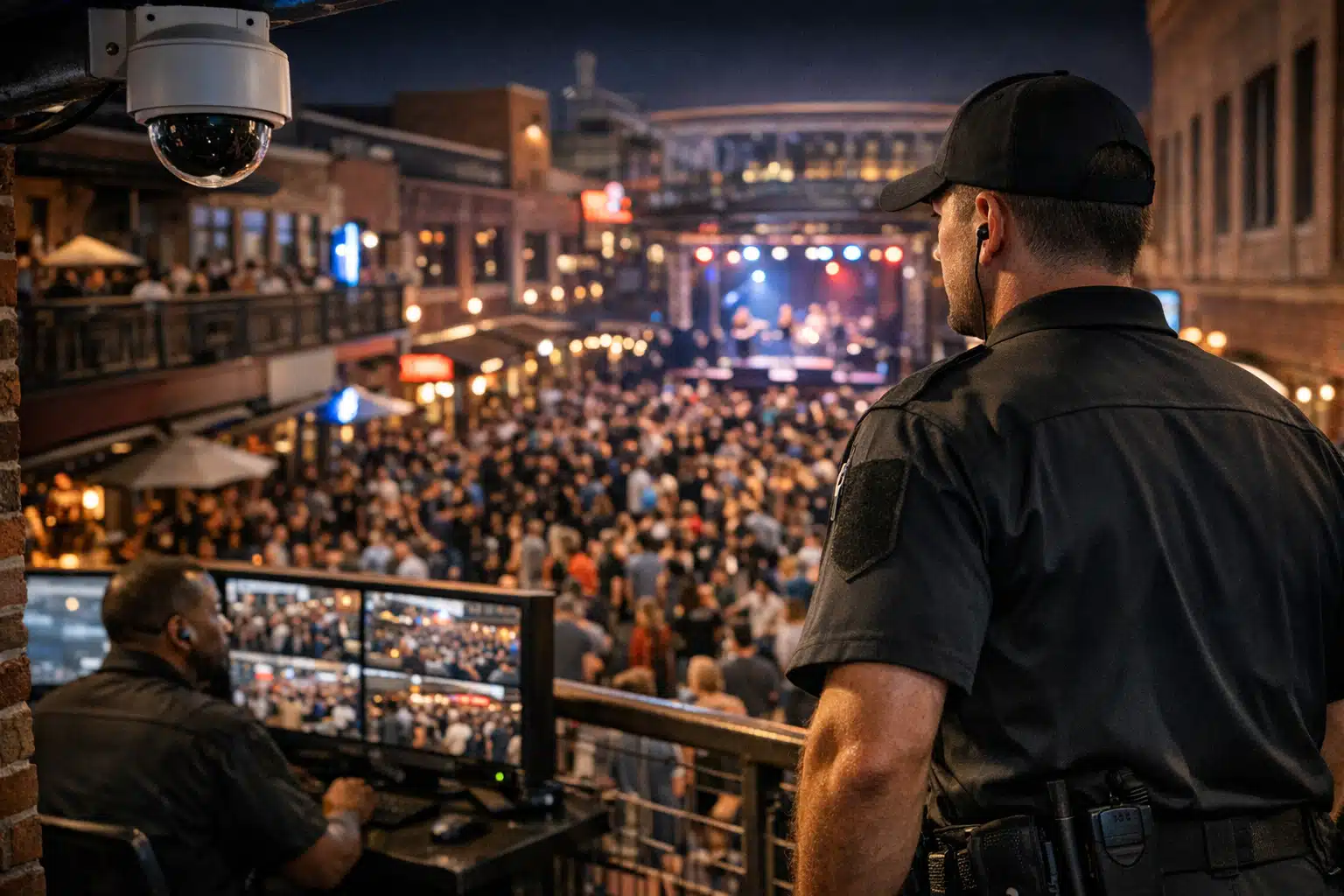
Remote surveillance plays a significant role in enhancing safety and security in Kansas City's nightlife, particularly in busy areas like the Power & Light District. By monitoring crowds and activities in real-time, it helps deter crime, ensures quick responses to incidents, and creates a safer environment for visitors enjoying the vibrant nightlife.
Why Kansas City Nightlife Needs More Than a Doorman
The Power & Light District draws thousands of visitors every weekend. Bars, patios, and outdoor stages fill from Friday afternoon until 3 a.m.
Nightlife security in Kansas City has grown past the single bouncer at the door. Crowds shift fast, alcohol lowers judgment, and blind spots appear where cameras and staff cannot see.
This post breaks down how remote surveillance protects late-night venues across the metro. You will find practical steps for Westport bar owners, Crossroads gallery operators, and Power & Light managers.
The Late-Night Risk Map for Kansas City Venues
Nightlife crime rarely happens inside the venue. It clusters in parking lots, alleys, and sidewalks after closing time.
Kansas City reported one of the higher violent crime rates among mid-size U.S. cities in recent FBI data. Much of the after-dark trouble concentrates in entertainment corridors.
Where the Trouble Starts
- Parking areas near Westport: Break-ins and confrontations peak between midnight and 2 a.m.
- Alleys behind Crossroads venues: Loading zones become blind spots after events end.
- Power & Light perimeter streets: Foot traffic overflow creates crowd-density flashpoints.
- Rideshare pickup zones: Disputes and theft rise where patrons wait alone.
A doorman watches the entrance. He cannot watch a parking lot two blocks away at the same time.
How Remote Surveillance Supports Nightlife Safety
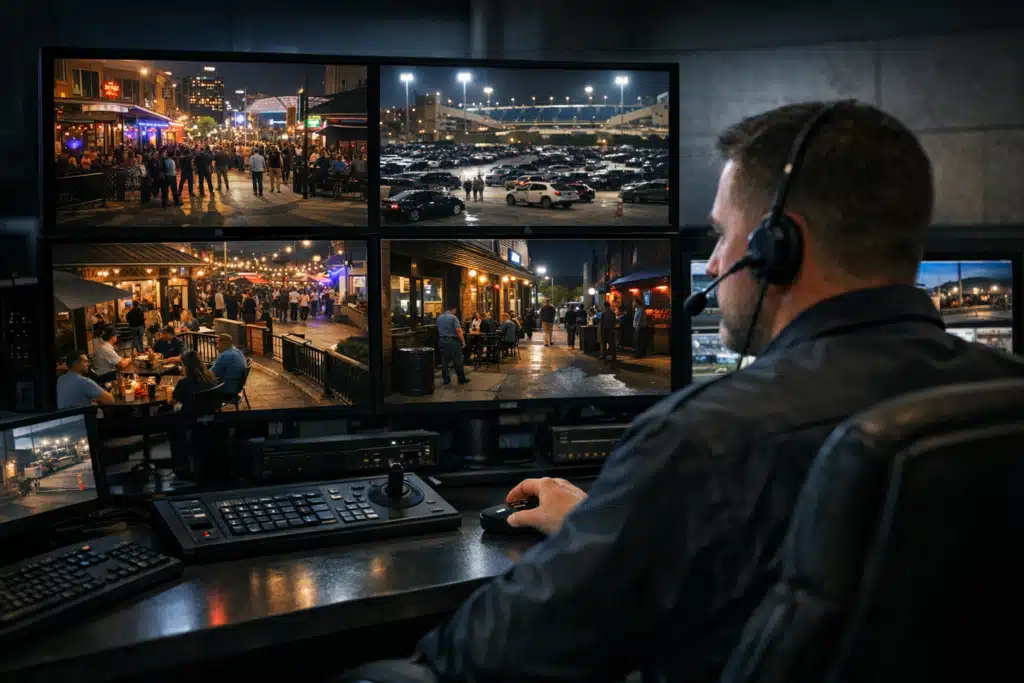
Remote surveillance places trained operators behind live camera feeds at a monitoring center. They watch multiple venue zones at once, in real time.
When an operator spots a fight forming or a break-in attempt, they act fast. They alert on-site staff, trigger audio warnings, or dispatch police with an exact location.
What Live Monitoring Catches That Cameras Alone Miss
Recorded footage only helps after something happens. Live monitoring stops incidents before they escalate.
- Loitering near closed patios flagged before a break-in begins
- Crowd surges at exits identified before a crush forms
- Aggressive confrontations spotted while intervention still matters
- Vehicle theft attempts in dark lots caught in progress
An operator speaking over a loudspeaker often ends a problem on its own. Many people leave once they know someone is watching.
A Step-by-Step Setup for Kansas City Bar and Venue Owners
Building night-time coverage takes planning around your specific layout. Follow these steps to close the gaps.
- Map your blind spots. Walk the property at 1 a.m. Note every dark corner, alley, and lot.
- Cover exit and rideshare zones. Most incidents happen where patrons leave, not enter.
- Add cameras with low-light range. Standard units fail in Crossroads alley lighting.
- Connect feeds to a live monitoring center. Recording alone will not stop a fight.
- Set audio deterrents. Speakers let operators warn trespassers directly.
- Coordinate with on-site guards. Remote eyes plus ground presence covers both scale and speed.
This layered setup fits venues from a 60-seat Westport bar to a full Power & Light block.
Midwest Weather and Night Operations
Kansas City winters bring ice, and summers bring severe storms. Both change how nightlife security works.
Icy sidewalks near closing time raise fall and liability risk. Remote operators can flag hazards and alert staff to salt walkways.
During spring storm warnings, operators monitor outdoor patios and tell managers when to move guests inside. That early warning protects people before sirens even sound.
Storm-Season Coverage Checklist
- Confirm cameras have weatherproof housing for rain and wind
- Keep backup power on monitoring feeds during outages
- Set alerts for outdoor patio zones during watches and warnings
- Have an indoor-move plan operators can trigger fast

 Posted on Google
Sports Nights Change Everything
Chiefs and Royals game days flood the metro with fans. Bars near the venues and in the Power & Light District fill hours before kickoff.
Tailgate spillover and post-game crowds stress every venue at once. Staffing for a normal Tuesday will not hold on a playoff Saturday.
Remote surveillance scales without hiring a new crew for one night. Operators add camera coverage for peak events, then return to standard levels afterward.
Game-Day Coverage Priorities
- Widen monitoring to overflow parking and street seating
- Watch entry lines for crowd-crush conditions
- Track rideshare zones as thousands leave at once
- Keep a direct line open to on-site guards and local police
Nightlife Security Costs and What Drives Them
Owners want numbers before they commit. Pricing depends on a few clear things.
- Number of camera zones: More angles mean more operator attention
- Hours of live coverage: Closing-time monitoring costs more than daytime
- On-site guard pairing: Combined coverage raises cost but cuts response time
- Event scaling: Game nights and festivals add temporary coverage
Remote monitoring usually costs less than staffing multiple guards across a large property. One operator watches zones that would need several people on foot.
Missouri and Kansas Licensing Notes
Security work in the metro crosses two states. A venue in Overland Park follows Kansas rules, and one in the Crossroads follows Missouri and Kansas City ordinances.
Guard licensing and alcohol-service security requirements differ across the state line. Work with a provider that holds proper credentials on both sides.
Twin City Security Kansas City operates across the metro and knows the local rules for each jurisdiction.
Bringing It Together for Your Venue
Kansas City nightlife draws big crowds, and those crowds bring real risk after dark. Remote surveillance gives you live eyes on parking lots, exits, and alleys that no single doorman can cover.
Paired with on-site guards and weather-aware planning, live monitoring stops trouble before it starts. That protects your patrons, your staff, and your license.
Ready to protect your Kansas City venue? Call Twin City Security Kansas City at 913‑831‑2525 or email Kansas@TwinCitySecurity.com for a night-time security assessment.
Sources
- FBI – Uniform Crime Reporting Program
- Kansas City Missouri Police Department – Crime Data
- National Weather Service – Kansas City/Pleasant Hill Office
- Missouri Division of Professional Registration – Licensing
Kansas City's nightlife scene requires enhanced security measures beyond traditional doormen. Remote surveillance provides real-time monitoring of high-risk areas, helping to prevent incidents before they escalate.
- Nightlife crime often occurs in parking lots and alleys, particularly after closing time. Kansas City has a higher violent crime rate compared to other mid-size U.S. cities.
- Remote surveillance allows trained operators to monitor multiple areas simultaneously, alerting on-site staff and authorities when necessary.
- This system can adapt for busy events, scaling coverage without the need for additional staff, ensuring safety during peak times.
Recent Posts