
How to Leverage Remote Surveillance for Kansas City’s Tornado Evacuation Zones
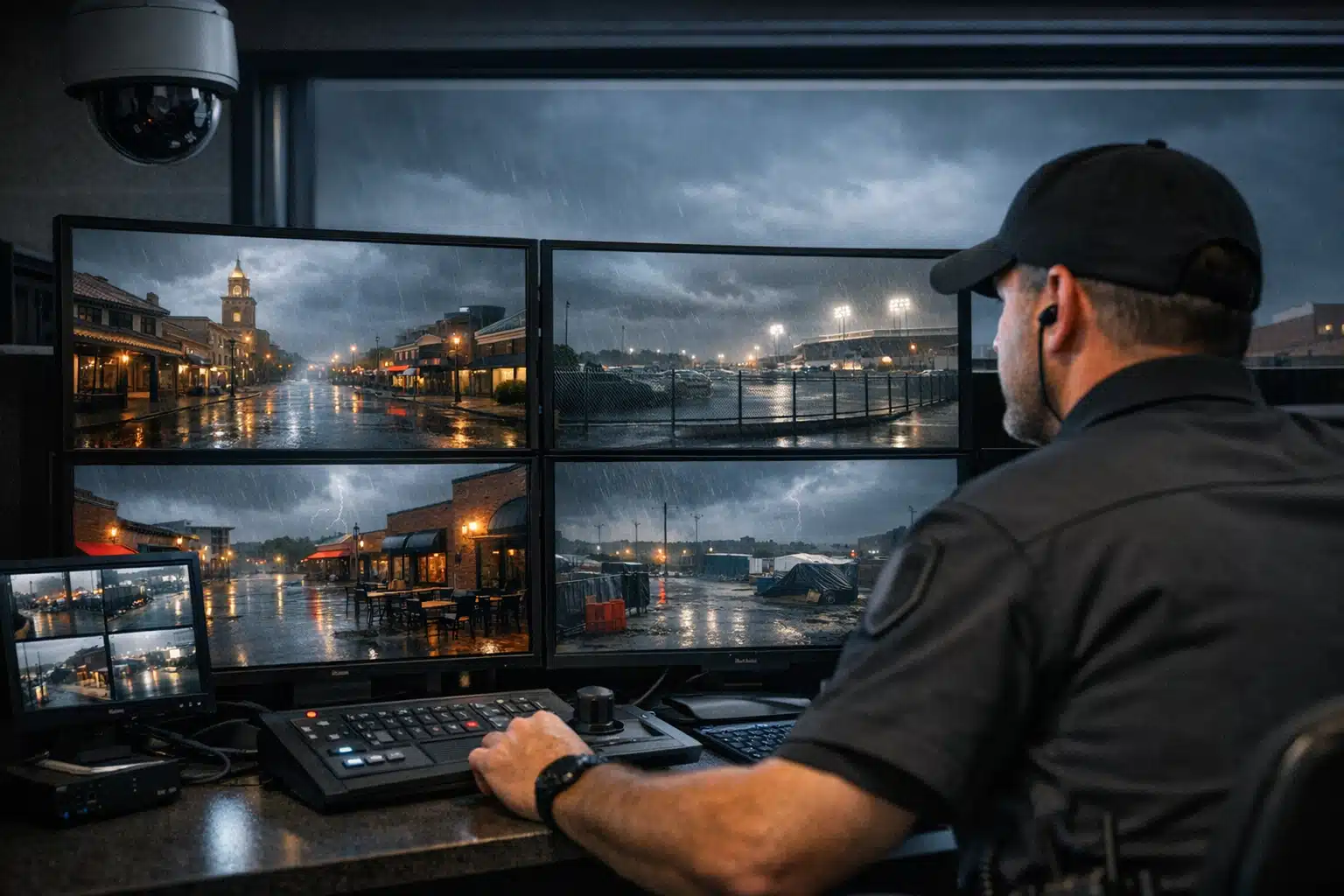
Remote surveillance plays a vital role during tornado evacuations in Kansas City by monitoring properties that are left behind when staff evacuate. This technology ensures that evacuated sites are continuously observed, providing security and peace of mind when human presence is not possible due to dangerous conditions.
Kansas City sits inside Tornado Alley, and Jackson County averages several tornado warnings each spring. When sirens sound, your staff evacuate, but your property stays behind. Remote surveillance fills the gap, watching evacuated sites across Kansas City when no human can safely remain on-site.
This post explains how remote video monitoring protects empty buildings during a tornado evacuation. You will learn what cameras catch during storms, how looting patterns shift after severe weather, and which Kansas City areas face the highest risk.
Why Tornado Evacuation Zones Need Remote Surveillance
An evacuated property is an exposed property. Once your team leaves for a shelter, open doors and shattered windows invite theft.
Storm chasers are not the only people out in bad weather. Opportunistic thieves track National Weather Service warnings and move into evacuated districts.
Remote surveillance lets trained operators watch your site from a secure off-site center. They see break-ins, flooding, and structural damage as it happens.
What On-Site Guards Cannot Do During a Tornado
OSHA requires that workers shelter during tornado warnings. A guard standing post in a parking lot during 70 mph winds breaks safety rules and risks their life.
Remote monitoring removes that conflict. Here is what changes when cameras replace a physical post during storms:
- Zero human exposure to flying debris or collapsing structures
- Continuous coverage even when roads flood and guards cannot reach the site
- Instant records of storm damage for insurance claims
- Live alerts sent to owners and first responders
Kansas City Areas Most Exposed to Storm-Season Theft
Certain Kansas City districts carry higher risk during tornado season. Dense commercial zones and open construction sites top the list.
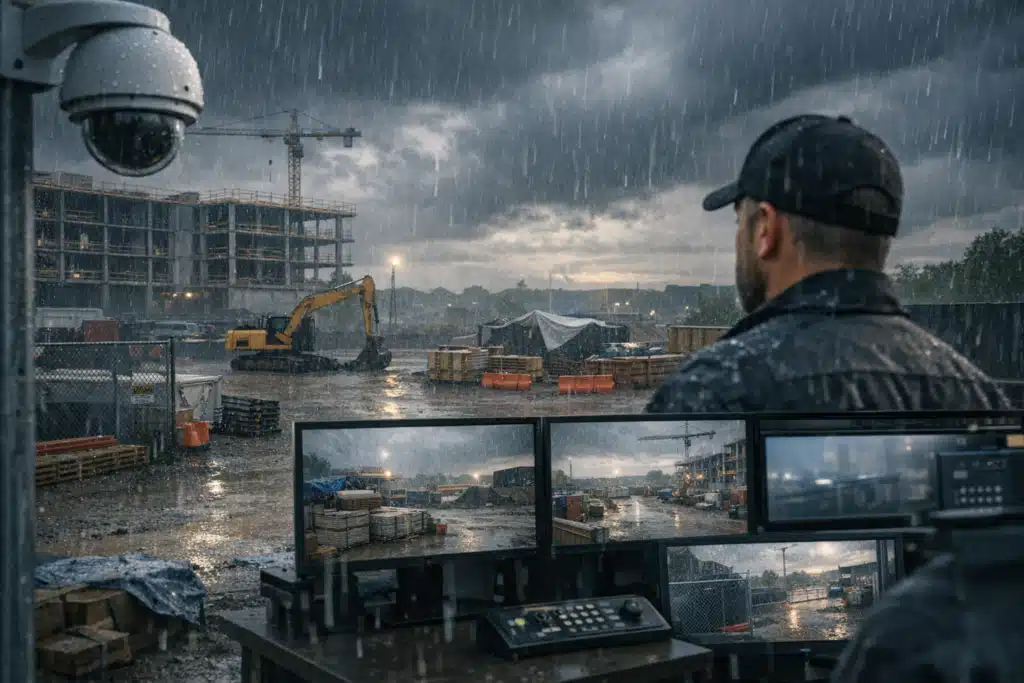
Construction Sites in Overland Park and the Northland
Active construction sites hold copper wire, generators, and heavy equipment. Crews leave fast when a warning hits, and the site sits open for hours.
Copper theft spikes after storms knock out power and distract police. Remote cameras with thermal detection flag intruders moving between material stacks at night.
The Crossroads and Power & Light District
The Crossroads Arts District packs galleries, bars, and retail into tight blocks. After a storm clears a crowd, broken storefronts draw smash-and-grab theft.
Power & Light empties quickly during a warning. Remote operators watch entrances and alert staff before they return to a compromised space.
The Kansas City BBQ District
Barbecue joints store expensive smokers, meat inventory, and cash drawers. A tornado warning on a busy Saturday scatters patrons and staff within minutes.
Remote surveillance tracks back-door activity and freezer rooms while the building sits empty. Operators confirm whether a power loss threatens thousands in spoiled inventory.
How Remote Surveillance Works During a Tornado Evacuation
Remote surveillance pairs on-site cameras with a staffed monitoring center outside the storm path. Operators watch feeds from a safe location miles away.
Follow these steps to protect a Kansas City property during severe weather:
- Map your evacuation zones. Mark which cameras cover exits, inventory rooms, and equipment yards.
- Set storm-mode triggers. Monitoring shifts to high alert when NWS issues a Jackson County warning.
- Confirm staff departure. Operators verify the site is empty and arm perimeter detection.
- Monitor live during the event. Operators log intrusions, flooding, and roof damage.
- Dispatch response. Verified threats trigger calls to KCPD or your emergency contacts.
- Document the aftermath. Recorded footage supports insurance and safe-reentry decisions.
Thermal and Low-Light Cameras for Dark, Stormy Conditions
Tornadoes strike with heavy rain and failing power grids. Standard cameras go blind in those conditions.
Thermal imaging reads heat signatures regardless of rain or darkness. An operator spots a person climbing a fence even when the lights are out across the block.
Post-Storm Risk: The Window When Theft Peaks
The hours after a tornado passes carry the highest theft risk. Power stays down, police handle rescue calls, and sites sit wide open.
FEMA documents that disaster-struck areas face elevated looting and fraud in the recovery window. Empty commercial blocks become easy targets.
Remote operators keep watching after the sirens stop. They cover the gap between the all-clear and the moment your staff safely return.
Protecting Inventory and Equipment Before Reentry
Managers should never rush back into a damaged building. Gas leaks and unstable walls make early entry dangerous.
Remote footage answers key questions before anyone walks in:
- Did the roof hold, or is there water pouring inside?
- Are exterior doors breached or still secure?
- Has anyone entered the property during the blackout?
- Is equipment still in place or missing?

 Posted on Google
Missouri and Kansas Considerations for Storm-Zone Monitoring
Kansas City businesses span two states, and both touch security rules. Missouri and Kansas regulate private security licensing separately.
Remote monitoring reduces staffing demands across both state lines during a regional storm event. One center can watch a Westport bar and an Overland Park warehouse at once.
Insurance Documentation That Holds Up
Timestamped footage strengthens storm-damage claims. Adjusters want proof of when damage occurred and whether theft followed.
Remote surveillance archives give property owners a clear timeline. That record speeds payouts and reduces disputes over cause.
Combining Remote Surveillance With On-Site Guards
Remote monitoring and physical patrols work best as a pair. Guards cover daily access control, and cameras cover the moments humans cannot.
During a tornado warning, guards evacuate safely and cameras take over. Once the all-clear sounds, guards return to secure doors and manage reentry.
This handoff keeps your Kansas City property covered from the first siren to the final insurance report.
Conclusion
Tornado evacuation leaves your Kansas City property undefended at the exact moment theft risk climbs. Remote surveillance watches evacuated sites, documents storm damage, and flags intruders when no one can stay on-site. Pairing live monitoring with trained guards closes the gap from siren to reentry.
Twin City Security Kansas City builds storm-zone monitoring plans for construction sites, BBQ district retailers, and entertainment venues across the metro. Call 913‑831‑2525 or email Kansas@TwinCitySecurity.com for a Kansas City security assessment.
Sources
- National Weather Service – Kansas City/Pleasant Hill Forecast Office
- OSHA – Tornado Preparedness and Response
- FEMA – Disaster Recovery and Fraud Prevention
Kansas City, located in Tornado Alley, faces significant risks during tornado evacuations, making remote surveillance essential for protecting properties. This system monitors evacuated sites, deters theft, and documents storm damage when human presence is unsafe.
- Remote surveillance provides continuous monitoring of properties during tornado warnings. It helps prevent theft and records damage in real-time.
- Certain areas, like construction sites and commercial districts, are particularly vulnerable during storms. Remote cameras can detect intrusions even in poor visibility.
- Combining remote monitoring with on-site guards enhances security. Guards evacuate during warnings while cameras maintain oversight until it is safe to return.
Recent Posts