
How to Protect Your Kansas City Warehouse from Summer Heat Risks
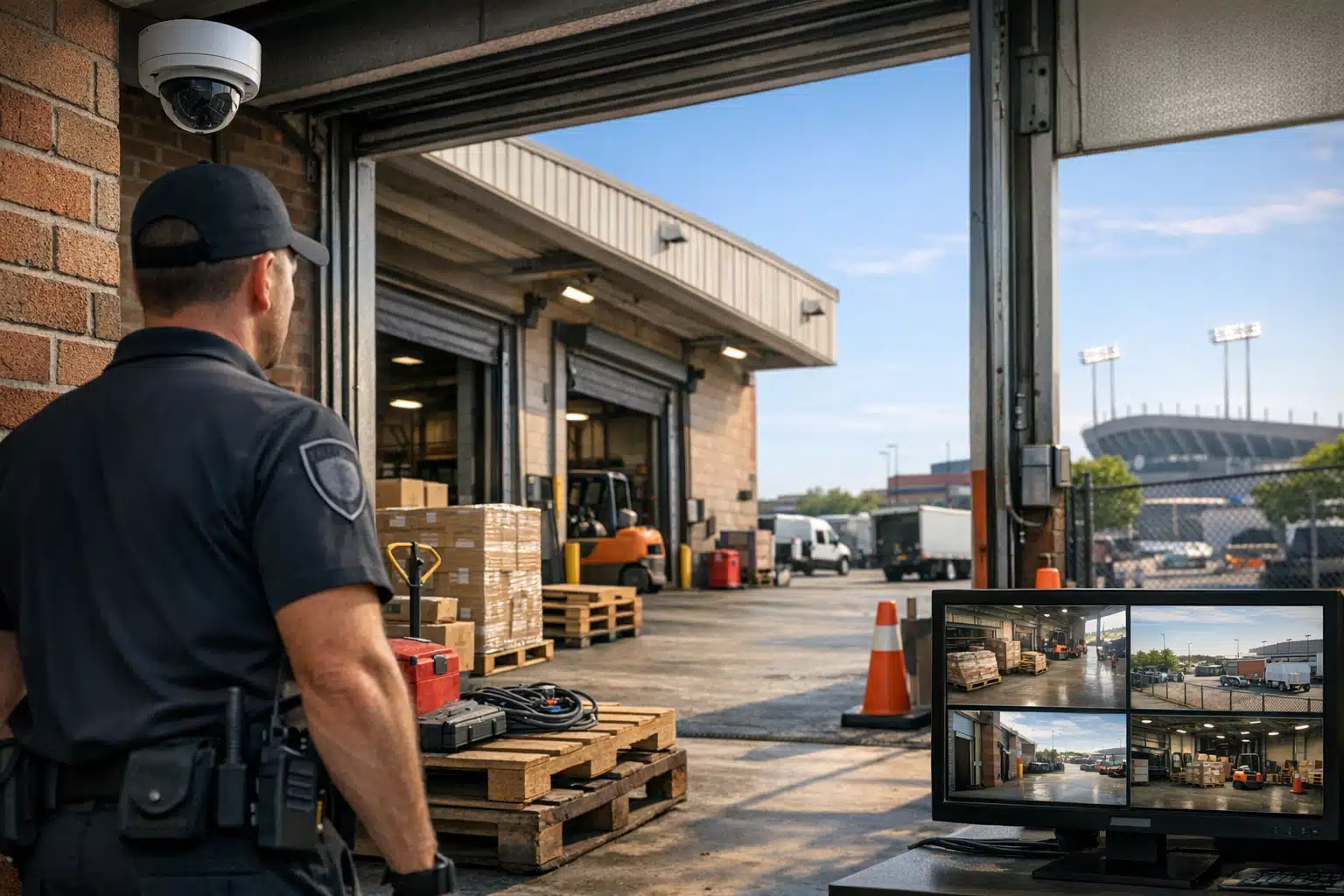
To protect your Kansas City warehouse from summer heat risks, consider installing insulation, using reflective roofing materials, and implementing ventilation systems. Additionally, maintaining air conditioning and monitoring indoor temperatures can help safeguard inventory and ensure a comfortable working environment for employees.
Why Summer Heat Puts Kansas City Warehouses at Risk
Kansas City summers push warehouse temperatures past 100°F inside metal-roofed buildings near the Central Industrial District. That heat damages inventory, exhausts workers, and quietly breaks the systems meant to protect your property.
Warehouse security weakens most in July and August. Cameras overheat, guards fatigue faster, and loading docks stay propped open for airflow.
This post covers how heat creates security gaps, what fails first, and steps to keep your Kansas City facility protected during the hottest months.
How Summer Heat Creates Warehouse Security Gaps
Heat does not just threaten comfort. It creates openings that thieves and trespassers watch for.
Propped-Open Doors and Docks
Warehouses without strong HVAC prop open bay doors to move air. Crews near the East Bottoms and near I-70 do this constantly in August.
An open dock is an open invitation. Copper wire, tools, and pallets disappear when a door sits unattended for ten minutes.
Track every open dock door with a timed alert. Doors left open past a set limit should trigger a notification.
Camera and Equipment Failure
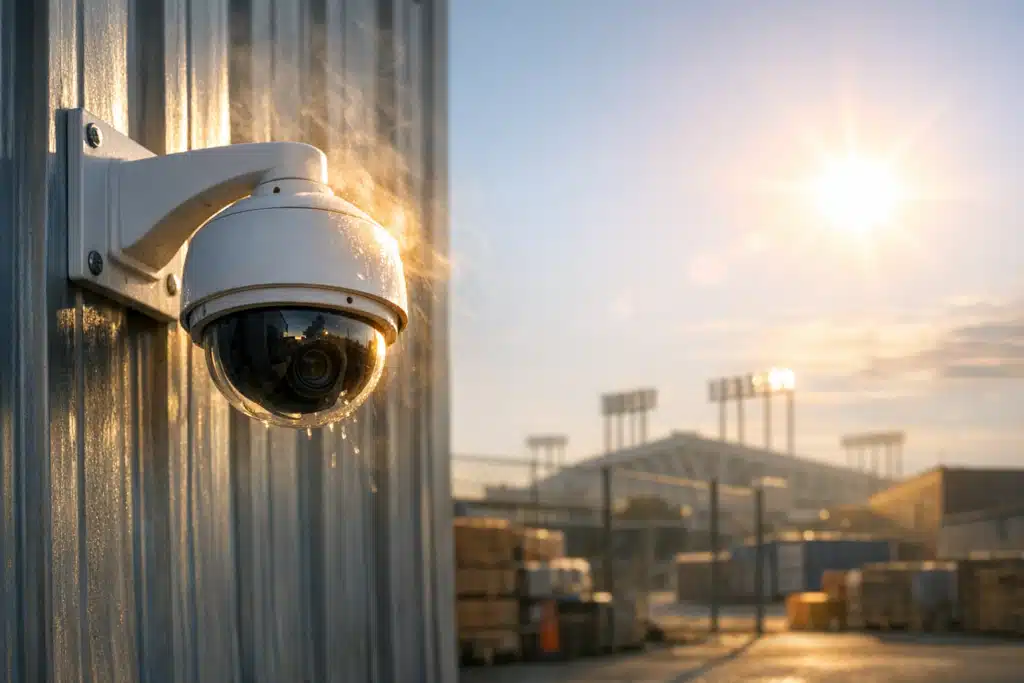
Outdoor cameras mounted on metal walls absorb direct sun. Internal temperatures climb well past manufacturer limits by early afternoon.
When a camera overheats, it reboots or drops footage. Gaps in recording line up with the exact hours crime risk peaks.
We have reviewed footage logs where a camera near a Kansas City distribution yard went dark from 2 p.m. to 5 p.m. daily. Nobody noticed until a theft occurred.
Guard Fatigue During Heat Waves
On-site guards patrolling outdoor perimeters lose focus in extreme heat. Dehydration and exhaustion slow response times.
A guard who cuts a patrol short misses the corner where fencing was cut. Heat quietly shrinks your coverage.
Warehouse Security Steps for Kansas City Summer Heat Safety
To protect your Kansas City warehouse during summer, follow these steps in order of priority.
- Audit camera placement for sun exposure. Move or shade any camera on a west- or south-facing metal wall.
- Set open-door alerts on all dock bays. Notify a monitoring team after 5 minutes of open time.
- Add remote video monitoring during peak heat hours. Cover the 1 p.m. to 6 p.m. window when guards tire fastest.
- Rotate guard patrols with shorter outdoor shifts. Pair outdoor rounds with indoor monitoring stations.
- Install temperature-rated camera housings. Look for units rated above 120°F operating range.
Remote Monitoring Beats Heat Better Than Foot Patrols
Remote video surveillance keeps eyes on your property without exposing a person to heat stroke. Monitoring agents work from a climate-controlled station.
When motion triggers a camera at a fenced lot near the Crossroads, an agent verifies the threat in seconds. No guard has to walk a 100°F perimeter every hour.
This approach fills the exact gap heat creates. Coverage stays sharp when outdoor conditions turn dangerous.
Combine On-Site Guards With Remote Cameras
The strongest setup pairs both. A guard handles physical response, and remote monitoring watches wide areas around the clock.
During a Kansas City heat wave, the guard stays inside near the docks. Remote agents cover the parking lots, fence lines, and back gates.
Protecting Warehouse Inventory From Heat and Theft Together
Heat and theft overlap in ways many operators miss. Both target the same weak points.
Climate-Sensitive Inventory Draws Attention
Warehouses storing electronics, pharmaceuticals, or food near Kansas City International handle temperature-controlled stock. A cooling failure signals a rushed, distracted staff.
Thieves watch for chaos. A crew scrambling to save spoiling product pays less attention to a side entrance.
Tie your climate alarms to your security team. A cooling failure should trigger extra camera attention, not less.
After-Hours Risk Rises in Summer
Longer daylight and warm nights bring more foot traffic near industrial zones. Vacant lots and back alleys stay active later.
Kansas City property crime tends to climb in warmer months. Warehouses left dark and quiet make easy targets.

 Posted on Google
What Kansas City Warehouse Operators Should Ask Before Summer
Before June arrives, review your setup against a short checklist.
- Do any cameras sit in direct afternoon sun without shading?
- Are dock doors monitored when propped open for airflow?
- Does your guard schedule account for heat fatigue?
- Can a remote team verify alarms without sending someone outside?
- Are camera housings rated for Kansas City summer temperatures?
Any “no” answer marks a gap worth closing before the first heat wave.
Missouri and Kansas Worker Safety Rules
OSHA guidance covers heat exposure for outdoor workers, including security staff. Employers must provide water, rest, and shade during extreme heat.
A guard patrolling your lot counts as an outdoor worker. Ignoring heat protocols creates liability beyond a security failure.
Building a Summer-Ready Warehouse Security Plan
A strong summer plan treats heat as a security variable, not a side issue. Every fix should account for both protection and safety.
Start with a walk-through in the hottest part of the day. See which doors open, which cameras strain, and where guards slow down.
Then match coverage to the risk hours. Afternoon and early evening deserve the most attention in a Kansas City warehouse.
How Twin City Security Kansas City Helps
We assess warehouse layouts across the metro, from Overland Park to the East Bottoms. Our team spots heat-driven gaps most operators overlook.
We pair on-site guards with remote video monitoring built for summer conditions. That keeps coverage steady when temperatures peak.
Conclusion
Summer heat weakens Kansas City warehouse security by breaking cameras, tiring guards, and forcing open doors. Closing those gaps before June protects both your inventory and your staff. Pair remote monitoring with on-site guards to hold coverage steady through the hottest hours.
Ready to review your warehouse before the next heat wave? Contact Twin City Security Kansas City at 913‑831‑2525 or Kansas@TwinCitySecurity.com for a Kansas City security assessment.
Sources
- OSHA – Heat Exposure and Prevention
- National Weather Service – Kansas City / Pleasant Hill Forecast Office
- FBI – Uniform Crime Reporting Program
Summer heat poses significant risks to Kansas City warehouses, impacting inventory and security. To mitigate these risks, it is essential to implement proactive measures that address both heat-related vulnerabilities and theft.
- Warehouse temperatures can exceed 100°F, leading to equipment failures and worker fatigue. Propped-open doors create easy access for thieves, increasing the risk of theft.
- Cameras may overheat and fail during peak hours, leaving gaps in surveillance when crime risk is highest. Guard fatigue can lead to reduced vigilance and slower response times.
- Implementing remote monitoring and adjusting guard schedules can enhance security during extreme heat. Regular audits of camera placements and door alerts are crucial for maintaining safety.
Recent Posts