
Protecting Kansas City’s Construction Sites from Summer Storms
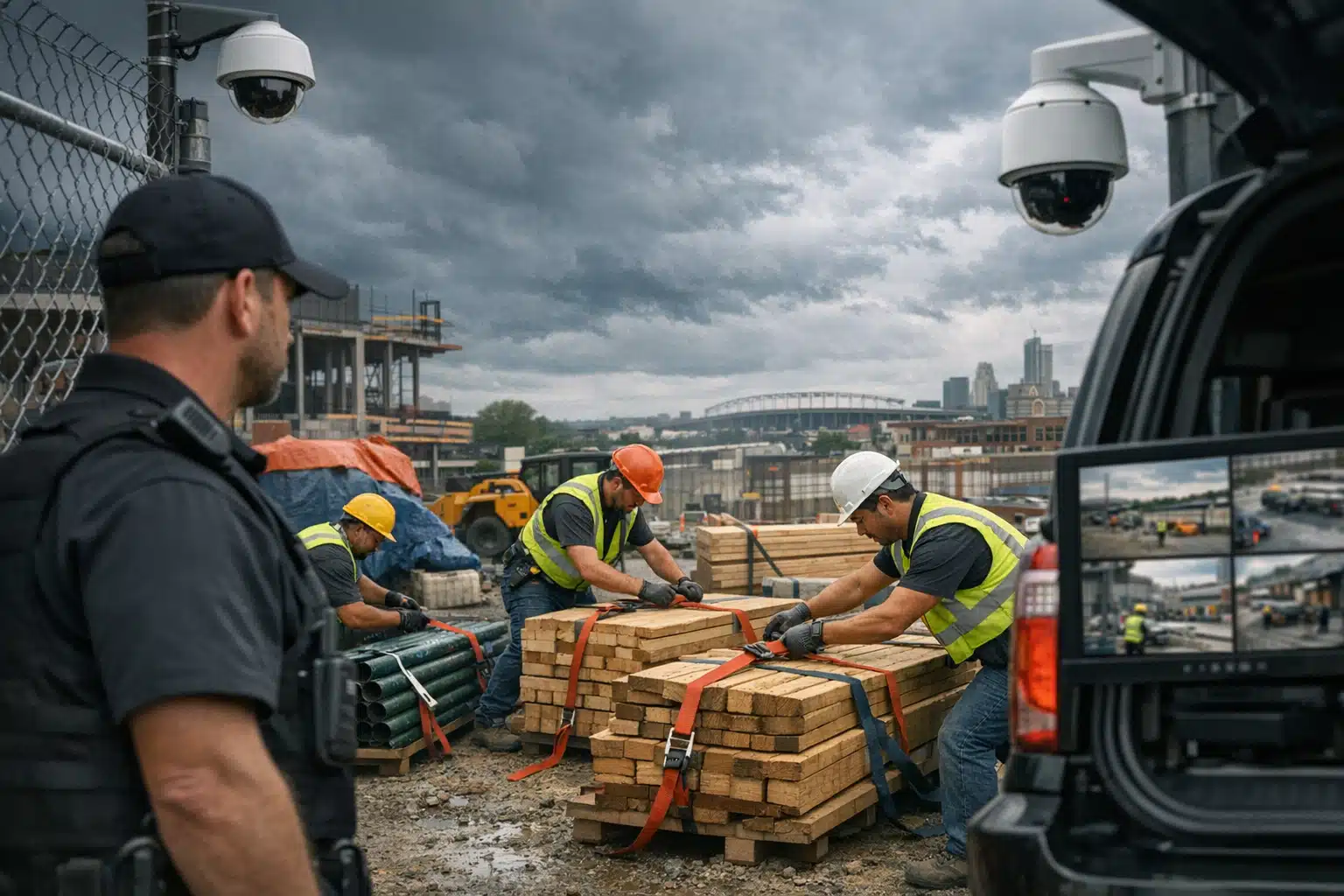
Construction sites in Kansas City face significant risks during summer storms, particularly due to the region's location in tornado alley. With Missouri averaging over 30 tornadoes annually, most occurring from April to July, strong winds, heavy rain, and potential tornadoes can cause severe damage to structures and equipment.
Why Summer Storms Put Kansas City Construction Sites at Risk
Kansas City sits in the middle of tornado alley. Missouri records over 30 tornadoes in an average year, most between April and July.
Summer storms bring more than wind damage. They create prime conditions for theft, vandalism, and equipment loss on open job sites.
Strong construction site security matters most when a storm knocks out power, scatters crews, and leaves materials exposed overnight. This post walks you through practical steps to protect Kansas City sites during the stormy months.
You will learn how thieves exploit bad weather, which physical safeguards hold up in high wind, and how remote video monitoring closes the gaps that fences alone cannot.
How Thieves Exploit Summer Storm Chaos
Criminals watch the weather forecast as closely as any project manager. A severe thunderstorm warning signals opportunity.
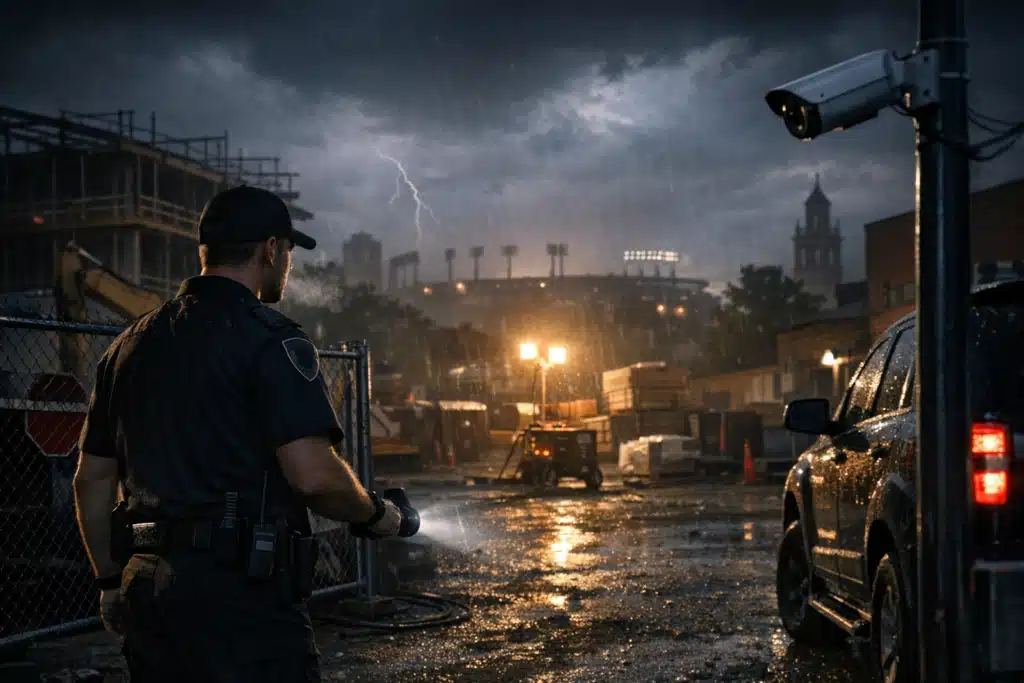
Here is why storms invite theft on KC job sites:
- Power outages disable alarms and lights. A downed line near a Crossroads redevelopment site can leave a lot dark for hours.
- Crews evacuate fast. When sirens sound, workers leave tools, copper wire, and fuel behind.
- Response times slow down. Police and fire units respond to storm emergencies first, not trespass calls.
- Storm noise masks break-ins. Thunder covers the sound of bolt cutters and truck engines.
Copper wire, catalytic converters, and portable generators are the most common targets. A single generator loss can stall a project for days.
Protecting Kansas City Construction Sites During Tornado Season
Storm protection and theft prevention overlap more than most owners realize. A site that survives 70 mph gusts also resists forced entry.
Start with the physical setup before the season peaks in June and July.
Secure and Anchor Loose Materials
Flying debris causes injury and property damage. It also creates access points when fencing collapses.
- Strap down lumber stacks and pipe bundles with ratchet ties.
- Store small tools inside locked containers rated for weather.
- Chain generators and compressors to fixed anchor points.
- Move fuel tanks to low, sheltered ground away from wind exposure.
A collapsed fence in the Berkley Riverfront zone can turn a secured lot into an open invitation overnight.
Reinforce Fencing and Access Points
Standard chain-link panels topple in straight-line winds. Anchor posts deeper and add bracing on corners.
Lock every gate with hardened padlocks, not cheap hardware-store models. Thieves cut weak locks in seconds during a downpour.
Plan for Power Loss
Battery backups keep cameras and alarms running when the grid fails. This single step defeats the most common storm-theft tactic.
Solar-powered surveillance units work well on Kansas City sites without permanent electrical hookups yet.
Remote Video Monitoring for Storm-Prone Job Sites
Remote video surveillance gives you eyes on the site when nobody can safely be there. This changes everything during summer storm protection.
Twin City Security Kansas City monitors sites live from a central station. Trained operators watch feeds, not recordings reviewed after a loss.
What Live Monitoring Catches
Motion triggers alert operators the moment someone crosses a boundary. They verify the threat before dispatching a response.
- Real-time voice warnings tell trespassers they are being watched. Most leave immediately.
- Verified alerts to police get faster response than unconfirmed alarms.
- Storm damage documentation supports insurance claims with timestamped footage.
A verified crime-in-progress call moves higher on the KC police priority list than an anonymous alarm.
Cameras That Perform in Bad Weather
Rain, fog, and hail degrade cheap cameras fast. Weather-rated units with infrared hold clear images in low visibility.
Thermal detection reads heat signatures even in heavy rain. That matters when a storm drops visibility to near zero across a large Overland Park site.
On-Site Guards Versus Remote Surveillance
Both methods protect KC construction sites. The right choice depends on site size, budget, and storm risk.
When On-Site Guards Make Sense
Large projects with active night work benefit from a physical presence. Guards manage access, log deliveries, and respond on foot.
During a lightning storm, though, guards must shelter for safety. Coverage drops exactly when risk peaks.
When Remote Monitoring Wins
Remote surveillance never takes shelter. Cameras keep watching a Power & Light adjacent site while the storm rages.
Many owners combine both. Guards cover daytime activity, and remote monitoring takes over overnight and during severe weather.

 Posted on Google
A Storm-Season Checklist for KC Site Managers
Use this sequence before every forecasted severe weather event:
- Confirm camera battery backups hold a full charge.
- Secure or store all portable equipment and tools.
- Lock and double-check every gate and container.
- Notify your monitoring provider of the storm window.
- Photograph the site layout for post-storm comparison.
- Clear drainage paths to prevent flooding of low areas.
- Verify contact numbers for after-hours emergency response.
Run this list the morning a severe weather watch appears. Waiting until the warning leaves no time.
Missouri and Kansas Rules Worth Knowing
Both states require licensed security personnel for contract guard work. Verify any provider holds current credentials on both sides of the state line.
Kansas City job sites frequently straddle Missouri and Kansas jurisdictions. A provider licensed only in one state leaves gaps.
Insurance carriers increasingly reward documented monitoring with lower premiums. Ask your carrier how verified surveillance affects your rate.
Why This Matters for Kansas City Builders
Equipment theft and storm damage delay schedules and drain budgets. A stalled project loses money every day crews cannot work.
Summer storms compress the risk window into a few violent hours. Preparation before the season pays off when the sirens sound.
Sites in the Crossroads, along the Riverfront, and across Overland Park all face the same threat pattern each June and July.
Protect Your Site Before the Next Storm Hits
Summer storms combine wind damage, power loss, and theft into one costly threat for KC construction sites. Physical safeguards, weather-rated cameras, and live remote monitoring close the gaps that open when the weather turns.
Twin City Security Kansas City builds site protection plans around your location, size, and storm exposure. Call 913‑831‑2525 or email Kansas@TwinCitySecurity.com for a Kansas City construction site security assessment.
Sources
- National Weather Service – Kansas City/Pleasant Hill Forecast Office
- NOAA Storm Prediction Center – Monthly Tornado Statistics
- National Insurance Crime Bureau – Equipment Theft Data
- OSHA – Severe Weather Preparedness for Worksites
Kansas City construction sites face significant risks from summer storms, including theft and equipment loss. Effective security measures are essential to protect these sites during severe weather events.
- Summer storms can lead to power outages that disable alarms and lights, increasing theft risks. Criminals take advantage of chaos during storms to target construction sites.
- Physical safeguards like reinforced fencing and remote video monitoring are crucial for protecting job sites from theft and damage.
- Site managers should prepare by securing equipment, verifying camera functionality, and notifying monitoring providers before severe weather events.
Recent Posts