
The Role of Security Guards in Kansas City’s Busy Power & Light District
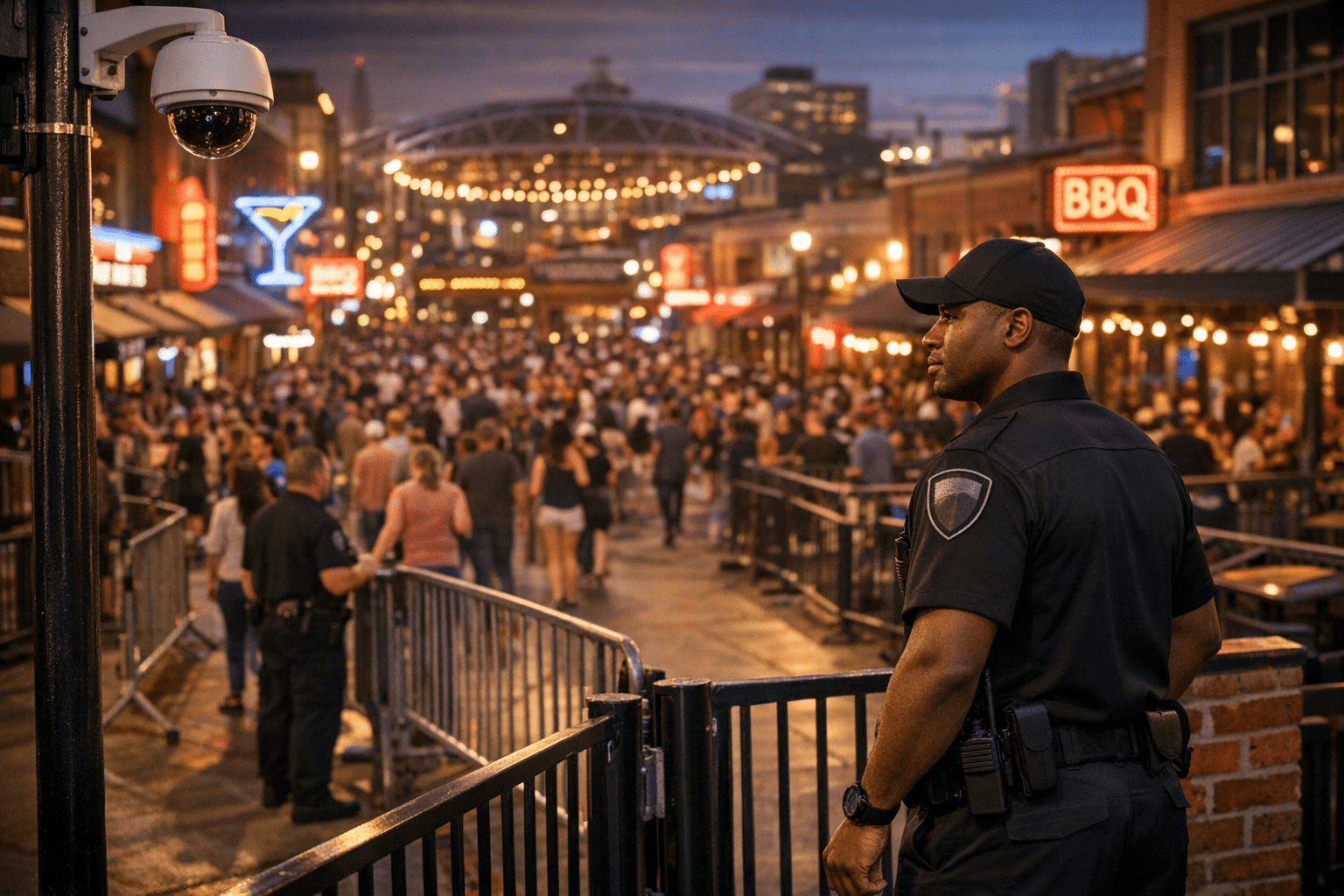
Security guards in Kansas City's Power & Light District are essential for maintaining safety and order among the large crowds that gather during major events. They monitor the area, respond to incidents, and ensure a secure environment for visitors enjoying the various retail, dining, and entertainment options available.
Why Power & Light District Security Guards Are Essential
Kansas City’s Power & Light District hosts over 40,000 visitors during major events. This downtown entertainment hub spans nine city blocks and includes retail stores, restaurants, bars, and concert venues. Security guards play a critical role in maintaining safety across this complex environment.
The district’s unique challenges require specialized security expertise. High foot traffic, multiple venue types, and late-night operations create security demands unlike typical Kansas City neighborhoods.
Property managers and business owners in the Power & Light District face specific risks that trained security professionals address daily.
Core Responsibilities of Security Guards in Entertainment Districts
Crowd management represents the primary duty during peak hours and special events. Security guards monitor entry points, manage line flow, and prevent overcrowding in venues.

Retail theft prevention requires constant vigilance in the district’s shopping areas. Guards patrol storefronts, monitor suspicious activity, and coordinate with loss prevention teams.
Emergency response coordination becomes crucial when incidents occur. Security guards serve as first responders and communication links to Kansas City Police Department and emergency services.
Event Security Operations
Concert nights and sporting events generate the highest security demands. Guards manage crowd flow between venues and parking areas.
Special event security requires additional staffing and coordination. Chiefs playoff celebrations and New Year’s Eve festivities can draw massive crowds to the district.
Weather-related evacuations need immediate response during severe thunderstorm warnings common in Kansas City’s spring months.
Retail and Business Protection Strategies
Store security involves both visible deterrence and discrete monitoring. Security guards position themselves strategically to observe customer behavior while maintaining welcoming atmospheres.
After-hours protection covers building security when businesses close. Guards conduct perimeter checks and monitor alarm systems throughout the night.
Coordinated patrols between multiple properties maximize coverage efficiency. Teams communicate via radio to share real-time security updates across the district.
Theft Prevention Techniques
Visual deterrence through uniformed presence reduces opportunistic theft attempts. Guards maintain professional appearances while staying alert to suspicious activities.
Loss prevention collaboration involves working closely with store employees and managers. Guards receive briefings on current theft trends and target items.
Documentation and reporting ensure proper evidence collection when incidents occur. Detailed incident reports support prosecution efforts and insurance claims.
Managing Nightlife Safety Challenges
Bar and restaurant security requires specialized training in conflict de-escalation. Guards handle intoxicated patrons while maintaining safe environments for all guests.
Late-night crowd dispersal needs careful management to prevent street-level conflicts. Security teams coordinate patron flow from multiple venues simultaneously.
Parking area safety becomes critical as visitors return to vehicles. Guards patrol parking structures and surface lots to prevent vehicle break-ins.
Alcohol-Related Incident Management
Intoxication assessment helps guards identify patrons who need assistance or removal. Training covers Missouri liquor laws and establishment policies.
Conflict prevention involves recognizing escalating situations before violence occurs. Guards use verbal de-escalation techniques and position themselves strategically.
Medical emergency response includes basic first aid and coordination with Kansas City emergency medical services.
Technology Integration for Enhanced Security
CCTV monitoring complements physical guard presence throughout the district. Remote surveillance systems provide real-time coverage of blind spots and entry points.
Radio communication networks connect security teams across multiple properties. Instant communication enables rapid response to developing situations.
Access control systems work alongside guards to manage building entry. Electronic locks and key card systems provide additional security layers.
Mobile Security Applications
Digital incident reporting streamlines documentation and communication. Guards use mobile devices to file reports and share photos with supervisors.
GPS tracking ensures optimal patrol coverage and response times. Supervisors monitor guard locations and adjust assignments based on real-time needs.
Emergency alert systems connect guards directly to Kansas City emergency services when situations require immediate backup.

 Posted on Google
Seasonal Security Considerations
Summer festival season brings increased crowds and extended hours. Additional security staffing covers outdoor events and extended venue operations.
Holiday shopping periods require enhanced retail security measures. Guards adapt to longer store hours and increased merchandise theft attempts.
Weather-related challenges include severe thunderstorm and tornado preparedness. Security teams coordinate emergency evacuations and shelter procedures.
Special Event Coordination
Chiefs game day activities generate significant district traffic. Security plans account for pre-game and post-game crowd surges.
Concert venue security scales up for major touring acts. Additional guards handle increased capacity and merchandise sales areas.
New Year’s Eve operations require comprehensive security coverage. Teams prepare for peak crowd levels and extended celebration hours.
Training Requirements for District Security Guards
Missouri security guard licensing provides the foundation for professional service. Guards complete state-required training covering legal authority and emergency procedures.
Specialized entertainment district training addresses unique challenges. Programs cover crowd psychology, conflict de-escalation, and venue-specific protocols.
Ongoing education keeps guards current on evolving security threats and techniques. Regular training updates cover new technologies and emerging crime trends.
Professional Development Areas
Customer service skills balance security duties with positive guest experiences. Guards learn to provide directions and assistance while maintaining vigilance.
Emergency medical training prepares guards for health-related incidents. Basic CPR and first aid certifications enable immediate assistance until paramedics arrive.
Legal knowledge covers authority limits and proper procedures. Guards understand Missouri laws regarding detention, search, and use of force.
Measuring Security Effectiveness
Incident reduction metrics track security program success over time. Comparing crime statistics before and after security implementation demonstrates value.
Response time measurements ensure rapid emergency assistance. Guards aim for sub-three-minute response times to incidents within the district.
Customer satisfaction surveys gauge public perception of safety and security. Positive feedback indicates effective guard performance and professional conduct.
Key Performance Indicators
- Incident prevention rate: Reduction in theft and vandalism reports
- Emergency response times: Average time from alert to guard arrival
- Patrol completion rates: Scheduled rounds completed on time
- Customer interaction scores: Feedback on guard professionalism and helpfulness
- Training compliance: Guard certification and continuing education completion
Cost-Benefit Analysis of Professional Security
Security investment costs significantly less than potential losses from theft, vandalism, and liability claims. Professional guards provide measurable return on investment through loss prevention.
Insurance premium reductions often offset security expenses. Many insurers offer discounts for properties with professional security coverage.
Business reputation protection maintains customer confidence and repeat visits. Visible security presence encourages patrons to feel safe returning to district establishments.
Professional security guards provide essential protection for Kansas City’s bustling Power & Light District. Their specialized training and local expertise ensure safe environments for visitors and businesses alike. Contact Twin City Security Kansas City at 913‑831‑2525 or Kansas@TwinCitySecurity.com for comprehensive district security assessments tailored to your property’s unique needs.
Sources
- Bureau of Justice Statistics – Commercial Crime Victimization
- Missouri Department of Public Safety – Private Security Division
- ASIS International – Security Industry Standards
- FBI Uniform Crime Reporting – Property Crime Statistics
Security guards are vital to maintaining safety in Kansas City's Power & Light District, which attracts over 40,000 visitors during major events. Their specialized training and expertise address the unique security challenges posed by high foot traffic and diverse venues.
- Crowd management is a primary duty, especially during peak hours and events. Guards monitor entry points and manage line flow to prevent overcrowding.
- Retail theft prevention involves constant vigilance, with guards patrolling storefronts and coordinating with loss prevention teams.
- Emergency response coordination is crucial, as guards act as first responders and communicate with local police and emergency services.
Recent Posts