
Why Kansas City’s Businesses Should Consider 24/7 Monitoring This Fall
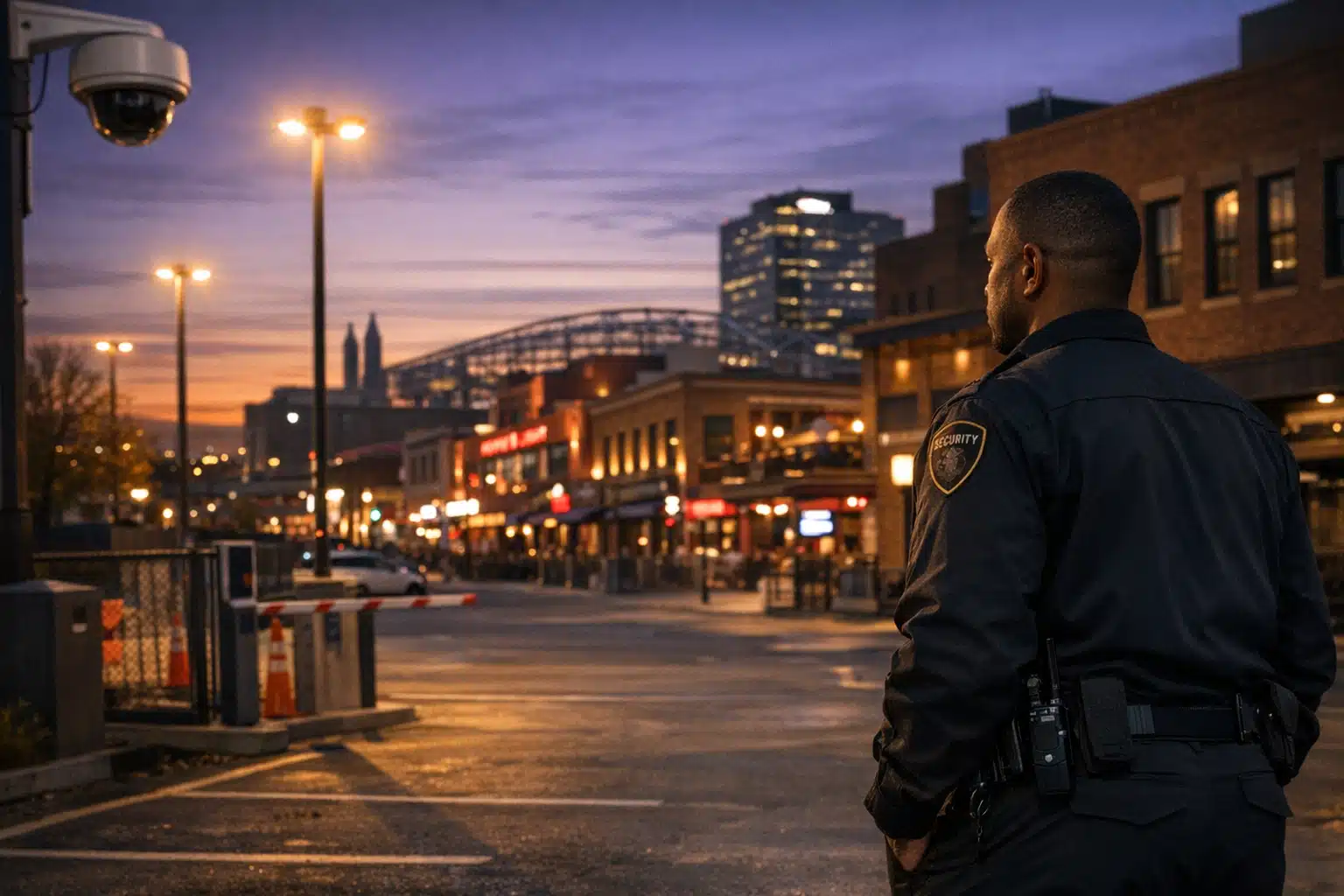
Kansas City businesses should consider 24/7 monitoring in the fall because property crime tends to increase as daylight hours decrease. With shorter days creating more hours of darkness, continuous surveillance can help protect storefronts, lots, and job sites from potential criminal activity during this vulnerable period.
Property crime climbs in Kansas City once daylight shrinks after the fall time change. Shorter days mean more hours of darkness around your storefront, lot, or job site. That gap is exactly why 24/7 monitoring matters more from September to December than any other stretch of the year.
Fall stacks three risks on top of each other in the metro. Chiefs and Royals crowds move business security down the priority list. Tailgate traffic clogs the roads near your property. And early-season storms can knock out power right when you need cameras most.
This post breaks down what changes in fall, where the gaps show up, and how continuous coverage closes them.
Why Fall Changes the Risk Picture for Kansas City Businesses
Darkness arrives earlier each week after the November clock change. Your afternoon rush now ends in the dark. Thieves gain hours of cover that did not exist in July.
Three fall patterns raise exposure for local operators:
- Earlier sunsets: Downtown lots near the Power & Light District empty into darkness by 5 p.m.
- Event surges: Chiefs home games pull foot traffic and police attention toward Arrowhead.
- Storm season tail: Missouri and Kansas see severe weather well into October.
Each pattern creates a window. Stacked together, they create a season.
The Time-Change Effect on Retail and Restaurants
Westport and Crossroads bars see later, rowdier nights once the weather cools. Closing staff walk to cars in the dark. Cash handling after midnight becomes a real concern.
Continuous video gives owners eyes on back doors and alleys during those closing hours. A remote operator watches when your team is busy counting the drawer.
How 24/7 Monitoring Protects Kansas City Sports Venue Crowds
Sports venue security requires coverage that scales up for game day and stays active afterward. The parking lots around Arrowhead and Kauffman fill hours before kickoff. They empty into darkness long after the final out.
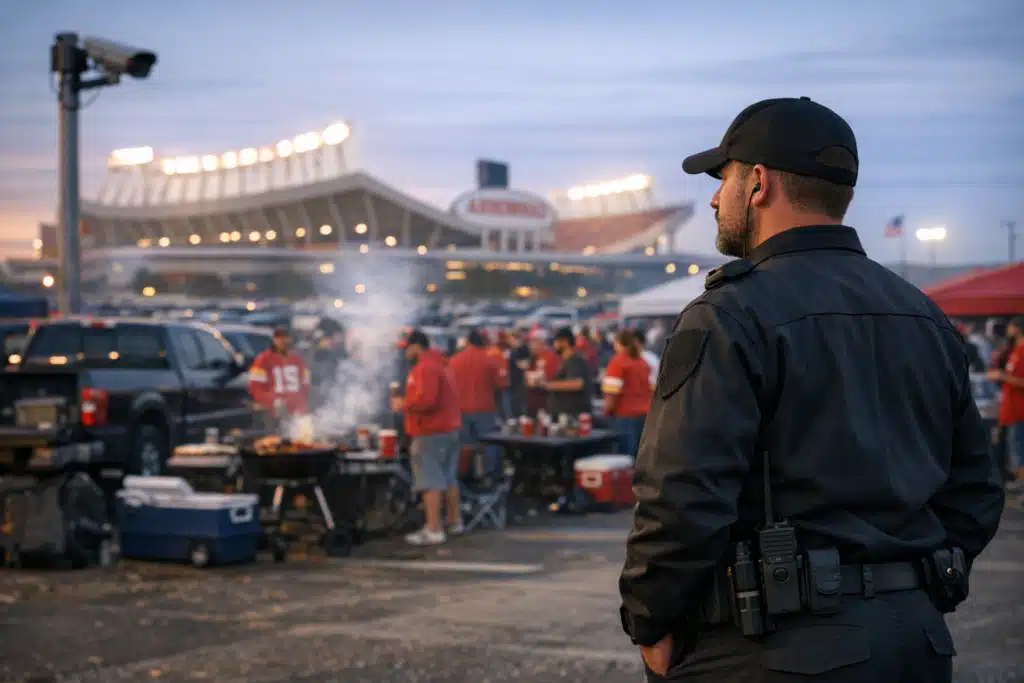
Tailgate zones bring their own problems:
- Crowd density makes vehicle theft and break-ins easier to hide.
- Alcohol service raises the odds of confrontation in lots.
- Post-event exits scatter staff attention across a wide area.
Remote operators track multiple camera feeds at once during these events. On-site guards handle the moments that need a physical presence. The two layers cover ground no single method can.
What Happens After the Crowd Leaves
The riskiest hours start once the stadium lights dim. Empty lots, unattended equipment, and tired staff create openings. A guard or an operator watching live feeds catches trouble before it spreads.
BBQ District and Restaurant Row Face Fall Theft Pressure
Kansas City’s barbecue spots draw steady crowds through football season. That foot traffic brings cash, deliveries, and equipment worth protecting. Grease theft, dumpster scavenging, and after-hours break-ins all climb when nights grow long.
Restaurant owners face specific fall concerns:
- Used cooking oil theft from rear collection tanks, a real black-market target.
- Delivery-window gaps when back doors stay propped open.
- Patio equipment left out as outdoor dining winds down.
Continuous video at loading docks and rear lots records every approach. An operator can speak over a live audio system to warn off an intruder in real time.
Construction Sites and Midwest Storm Season
To protect a Kansas City construction site this fall, plan for both theft and weather. Copper, tools, and fuel vanish from unguarded lots overnight. Severe storms can scatter materials and cut power across the metro.
Follow these steps to keep a fall job site covered:
- Map your blind spots before placing cameras or guards.
- Add battery backup so feeds survive a storm outage.
- Set alert zones around material storage and fuel tanks.
- Combine patrols with remote video for full-perimeter coverage.
Remote monitoring keeps watching when wind or hail drives everyone indoors. That continuity matters when a storm clears and scavengers move in.
Weather Alerts Tied to Live Monitoring
A monitored site pairs camera feeds with regional weather warnings. Operators can flag flooding risk near low-lying Crossroads lots. They log storm damage for insurance before anyone sets foot back on site.
Apartment Communities Need Fall Coverage Too
Residential property managers across Overland Park and the Plaza face package theft in fall. Online orders climb as the holidays approach. Lobbies, mailrooms, and parking garages become targets.
24/7 monitoring at an apartment community covers:
- Package rooms during peak delivery hours.
- Garage entries where tailgating vehicles slip in.
- Amenity spaces that empty out as the weather cools.
Residents want to feel safe walking to their cars after dark. Visible cameras and active monitoring answer that concern directly.

 Posted on Google
On-Site Guards Versus Remote Video: Which Fits Your Property?
Both methods have strengths. The right mix depends on your property type, hours, and budget. Here is how they compare for fall coverage.
On-Site Security Guards
- Physical presence deters crowds and confrontations.
- Best for game-day venues, large lots, and events.
- Handle access control and direct resident contact.
Remote Video Monitoring
- Watches multiple feeds across one or many sites.
- Lower cost for overnight and off-hour coverage.
- Live audio warnings stop intruders before they act.
Many Kansas City properties run both. Guards cover peak hours and crowds. Remote operators cover the long, dark, quiet stretches when staff go home.
What to Ask Before Hiring Fall Security in Kansas City
A good assessment starts with questions about your real exposure. Use this checklist when you talk to a provider:
- Does coverage adjust for game-day and event surges?
- Do cameras include battery backup for storm outages?
- Can operators issue live audio warnings?
- Are guards licensed under Missouri and Kansas rules?
- How fast do operators escalate to local police?
The answers tell you whether a provider knows the metro or reads from a script.
Get a Fall Security Assessment for Your Kansas City Property
Fall brings earlier darkness, bigger crowds, and late-season storms all at once. 24/7 monitoring closes the gaps that open between September and December. The right mix of guards and remote video keeps your property covered when attention is pulled elsewhere.
Twin City Security Kansas City builds coverage around your property, hours, and budget. Call 913‑831‑2525 or email Kansas@TwinCitySecurity.com for a fall security assessment and monitoring quote.
Sources
- FBI – Uniform Crime Reporting Program
- National Weather Service – Kansas City/Pleasant Hill Forecast Office
- Kansas City Missouri Police Department – Crime Statistics
Kansas City businesses face increased property crime risks during the fall due to shorter days and event crowds. Implementing 24/7 monitoring can help mitigate these risks and enhance security during this vulnerable season.
- Property crime rises in Kansas City as daylight decreases, creating more opportunities for theft.
- Fall brings unique challenges such as event surges and severe weather that can disrupt security.
- 24/7 monitoring provides continuous coverage, helping businesses protect their assets and ensure safety.
Recent Posts