
How Kansas City’s BBQ District Can Enhance Security with Remote Surveillance
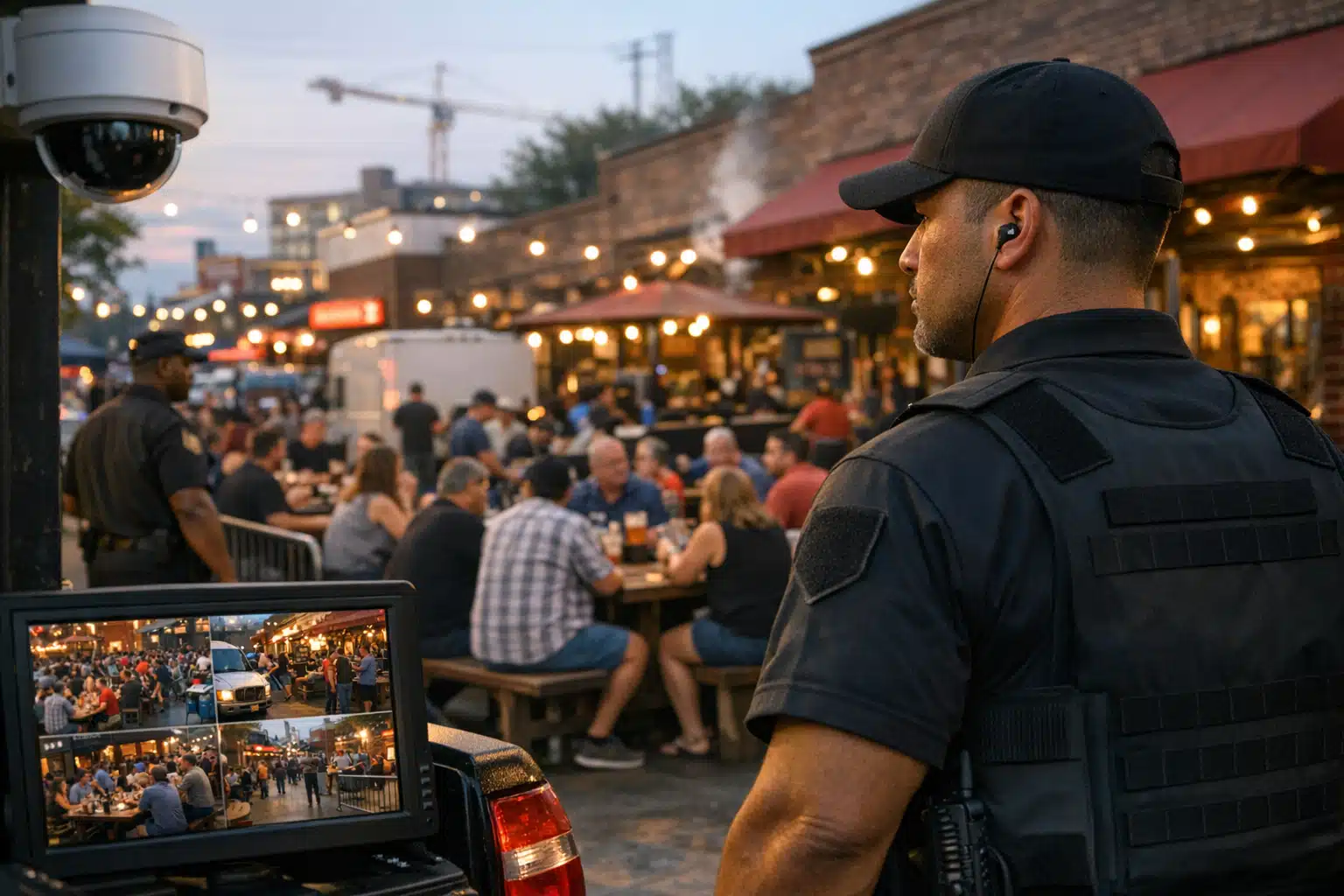
Remote surveillance enhances security in Kansas City's BBQ District by providing owners with constant monitoring of their properties, especially during peak foot traffic times. This technology helps deter theft, vandalism, and after-hours break-ins, ensuring that restaurants and retail spaces remain safe and secure amidst the bustling activity in the area.
Remote surveillance gives Kansas City BBQ district owners eyes on their property when foot traffic peaks and staff cannot watch every corner. The area around 18th & Vine and the barbecue joints scattered across the metro draw weekend crowds, delivery trucks, and late-night stragglers. That mix creates real exposure for theft, vandalism, and after-hours break-ins. This post breaks down how remote video monitoring protects your restaurant, retail space, or event venue in one of the busiest food corridors in the region.
Why BBQ District Businesses Face Specific Security Risks
Food-service districts pull in cash, high foot traffic, and valuable equipment. All three attract trouble.
Kansas City restaurants deal with smoker theft, catalytic converter cuts in back lots, and grease dumpster break-ins. Copper and metal thieves target HVAC units on flat roofs.
The BBQ district also runs on odd hours. Prep starts before dawn. Cleanup finishes past midnight. Those quiet windows are when most property crime happens.
Common threats owners report
- After-hours break-ins targeting registers and safes
- Parking lot vehicle crime during Friday and Saturday rushes
- Delivery theft when back doors sit open for loading
- Vandalism to patios, signage, and outdoor seating
- Loitering near dumpsters and side alleys after close
On-site guards help, but a single guard cannot cover a rooftop, a back lot, and a dining room at once. Remote monitoring fills those gaps.
How Remote Surveillance Protects Kansas City Food Venues
Remote surveillance uses live camera feeds watched by trained agents at an off-site monitoring center. Agents spot suspicious activity in real time and respond before damage happens.
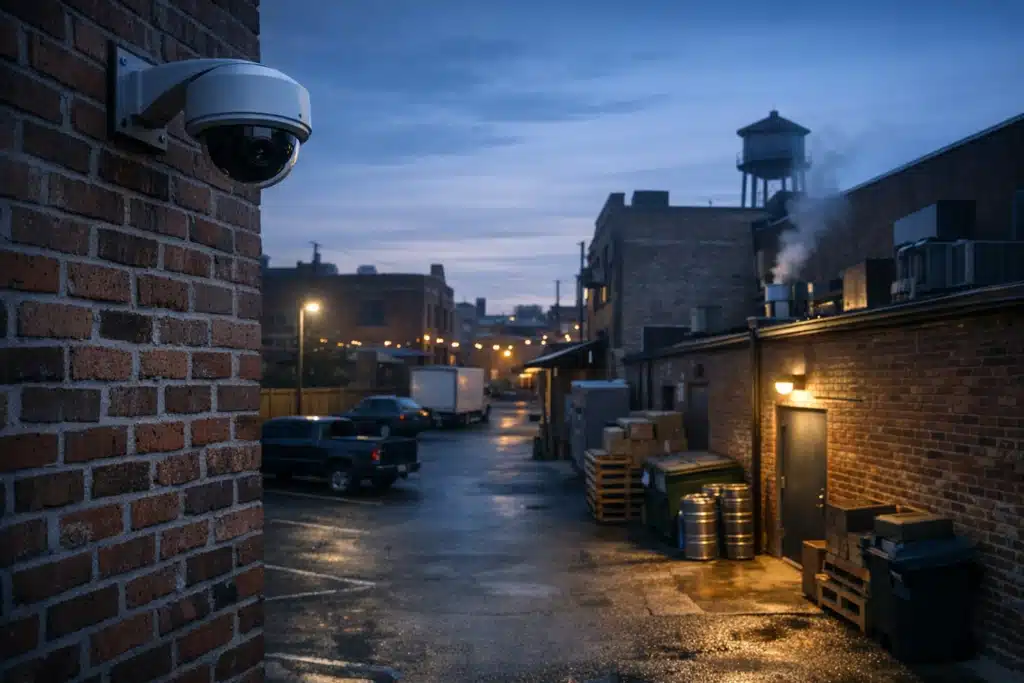
This differs from a standard camera that only records. Recorded footage helps after a crime. Live monitoring stops the crime as it starts.
What a monitoring agent does during an alert
- Detects motion in a restricted zone after hours
- Reviews the live feed to confirm a real threat
- Activates on-site speakers to warn the intruder
- Contacts Kansas City police with a live description
- Alerts the owner and logs the event with timestamped video
The speaker warning matters. A voice saying “You are being recorded” from a rooftop speaker sends most trespassers running. That single step prevents many break-ins outright.
Handling Weekend Crowds and Event Overflow
The BBQ district fills fast when the Chiefs or Royals play. Fans park anywhere, and lots overflow into private property.
Remote cameras let you watch your parking areas without pulling staff off the floor. Agents flag illegal parking, blocked exits, or crowds gathering near your entrance.
Game-day pressure points
- Parking lot capacity when Arrowhead traffic spills over
- Line control along sidewalks during dinner rushes
- Patio safety when outdoor seating fills past limits
- Cash handling visibility near registers during peak volume
A monitoring agent watching your feed can call your manager the moment a line blocks a fire exit. That keeps you compliant and keeps customers safe.
Midwest Weather and Your Security Coverage
Kansas City weather tests any security setup. Summer heat, ice storms, and tornado season all affect outdoor cameras and equipment.
Remote surveillance keeps working when staff cannot reach the property. During a severe storm warning, agents watch for roof damage, flooding at loading docks, and downed signage.
Storm-season advantages
- Remote checks during tornado warnings without risking staff
- Water intrusion alerts at back doors and basements
- Post-storm damage review using timestamped footage for insurance claims
- Power-outage monitoring on battery-backed camera systems
Ice storms knock out visibility for foot patrols. Cameras with infrared see clearly in freezing rain and darkness. That coverage protects your lot when nobody wants to stand outside.
Remote Surveillance vs. On-Site Guards: What Fits Your Business
Both approaches have a place. The right mix depends on your hours, layout, and budget.
When remote monitoring makes sense
- You need overnight coverage without a full-time guard cost
- Your property has large lots or rooftops hard to patrol on foot
- You want fast police dispatch backed by live video evidence
When on-site guards make sense
- You host large events needing physical crowd control
- Customers expect a visible presence at the door
- You need someone to handle disputes in person
Many BBQ district owners combine both. A guard works the busy Friday shift. Remote agents cover the overnight hours after close. This pairing costs less than round-the-clock guards and covers more ground.

 Posted on Google
Choosing a Remote Surveillance Setup for Your Property
Start with a walk of your property at night. Note every dark corner, blind spot, and access point.
Steps to build effective coverage
- Map entry points including back doors, loading zones, and rooftop access
- Cover cash areas with cameras angled to catch faces
- Light your lot to improve nighttime camera clarity
- Add speakers where live voice warnings deter trespassers
- Test motion zones so alerts trigger on people, not passing cars
Missouri and Kansas both allow video recording on your own commercial property. Audio recording carries stricter rules. A local provider familiar with both state laws keeps your system compliant.
What This Costs a Kansas City Business
Remote monitoring usually costs less than staffing guards for every shift. Pricing depends on camera count, hours of coverage, and response features.
A small BBQ spot may need four to six cameras with overnight monitoring. A larger venue with event parking may need a dozen or more plus speaker units.
The savings show up fast. One prevented break-in often covers months of monitoring fees. Insurance carriers may lower premiums for actively monitored properties.
Protect Your BBQ District Business Today
Remote surveillance keeps watch over your Kansas City food venue when crowds swell, storms roll in, and staff head home. It stops crime before it happens and gives you clear evidence when it counts. Pairing live monitoring with on-site coverage protects your property around the clock.
Contact Twin City Security Kansas City for a property security assessment or a monitoring quote. Call 913‑831‑2525 or email Kansas@TwinCitySecurity.com to get started.
Sources
- Kansas City Missouri Police Department – Crime Statistics
- National Weather Service – Kansas City/Pleasant Hill Forecast Office
- Missouri Revisor of Statutes – Wiretapping and Electronic Surveillance
Remote surveillance offers Kansas City BBQ district owners a way to monitor their properties during peak times when staff cannot oversee every area. This system helps prevent theft and vandalism in a high-traffic area known for its unique security challenges.
- The BBQ district faces specific risks like after-hours break-ins and vehicle crime during busy weekends. Remote monitoring provides real-time surveillance to address these threats effectively.
- Live monitoring allows agents to respond to suspicious activity immediately, unlike standard cameras that only record events after they occur.
- Combining remote surveillance with on-site guards can optimize security coverage while reducing costs for BBQ district businesses.
Recent Posts