
How to Improve Existing Security Coverage for Kansas City Businesses

To enhance security coverage for Kansas City businesses, it is essential to upgrade outdated security systems that may have blind spots. This can involve installing modern surveillance cameras, implementing motion sensors, and conducting regular assessments to identify vulnerabilities. By addressing these issues, businesses can better protect themselves against criminal activities.
Current Security Gaps in Kansas City Business Districts
Most Kansas City businesses run security systems installed years ago. These outdated setups miss critical blind spots that criminals exploit daily.
Common coverage gaps we find during Kansas City assessments include:
- Loading docks without camera coverage during shift changes
- Parking areas with dead zones between light poles
- Side entrances monitored only by motion sensors
- Storage areas protected by alarms but no visual verification
The Power & Light District sees break-ins spike during event nights when crowds provide cover. Crossroads businesses report theft during morning delivery windows when staff focus on inventory.
Improving Security Coverage Through Layered Protection
Effective security improvement starts with identifying where your current system fails. Single-method protection leaves gaps that determined intruders will find.
Layer one covers perimeter detection. Motion sensors and door contacts catch entry attempts. However, these systems cannot distinguish between legitimate access and unauthorized entry during business hours.
Layer two adds visual verification. Cameras confirm what triggered your alarms. Remote monitoring takes this further by having trained operators watch live feeds and respond immediately.
Layer three provides physical response. On-site security guards handle situations requiring human judgment and direct intervention.
Combining Guard Services with Remote Monitoring
Kansas City businesses achieve optimal protection when guards work alongside remote surveillance operators. Guards patrol visible areas while cameras monitor blind spots continuously.
During Chiefs game days, Westport bars use this combination effectively. Remote operators track crowd behavior through cameras while guards manage entry points and handle disturbances.
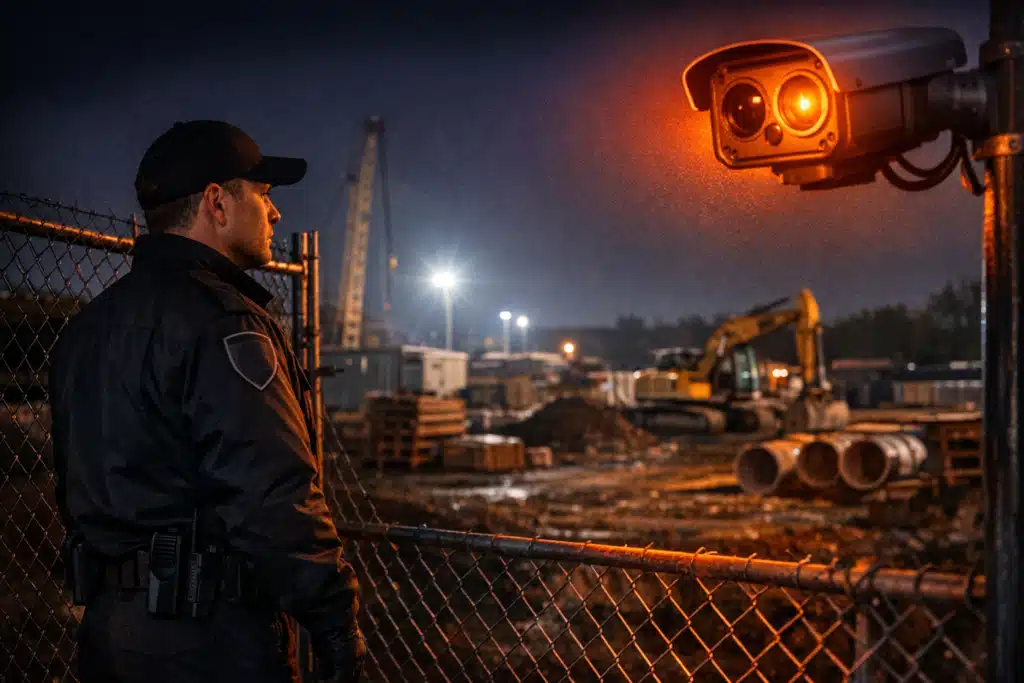
Construction sites in Overland Park benefit similarly. Night guards cannot monitor every area of large jobsites, but thermal cameras catch movement across the entire perimeter.
Technology Upgrades That Close Security Gaps
Modern security technology offers capabilities that older systems lack. Upgrading specific components often provides better protection than replacing entire systems.
Smart Camera Integration
Analytics-enabled cameras detect unusual behavior patterns automatically. These systems learn normal activity flows and alert operators when something changes.
BBQ restaurants in the Crossroads use smart cameras to monitor cash handling procedures. The system flags transactions that deviate from standard patterns, reducing internal theft.
Key smart camera features for Kansas City businesses:
- Facial recognition for banned individuals
- Vehicle license plate capture
- Crowd density monitoring
- Loitering detection in restricted areas
Access Control System Modernization
Card readers and keypads provide better security than traditional locks. Modern systems track who enters which areas at specific times.
Country Club Plaza retailers use access control to monitor employee movement during inventory periods. Managers receive alerts when restricted areas are accessed outside normal schedules.
Mobile Response Capabilities
Security personnel need real-time information during incidents. Mobile apps connect guards with remote operators instantly.
Tornado season creates unique challenges for Kansas City security. Mobile systems allow operators to guide guards to safe areas while maintaining property protection.
Cost-Effective Security Improvement Strategies
Budget constraints limit how quickly businesses can upgrade security systems. Prioritizing improvements based on risk assessment maximizes protection within financial limits.
High-Impact, Low-Cost Improvements
Lighting upgrades provide immediate benefits. LED fixtures with motion activation deter criminals while reducing energy costs. Proper lighting also improves camera image quality during night hours.
Signage warns potential intruders about security measures. Visible camera warnings and security company signs often prevent attempts before they start.
Communication system integration connects existing components better. Linking door alarms to camera systems automatically focuses operators on relevant areas during incidents.
Phased Implementation Approach
Large facilities benefit from upgrading security in phases rather than all at once. Start with areas containing valuable assets or frequent incidents.
Manufacturing facilities in Kansas City typically upgrade loading docks first. These areas see the highest theft losses and benefit most from immediate attention.
Phase two usually covers employee parking areas. Vehicle break-ins affect staff morale and create liability concerns for employers.

 Posted on Google
Measuring Security Coverage Effectiveness
Tracking specific metrics shows whether security improvements actually reduce incidents. Raw crime statistics tell only part of the story.
Key Performance Indicators
Response time measurement tracks how quickly security personnel reach incident locations. Effective coverage should produce response times under three minutes for most situations.
Detection accuracy measures how often alarms represent genuine threats versus false positives. High false alarm rates waste resources and reduce overall effectiveness.
Coverage area analysis identifies zones where incidents occur despite security presence. These patterns reveal gaps requiring additional attention.
Regular Assessment Schedules
Security needs change as businesses grow and criminal tactics evolve. Quarterly reviews ensure coverage remains effective.
Entertainment venues in Power & Light District adjust security based on seasonal event schedules. Summer concerts require different coverage than winter indoor events.
Retail businesses modify protection during holiday seasons when inventory values and customer traffic both increase significantly.
Weather-Specific Security Considerations
Midwest weather patterns create unique security challenges that standard systems often overlook. Kansas City businesses need protection that works during severe storms and extreme temperatures.
Tornado and Severe Weather Preparedness
Spring storms can disable outdoor cameras and motion sensors. Backup power systems keep critical monitoring equipment operational during outages.
Remote monitoring becomes especially valuable during severe weather warnings. Operators can guide on-site personnel to safe areas while maintaining facility oversight.
Winter Weather Adaptations
Ice storms knock out power and communications regularly in Kansas City. Security systems require weatherproof components and backup communication methods.
Heated camera housings prevent ice buildup that blocks lenses. Cellular backup connections maintain monitoring capabilities when landline systems fail.
Industry-Specific Security Improvements
Different business types face distinct security challenges requiring specialized approaches. Generic solutions rarely address industry-specific vulnerabilities effectively.
Hospitality and Entertainment Venues
Bars and restaurants need systems that handle crowds while identifying problem individuals quickly. Facial recognition helps staff spot banned customers before incidents occur.
Kitchen areas require monitoring that respects employee privacy while preventing theft of expensive equipment and ingredients.
Construction and Industrial Sites
Copper theft targets construction sites throughout Kansas City. Thermal imaging detects intruders attempting to access electrical systems and HVAC units.
Tool theft occurs most often during shift changes when supervision gaps exist. Time-lapse recording helps identify exactly when valuable equipment disappears.
Retail and Shopping Centers
Shoplifting patterns change seasonally and require adaptive monitoring strategies. Back-to-school and holiday seasons see different theft methods than summer months.
Employee areas need discrete monitoring that prevents internal theft while maintaining workplace trust.
Improving security coverage requires understanding your specific vulnerabilities and implementing solutions that work together effectively. Kansas City businesses achieve the best results by combining proven technologies with professional security expertise.
Twin City Security Kansas City provides comprehensive security assessments that identify gaps in current coverage and recommend cost-effective improvements. Contact us at 913-831-2525 or Kansas@TwinCitySecurity.com to schedule your personalized security evaluation.
Sources
- Bureau of Justice Statistics – Commercial Victimization
- National Fire Protection Association – Building Security Standards
- National Weather Service – Severe Weather Safety
Kansas City businesses often face security gaps due to outdated systems that fail to cover critical areas. By identifying vulnerabilities and implementing layered protection strategies, they can enhance their security measures effectively.
- Many businesses have security systems that miss blind spots criminals exploit, such as loading docks and parking areas.
- Upgrading to modern technology, like smart cameras and access control systems, can significantly improve security coverage.
- Regular assessments and phased improvements help businesses adapt their security measures to evolving threats and operational needs.
Recent Posts