
Implementing Effective Security for Kansas City’s Entertainment Venues
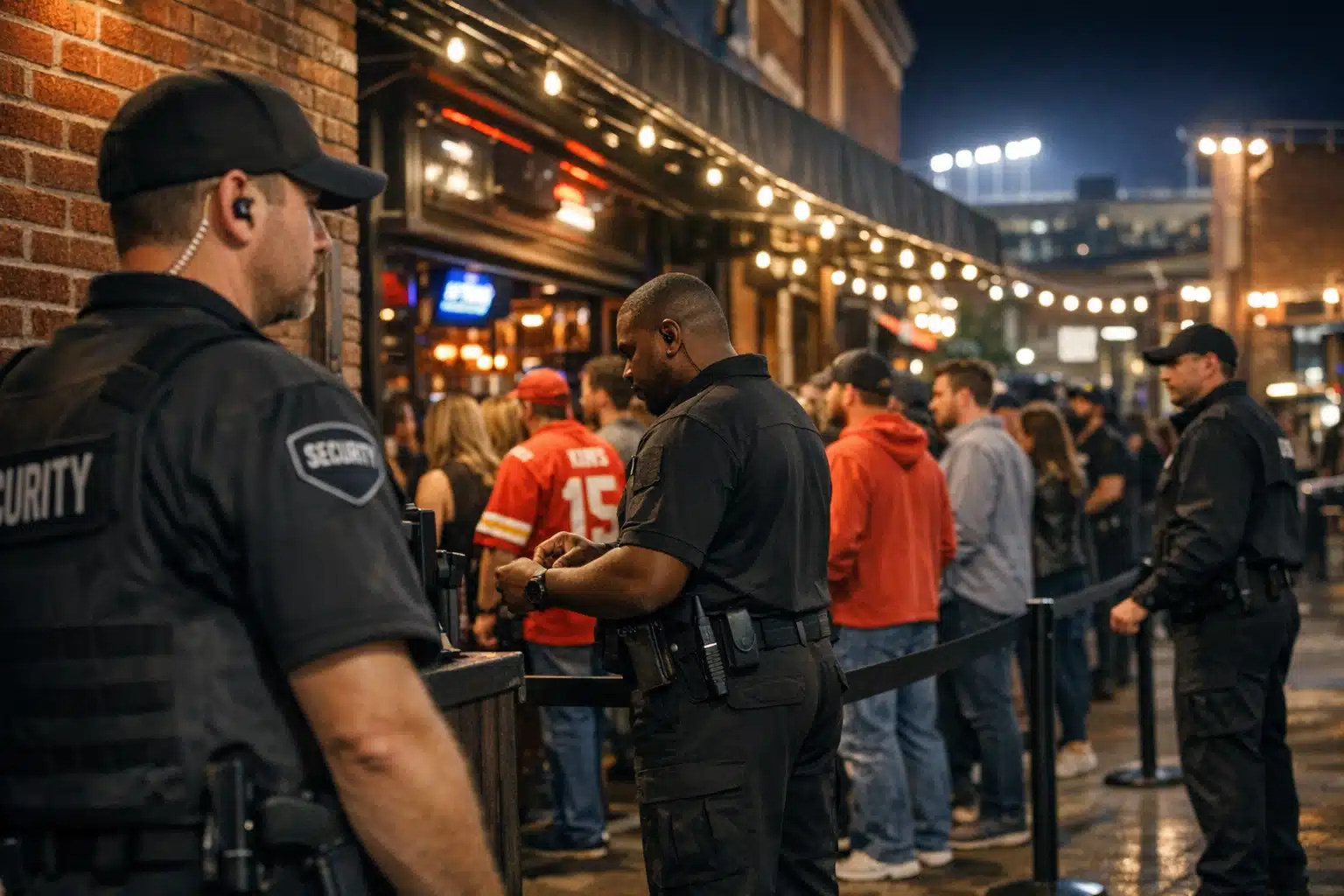
Security management for entertainment venues in Kansas City involves addressing challenges posed by large crowds, alcohol consumption, and late-night activities. Venue operators implement strategies such as adequate staffing, remote monitoring, and tailored security measures to effectively manage crowd surges, theft, severe weather, and parking lot incidents, ensuring a safe environment for patrons.
Arrowhead Stadium can hold more than 76,000 fans on a Chiefs game day. When those crowds spill into the Power & Light District afterward, entertainment venue security becomes a logistical test for every bar, club, and restaurant in Kansas City. Large crowds, alcohol, and late hours create risk that standard retail protection cannot cover. This post explains how venue operators handle crowd surges, theft, severe Midwest weather, and parking lot incidents with staffing and remote monitoring that fit the building.
Why Entertainment Venue Security Differs From Standard Business Protection
Venues move hundreds or thousands of people in and out within a few hours. That volume changes the math on everything.
A retail store manages a steady trickle of customers. A concert hall in the Crossroads empties 1,200 people onto the sidewalk in fifteen minutes.
Entertainment venue security must account for:
- Crowd density at entry points and exits
- Alcohol service that raises the chance of confrontations
- Late operating hours that overlap with lower police visibility
- Cash handling at bars, box offices, and merchandise tables
- Parking areas where theft and vehicle break-ins cluster
Each item needs a different staffing answer. A single guard at the door solves almost none of them.
Managing Game Day Crowds Near the Power & Light District
Chiefs and Royals schedules drive foot traffic across downtown Kansas City. Venues within walking distance of the stadiums feel it most on weekends and primetime nights.
Crowd management on these nights requires planning before doors open.
Staffing by Zone, Not by Headcount
Assign guards to fixed zones instead of floating coverage. A zone plan covers entrances, the main floor, bar areas, and exterior perimeters without gaps.
One guard per 75 to 100 patrons is a working baseline for high-energy venues. Adjust upward when alcohol flows heavily or when an event sells out.
Controlling the Entry Line
Long lines create friction before anyone even enters. Position staff to check IDs, scan bags, and move people forward at a steady pace.
A backed-up door pushes crowds into the street. That raises the odds of fights, jaywalking incidents, and complaints from neighboring businesses.
Protecting Kansas City BBQ Districts and Food-Focused Entertainment Zones
Kansas City’s reputation for barbecue draws steady crowds to restaurant corridors and food halls. Weekend nights in Westport and along the Crossroads bring the same mix of diners, drinkers, and foot traffic.
Food-focused venues face theft patterns that differ from clubs.
- Patio theft of phones, bags, and tablets left on tables
- Register and tip-jar grabs during busy rushes
- After-close break-ins targeting cash drops and equipment
- Loitering near dumpsters and back entrances
A guard who knows the floor plan spots problems early. A patio incident gets handled before a diner even notices a missing phone.
Covering the Back of House
Kitchen deliveries and trash runs leave rear doors propped open. That gap is a common entry point for after-hours theft.
Remote cameras on rear entrances flag propped doors in real time. A monitoring operator can call the manager before anyone walks in.
Remote Video Surveillance for Parking Lots and Perimeters
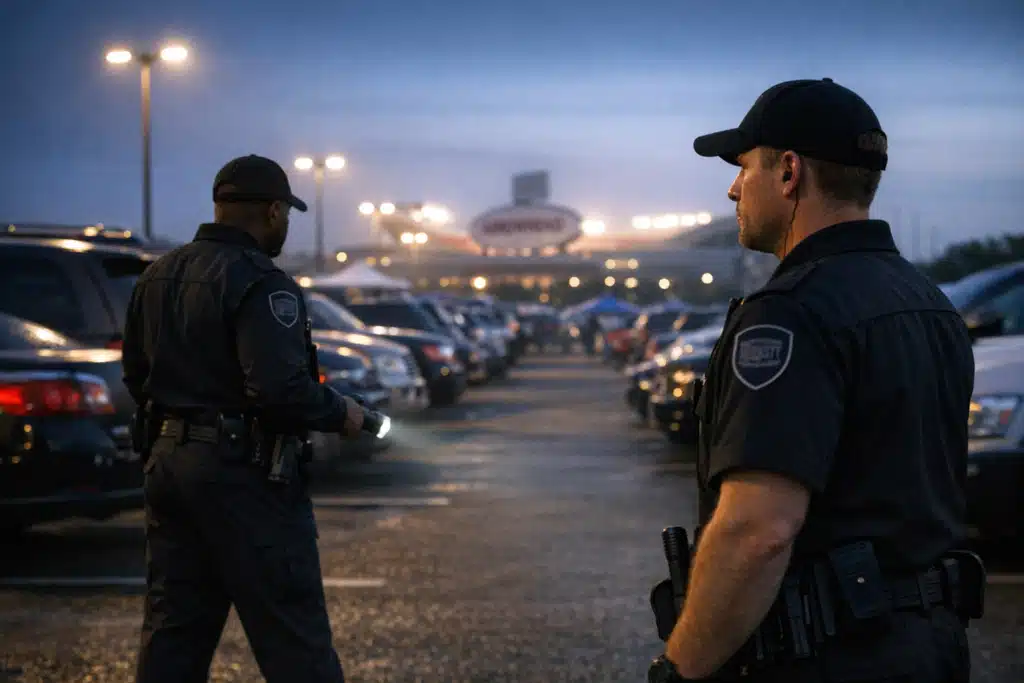
Most entertainment venue incidents start outside the building. Parking lots and sidewalks see vehicle break-ins, assaults, and property damage after events let out.
On-site guards cannot watch every corner of a large lot at once. Remote video monitoring fills that gap.
How Live Monitoring Changes Response Time
A trained operator watches multiple camera feeds from a central station. When motion triggers an alert, the operator assesses the scene within seconds.
If someone pries at a car door, the operator can:
- Activate a spoken warning over on-site speakers
- Direct the nearest guard to the exact location
- Call Kansas City police with a live description
- Save time-stamped footage for any report
This combination of cameras and human review stops incidents that passive recording would only document after the fact.
Lighting and Camera Placement
Dark corners invite trouble. Pair camera coverage with lighting audits across every lot and walkway.
Place cameras to capture license plates at lot entrances. That single angle recovers more stolen vehicles than any other placement.
Preparing Venue Security for Midwest Severe Weather
Tornado season runs March through June across Missouri and Kansas. An outdoor stage or packed patio turns dangerous fast when a warning hits.
Security staff are the people already positioned to move crowds safely.
Weather Response Roles for Guards
Build severe weather duties into your security plan before storm season starts. Assign each guard a clear task when a warning sounds.
- Direct patrons to the designated interior shelter area
- Clear patios and parking lots of stragglers
- Block exterior exits that lead into open danger
- Account for staff in back-of-house areas
A venue near the Plaza with a basement level has a built-in shelter. Single-story buildings need a predetermined interior room away from glass.
Winter Risks That Get Overlooked
Ice storms close Kansas City streets with little warning. Slick entrances and lots raise slip-and-fall liability during winter events.
Guards who salt walkways and flag hazards reduce injury claims. That daily task protects both patrons and your insurance record.

 Posted on Google
Meeting Missouri and Kansas Licensing Requirements
Security staffing rules differ across the state line. A venue in Overland Park answers to Kansas regulation, and a Crossroads location follows Missouri and Kansas City municipal rules.
Confirm these points before hiring any security provider:
- Guards hold valid licensing for the jurisdiction where they work
- Armed staff carry the correct state permits
- The provider carries liability insurance that covers venue incidents
- Incident reports meet local documentation standards
A provider who works across both states already knows the difference. That knowledge keeps your venue clear of fines and liability gaps.
Building a Security Plan That Matches Your Venue Type
No two Kansas City venues carry identical risk. A rooftop bar, a concert hall, and a food hall each need a different coverage model.
Start your plan with these questions:
- What is your peak capacity on a sold-out night?
- Where do patrons gather before and after events?
- How much cash moves through the building daily?
- Which exterior areas have the least visibility?
- What happens when a severe weather warning hits mid-event?
Answer each one honestly. The gaps you find point directly to where staffing and cameras belong.
Combining Guards and Remote Monitoring
On-site guards handle direct contact with patrons. Remote monitoring extends eyes to areas no single person can watch.
A mid-sized venue might run four guards inside and remote cameras across the lot. That pairing covers both the floor and the perimeter at a lower cost than guards alone.
Conclusion
Entertainment venue security in Kansas City comes down to crowd planning, perimeter coverage, severe weather readiness, and licensing that matches your jurisdiction. The right mix of on-site guards and remote monitoring protects patrons, staff, and your bottom line across every type of venue.
Twin City Security Kansas City builds venue security plans around your capacity, location, and risk profile. Call 913‑831‑2525 or email Kansas@TwinCitySecurity.com for a Kansas City security assessment or monitoring quote.
Sources
- FBI – Uniform Crime Reporting Program
- National Weather Service – Tornado Safety
- Missouri Division of Professional Registration
- OSHA – Winter Weather Safety
Effective security for entertainment venues in Kansas City requires tailored strategies to manage large crowds and unique risks. The combination of on-site guards and remote monitoring is essential for ensuring safety and compliance with local regulations.
- Arrowhead Stadium can host over 76,000 fans, creating significant security challenges for nearby venues. They must manage crowd density, alcohol-related issues, and late-night incidents.
- Security staffing should be zone-based, with one guard for every 75 to 100 patrons, especially during high-energy events.
- Remote video monitoring enhances safety by allowing real-time responses to incidents in parking lots and other areas that on-site guards cannot continuously oversee.
Recent Posts