
Choosing the Right Security for Kansas City’s BBQ District Nightlife
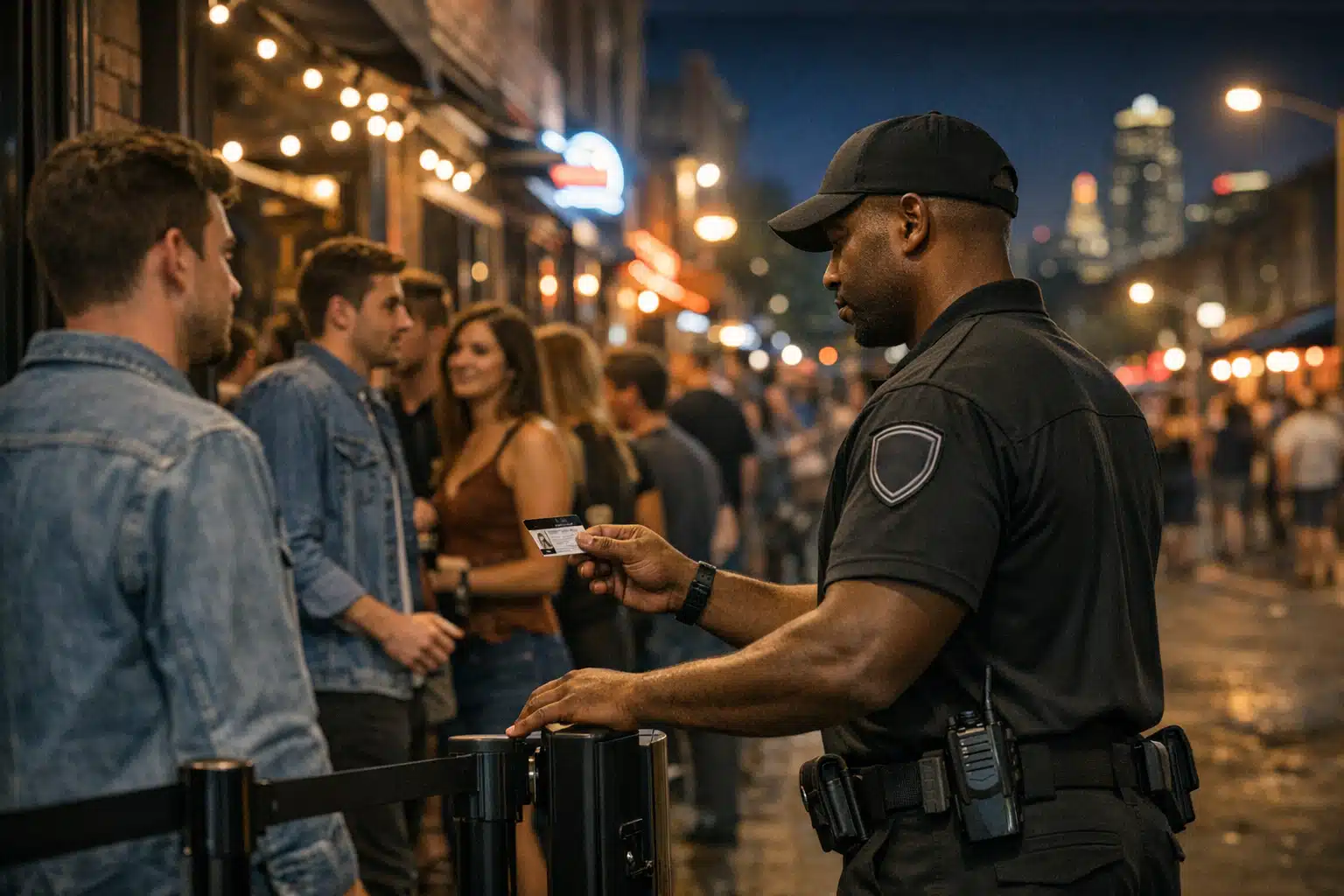
The best security option for Kansas City's BBQ District nightlife involves hiring trained personnel who are familiar with the local scene and can effectively manage crowds. Additionally, employing surveillance systems and ensuring proper lighting can enhance safety, creating a welcoming environment for patrons enjoying the vibrant nightlife.
Why BBQ District Nightlife Demands a Different Security Plan
Kansas City’s barbecue scene draws crowds long after the kitchens close. Bars, patios, and late-night joints near the Crossroads and 18th & Vine fill sidewalks past midnight.
That foot traffic changes your risk profile. Nightlife security for a smoke-scented block is not the same as daytime retail coverage.
Kansas City reported over 30,000 property crimes in recent FBI figures. A share of those hit food-and-drink venues after dark, when parking lots empty and staff count cash.
This post breaks down what actually protects a BBQ district nightlife venue. You get staffing math, camera placement, weather planning, and Missouri licensing facts you can act on.
The Specific Risks Facing Late-Night KC Venues
Late-night barbecue spots face a stacked set of problems. Alcohol, cash, cars, and crowds all peak at the same hour.
Crowd Surges Around Chiefs and Royals Nights
Game nights flip a normal Tuesday into a packed house. Fans leaving Arrowhead or the T-Mobile plaza flood nearby patios within an hour.
A venue built for 80 guests can hit 200 fast. Without a door count system, you lose control of capacity and fire-code limits.
Parking Lot Incidents
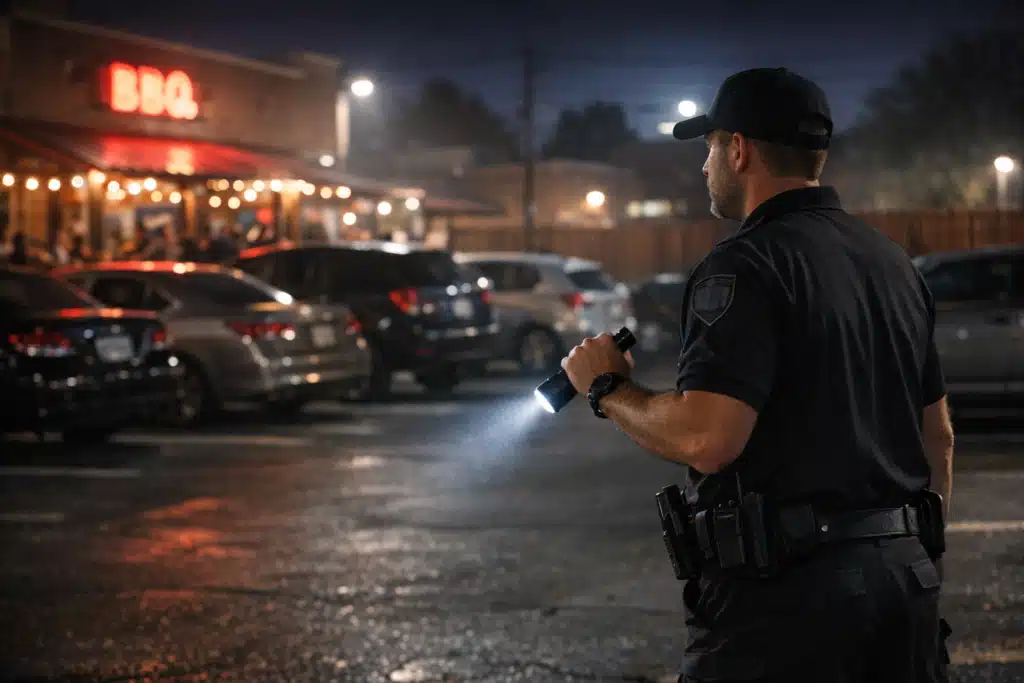
Most nightlife trouble starts outside, not at the bar. Break-ins, fender confrontations, and loitering happen in poorly lit lots.
A patron who feels unsafe walking to a car will not come back. Your lot is part of your venue, even if you rent it.
Cash Handling at Close
Barbecue joints still move heavy cash. Closing staff carrying deposits at 2 a.m. are targets.
Nightlife Security Staffing: What Actually Works
Nightlife security starts with the right number of guards in the right spots. Guessing gets you sued or robbed.
A working ratio for KC venues:
- One guard per 75–100 guests during peak hours
- A dedicated door position for ID checks and capacity counts
- One roving lot patrol once occupancy passes 100
- A closing escort for cash runs after last call
These numbers shift with your layout. A patio-heavy spot in the Crossroads needs more perimeter coverage than a single-room bar.
Uniformed vs. Plainclothes
Uniformed guards stop trouble before it starts. Visible presence at the door cuts fights and fake-ID attempts.
Plainclothes officers watch for theft and drink-tampering inside. A mix covers both the deterrent and the detection side.
Licensed Guards in Missouri and Kansas
Kansas City sits across two states with different rules. A guard working a Missouri-side venue answers to Kansas City Police Department private-officer licensing.
Overland Park and other Kansas-side spots follow separate local ordinances. Hire a provider who holds current credentials on both sides of State Line Road.
Camera Coverage Built for Dark, Crowded Blocks
Remote video surveillance fills the gaps your guards cannot stand in. Cameras run the lot while a guard handles the door.
For a nightlife venue, prioritize these camera positions:
- Entry and exit doors — capture faces at chest height, not ceiling angles
- The full parking lot — plate-readable resolution near stalls
- The register and cash drop — clear coverage of every transaction point
- Patio and smoking areas — where disputes spill outdoors
- Rear alley and dumpster — a common break-in path in the Crossroads
Low-light cameras matter more than megapixels here. A 4K feed of a black parking lot tells you nothing.
Live Monitoring vs. Recorded-Only
Recorded footage helps after a crime. Live remote monitoring stops one in progress.
A monitored feed lets an operator call police the moment a lot break-in begins. That response gap decides whether you file a claim or prevent a loss.
Planning Nightlife Security Around Midwest Weather
Kansas City weather wrecks unprepared security plans. Spring tornado season and summer heat both hit your operation.
Storm and Tornado Nights
A tornado warning during a packed Friday forces fast decisions. Guards need a shelter plan for guests, not just an exit strategy.
Assign a staff role to monitor National Weather Service alerts. Your door team should know the nearest interior shelter space before the sirens sound.
Summer Heat and Patio Crowds
July heat pushes drinking harder and tempers shorter. Hydration stations and shaded lines reduce medical calls and conflict.
Winter ice creates lot-fall liability. A guard flagging an icy patch prevents a slip claim that outsizes any theft.

 Posted on Google
How to Choose a Security Provider for Your Venue
Picking the right partner takes more than a price quote. Ask questions that expose real capability.
Use this checklist when interviewing a security firm:
- Do your guards hold current KCPD or Kansas-side private-officer licenses?
- Can you staff sudden game-night surges on short notice?
- Do you carry liability insurance covering nightlife incidents?
- Can you combine on-site guards with live remote monitoring?
- What is your response protocol during a tornado warning?
- Will you provide incident reports I can share with police and insurers?
A firm that answers these clearly has run KC nightlife before. Vague answers signal a company learning on your dime.
Blending Guards and Remote Monitoring
The strongest setups pair people with cameras. A guard handles the door and crowd while a remote operator watches the lot and registers.
This cuts your total cost. You cover more ground without staffing a guard at every corner.
What This Costs a KC Nightlife Business
Owners want numbers, not vague promises. Rates depend on hours, guard count, and monitoring scope.
Factors that move your price:
- Peak-hour coverage costs more than steady daytime shifts
- Armed vs. unarmed guards carry different rates
- Camera count and live monitoring hours add to the total
- Event surges for Chiefs, Royals, and festival nights bill separately
A combined guard-and-camera plan often beats guards alone. You buy coverage, not just headcount.
Bringing It Together for Your BBQ District Venue
Late-night barbecue crowds need staffing math, dark-ready cameras, and a weather plan built for Kansas City. The right mix of guards and live monitoring protects your patrons, your cash, and your reputation.
Twin City Security Kansas City builds nightlife security plans for KC venues on both sides of State Line Road. Call 913‑831‑2525 or email Kansas@TwinCitySecurity.com for a venue assessment and monitoring quote.
Sources
- FBI – Crime Data Explorer
- Kansas City Missouri Police Department – Private Officer Licensing
- National Weather Service – Kansas City/Pleasant Hill Office
- OSHA – Heat Illness Prevention
Kansas City's BBQ District nightlife requires a tailored security approach due to unique risks associated with late-night crowds. Effective security combines proper staffing, camera placement, and weather preparedness to protect patrons and assets.
- Late-night venues face increased risks from alcohol, cash, and crowd surges, especially during game nights.
- Proper staffing ratios and a mix of uniformed and plainclothes guards enhance safety and deter incidents.
- Security plans must account for local weather conditions to ensure guest safety during emergencies.
Recent Posts