
How to Optimize Security for Kansas City’s BBQ Joint Owners
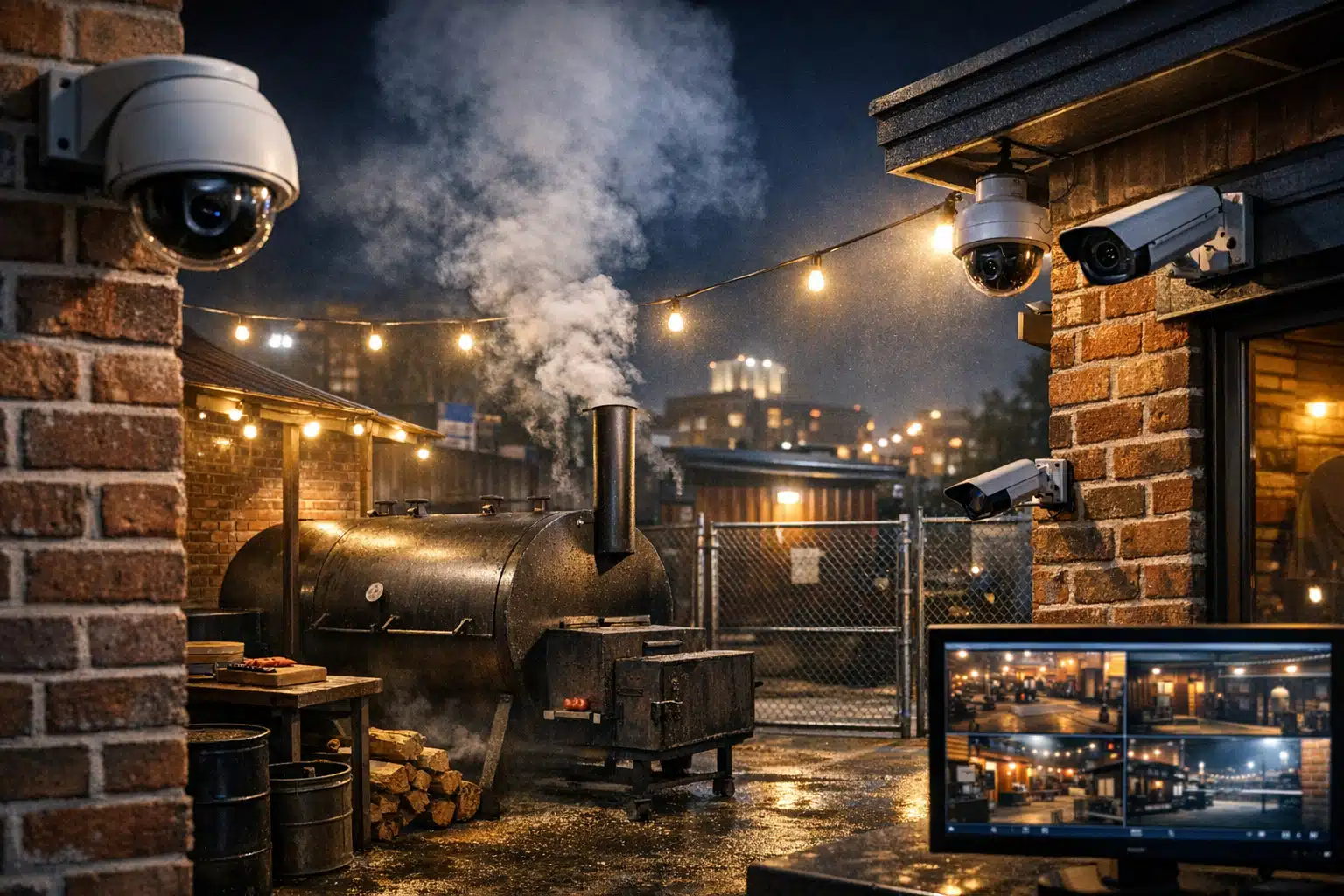
To optimize security for barbecue restaurants in Kansas City, owners should implement a combination of surveillance systems, access control measures, and staff training. Regularly assessing the security environment and collaborating with local law enforcement can also enhance safety, ensuring a secure dining experience for customers and staff alike.
Why BBQ Joint Security Matters in Kansas City
Kansas City has more than 100 barbecue restaurants competing across the metro. Many operate near high-traffic zones like the Power & Light District and Crossroads.
BBQ joint security carries risks most other food spots never face. Smokers run overnight. Cash still moves fast. Outdoor prep areas sit exposed.
This post breaks down the specific threats KC pitmasters face. It offers steps to cut theft, vandalism, and property loss.
The Specific Risks Facing Kansas City BBQ Joints
BBQ restaurants differ from standard eateries in physical setup. That difference creates security gaps competitors rarely discuss.
Overnight Smokers and Unattended Property
Many KC joints smoke brisket and ribs for 12 to 16 hours. That means fuel, meat, and equipment sit outside overnight.
Wood piles, propane tanks, and pellet supplies get stolen. Copper and steel smoker parts attract metal thieves across Jackson County.
An unattended smoker is a target. A single stolen commercial smoker can cost $8,000 to replace.
Cash-Heavy Transactions
Barbecue draws heavy walk-up and takeout volume. Tailgate crowds near Arrowhead pay cash for quick orders.
High cash flow raises robbery risk during closing hours. Register skimming by staff also climbs when oversight drops.
Outdoor Seating and Patio Exposure
Patios in Westport and the Crossroads stay busy in warm months. Open layouts make theft of tip jars, phones, and purses easier.
After hours, empty patios invite vandalism and break-in attempts. Loose furniture becomes a tool for forced entry.
How to Build Strong BBQ Joint Security
BBQ joint security works best when it matches your building layout. Start with the areas thieves hit first.
Step-by-Step Protection Plan
- Map your vulnerable zones. Walk the property at night. Note smoker areas, back doors, and cash points.
- Install cameras on the smoker line. Cover fuel storage and any outdoor cooking equipment.
- Add lighting to blind spots. Motion-activated lights deter loitering near dumpsters and back exits.
- Lock down portable assets. Chain propane tanks and secure wood piles behind fencing.
- Set camera alerts for after-hours motion. Remote monitoring flags activity when the joint is closed.
- Limit register access. Assign codes per employee to track cash handling.
Remote Video Surveillance for Overnight Cooks
Remote monitoring fits BBQ operations that run past midnight. Trained operators watch live feeds while your smokers work.
If someone approaches a fuel pile at 3 a.m., an operator can respond. Voice-down warnings and live dispatch stop many thefts before loss.
This matters most for joints without overnight staff. Your brisket cooks unattended, but the camera never sleeps.
Protecting Kansas City Restaurants During Chiefs Game Days
Game days near Arrowhead flood nearby Kansas City restaurants with foot traffic. BBQ joints see order spikes and packed patios.
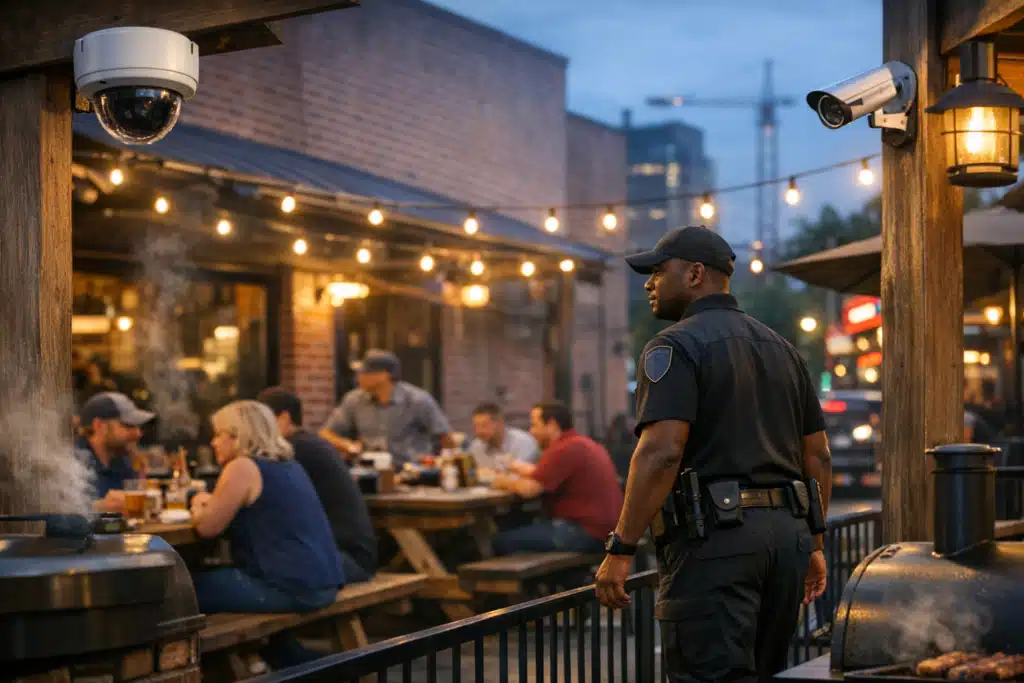
Crowds bring opportunity for theft and disputes. On-site guards help manage lines and deter grab-and-run incidents.
Tailgate Crowd Management
- Post visible guards at entrances during peak hours.
- Monitor parking areas where vehicle break-ins rise.
- Control patio access to keep non-paying crowds out.
- Watch cash registers when order volume overwhelms staff.
A guard presence also calms tension when wait times climb. Fans stay orderly when someone visible keeps watch.
Midwest Weather and BBQ Property Damage
Kansas City sits in tornado alley. Spring storms bring hail, high winds, and power loss across the metro.
Storm damage opens security gaps fast. A blown-out window or downed fence invites looting during outages.
Weather-Ready Security Steps
- Back up camera systems with battery or cellular failover.
- Secure outdoor furniture before storm warnings hit.
- Store fuel safely away from wind-exposed areas.
- Schedule post-storm checks of doors, windows, and locks.
Cameras with cellular backup keep recording during power cuts. That footage supports insurance claims after severe weather.

 Posted on Google
Missouri and Kansas Security Rules to Know
Security staffing rules differ across the state line. Kansas City straddles both Missouri and Kansas jurisdictions.
Guard licensing requirements vary by city and county. Verify that any provider holds proper credentials for your location.
Ask before you hire:
- Are guards licensed for Missouri or Kansas work?
- Does the camera setup meet local recording rules?
- Who responds to alarm alerts, and how fast?
Choosing Between Guards and Remote Monitoring
Both methods protect BBQ joints in different ways. Your hours and layout decide the right mix.
When On-Site Guards Fit Best
Guards work for busy patios and high-traffic game days. A physical presence stops disputes and grab-and-run theft.
When Remote Monitoring Fits Best
Remote cameras suit overnight smoking and closed hours. One operator can watch multiple zones at lower cost than staffing.
Many KC joints use both. Guards cover peak service, and cameras cover the quiet overnight cook.
Common Mistakes BBQ Owners Make
Several patterns show up across Kansas City restaurants that get hit. Fixing them cuts loss quickly.
- Leaving fuel unsecured behind the building overnight.
- Skipping camera coverage on outdoor smoker lines.
- Using one shared register code for all staff.
- Ignoring back-door lighting near alley entrances.
- Assuming daytime crowds mean lower theft risk.
Each gap gives thieves an opening. Closing them costs far less than replacing stolen equipment.
Protect Your Kansas City BBQ Joint
BBQ joint security depends on covering overnight smokers, cash points, and exposed patios. The right mix of guards and remote cameras stops most theft and vandalism before loss.
Twin City Security Kansas City assesses your property and builds a plan that fits your hours and layout. Call 913‑831‑2525 or email Kansas@TwinCitySecurity.com for a Kansas City security assessment.
Sources
- Kansas City Missouri Police Department – Crime Data and Reports
- National Weather Service – Kansas City/Pleasant Hill Forecast Office
- FBI – Uniform Crime Reporting Program
Kansas City BBQ joint owners face unique security challenges due to high cash flow and outdoor operations. This article outlines specific threats and offers practical steps to enhance security.
- BBQ restaurants often have smokers and equipment left outside overnight, making them targets for theft.
- High cash transactions increase the risk of robbery, especially during busy hours.
- Outdoor seating areas are vulnerable to theft and vandalism, requiring effective monitoring and protection.
Recent Posts