
Security Strategies for Kansas City’s High-Risk Tornado Zones
Effective security strategies for tornado-prone areas in Kansas City include creating emergency plans, establishing safe rooms, and ensuring regular communication with local weather services. Residents should also prepare emergency kits and stay informed about weather alerts to enhance safety during tornado season.
Why Tornado Season Changes Kansas City Security Planning
Kansas City sits inside Tornado Alley, recording dozens of severe weather warnings each spring. The National Weather Service tracks peak activity between April and June across the metro.
Storms create a second problem beyond wind damage. Empty buildings, downed fences, and dark streets invite theft during and after a tornado.
Tornado zone security addresses both threats at once: physical property protection and post-storm looting prevention. Business owners in Westport, the Crossroads, and Overland Park face real losses when a warning empties their block.
This post breaks down practical steps for construction sites, retail districts, sports venues, and apartment communities across the metro.
Tornado Zone Security Risks Specific to Kansas City
Kansas City storms follow patterns that shape security needs. Fast-moving supercells give short warning windows, sometimes under 15 minutes.
That timeline matters. Staff evacuate quickly, doors get left unlocked, and cash drawers stay open.
Common Loss Points After a Storm
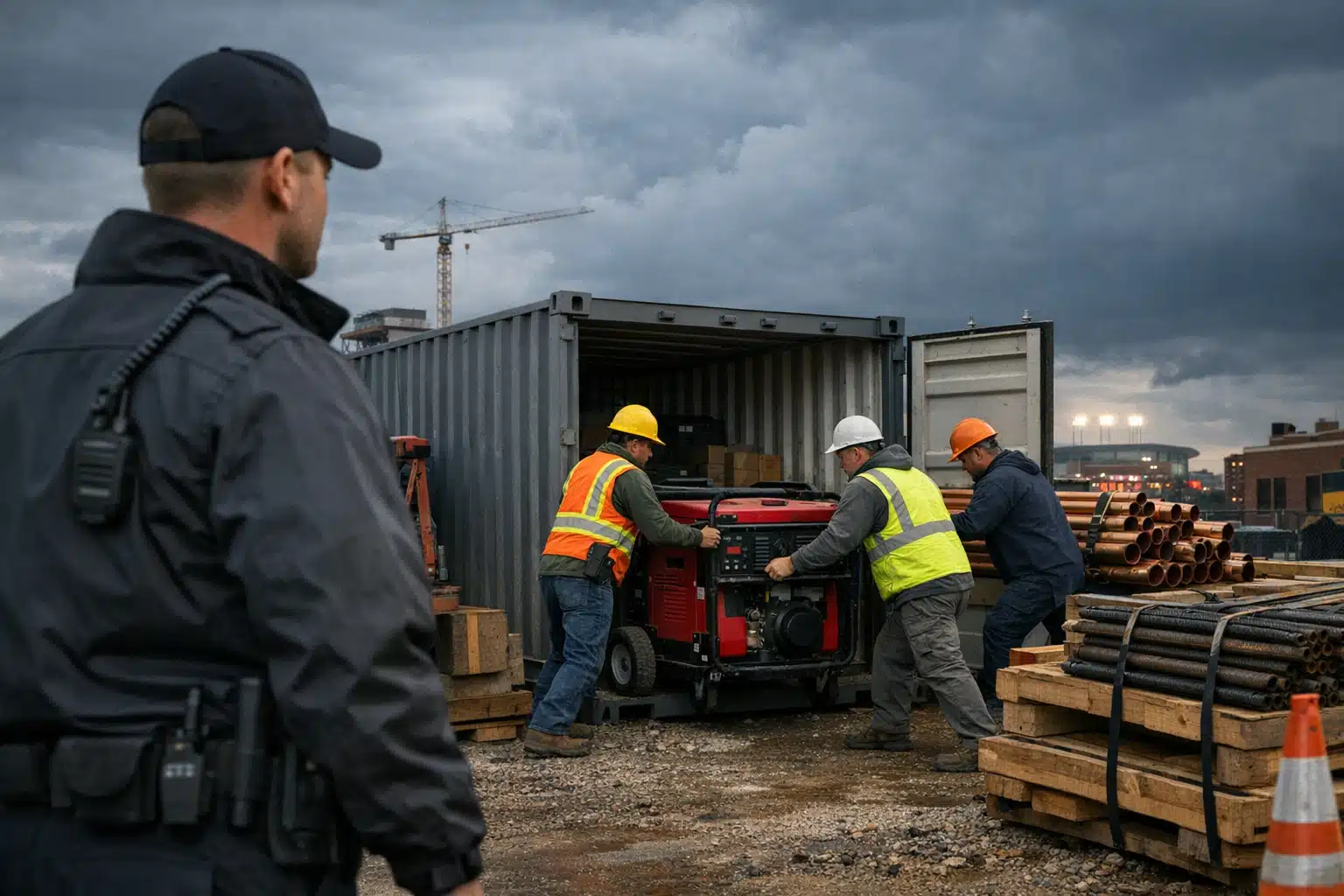
- Construction sites: Copper wire, tools, and generators disappear when fences blow down.
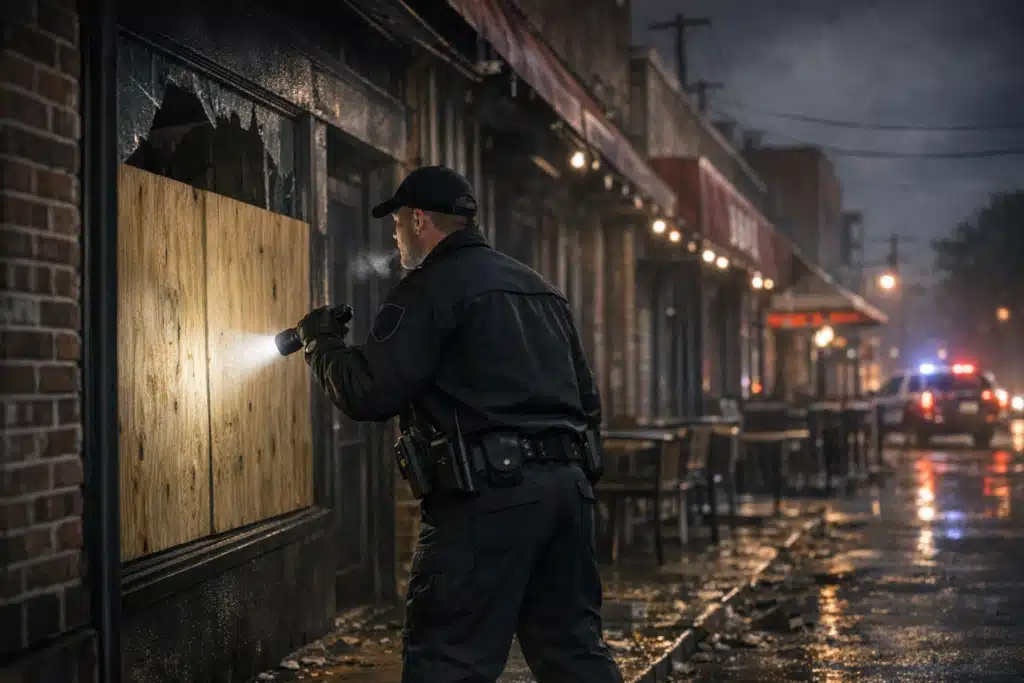
- Retail in the BBQ district: Broken glass and dark storefronts attract break-ins overnight.
- Apartment communities: Damaged access gates let strangers into parking areas.
- Sports venues: Concession stands and equipment sit exposed after event cancellations.
Power outages compound each risk. Alarm systems fail, and camera feeds go dark without backup power.
Protecting Kansas City Construction Sites During Tornado Season
Construction sites lose the most during severe weather. High-value materials sit in the open, and temporary fencing rarely survives 70 mph gusts.
To protect your Kansas City construction site, follow these steps:
- Anchor and photograph inventory weekly. Documented assets speed insurance claims after damage.
- Move portable equipment to secured containers. Store generators and copper indoors before warnings hit.
- Install remote video surveillance with battery backup. Cameras keep recording when grid power drops.
- Assign a post-storm inspection point of contact. Someone must check the site within hours of clearance.
- Coordinate guard patrols for the 48 hours after a storm. Thieves target sites while owners handle cleanup.
Remote monitoring works around the clock at a lower cost than full-time on-site staff. Our operators flag intruders and dispatch responders in real time.
Retail and BBQ District Protection During Severe Weather
The Crossroads, Westport, and the barbecue corridors face crowd and theft pressure when storms clear. Foot traffic returns fast after a warning lifts.
Broken windows and disabled locks create openings. A single dark block can draw multiple break-ins in one night.
Steps for Retail Owners
- Test backup power for alarms and cameras before each storm season.
- Keep cash reserves minimal during high-warning weeks.
- Use motion-activated lighting to remove shadows around entrances.
- Schedule guard checks for the hours right after a warning ends.
On-site guards give restaurant and shop owners a fast response option. They secure broken entries before opportunists arrive.
Sports Venue and Event Security in Storm Conditions
Kansas City venues handle large crowds that must move fast when sirens sound. Tailgate lots around major games hold thousands of people and vehicles.
Sports venue security during tornado warnings requires clear evacuation routing and post-event asset protection. Empty lots and stands become targets once fans leave.
Priorities for Venue Operators
- Map shelter locations and mark them at every entrance.
- Station guards at exits to direct crowds without panic.
- Secure concessions and equipment the moment an event stops.
- Monitor parking lots by camera for vehicle break-ins during evacuations.
Crowd control and theft prevention overlap during storms. Trained guards manage both while operators focus on fan safety.

 Posted on Google
Building Emergency Protocols for Tornado Events
Strong emergency protocols reduce loss and confusion when minutes count. Every property needs a written plan staff can follow under pressure.
A workable plan covers three phases: before the warning, during the event, and after clearance.
A Three-Phase Framework
- Before: Secure loose assets, test backup power, confirm shelter access, brief staff.
- During: Move people to shelter, lock cash and inventory, keep camera feeds running.
- After: Inspect damage, secure broken entries, deploy patrols, document losses.
Apartment managers in Overland Park benefit from posting these steps in common areas. Residents move faster when directions are visible.
Why Remote Surveillance Fits Tornado Zone Security
Remote video monitoring keeps watching when people cannot. During a warning, staff shelter while cameras stay active.
Battery-backed systems record when power fails. Operators watch live feeds and alert authorities the moment activity appears.
Compared to on-site-only coverage, remote monitoring costs less per hour and covers more ground. Many Kansas City clients pair both for storm season.
Combined Coverage Advantages
- Continuous recording supports insurance and police reports.
- Live operator response stops theft before it spreads.
- Lower cost than round-the-clock on-site guards alone.
- Fast patrol dispatch when a camera flags an intruder.
Preparing Your Kansas City Property Before the Next Storm
Preparation beats reaction every time. Owners who plan before April avoid scrambling when the first siren sounds.
Start with a walk-through of weak points: fences, gates, doors, and camera blind spots. Fix each before peak season arrives.
A security assessment identifies gaps you may miss. Our team reviews your property and recommends specific steps for your location.
Conclusion
Tornado zone security protects Kansas City properties from both storm damage and the theft that follows. Construction sites, retail blocks, venues, and apartments each need clear emergency protocols and reliable monitoring.
Twin City Security Kansas City builds storm-ready plans for local businesses across the metro. Call 913‑831‑2525, email Kansas@TwinCitySecurity.com, or visit https://www.twincitysecuritykansascity.com for a security assessment or monitoring quote.
Sources
- National Weather Service – Kansas City/Pleasant Hill Forecast Office
- National Weather Service – Tornado Safety
- NOAA Storm Prediction Center – Severe Weather Data
Kansas City faces significant security challenges during tornado season, necessitating comprehensive planning to protect properties from storm damage and theft. Businesses must implement effective strategies to safeguard their assets before, during, and after severe weather events.
- Kansas City experiences severe weather warnings from April to June, increasing security risks for businesses. Empty buildings and dark streets can lead to theft during and after tornadoes. Effective security measures include remote monitoring and clear emergency protocols for various property types.
- Why Tornado Season Changes Kansas City Security Planning Kansas City [...] Why Tornado Season Changes Kansas City Security Planning Kansas City sits inside Tornado Alley, recording dozens of severe weather warnings each spring.
- The National Weather Service tracks peak activity between April and June across the metro.
Recent Posts