
How to Implement Effective Security for Kansas City’s New BBQ District Events
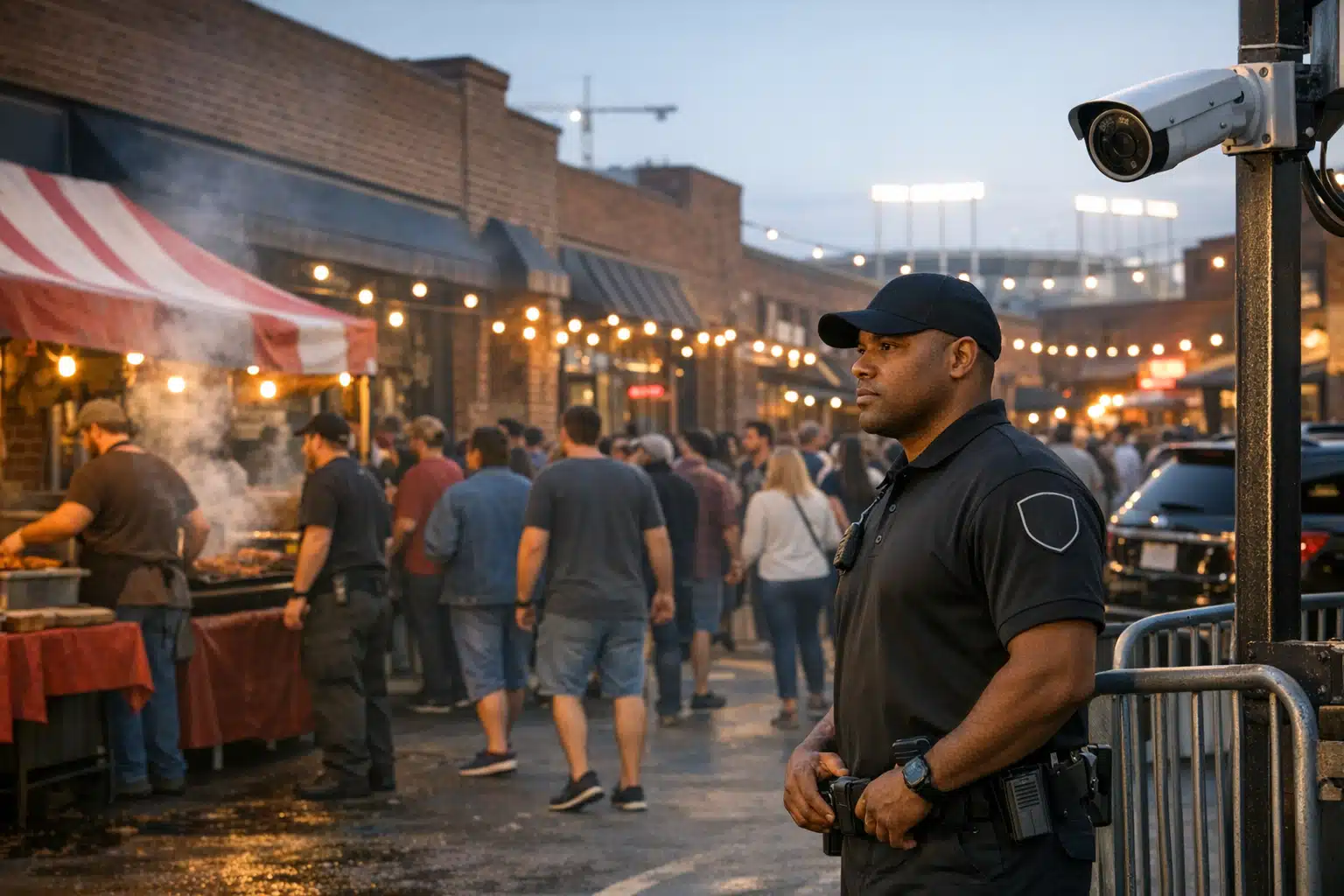
To implement effective security for events in Kansas City's BBQ District, it is essential to assess potential risks such as large crowds and cash-heavy vendor booths. This can be achieved by deploying trained security personnel, utilizing surveillance systems, and establishing clear emergency protocols to ensure the safety of attendees and vendors.
Why BBQ District Security Matters for Kansas City Event Planners
Kansas City events draw thousands of hungry visitors on a single weekend. Smoke, crowds, and cash-heavy vendor booths create real risk.
BBQ district security starts with one hard fact: food festivals in dense urban blocks attract theft, disorderly conduct, and vendor cash loss. Kansas City sees higher property crime rates than the national average, according to FBI reporting.
This post covers practical steps for merchants, venue operators, and event planners. You get crowd management tactics, camera placement rules, and staffing math built for KC weather and KC crowds.
What BBQ District Security Requires for Large Events
BBQ district security requires layered coverage. One guard at a gate does not protect a full block of vendors and open-air seating.
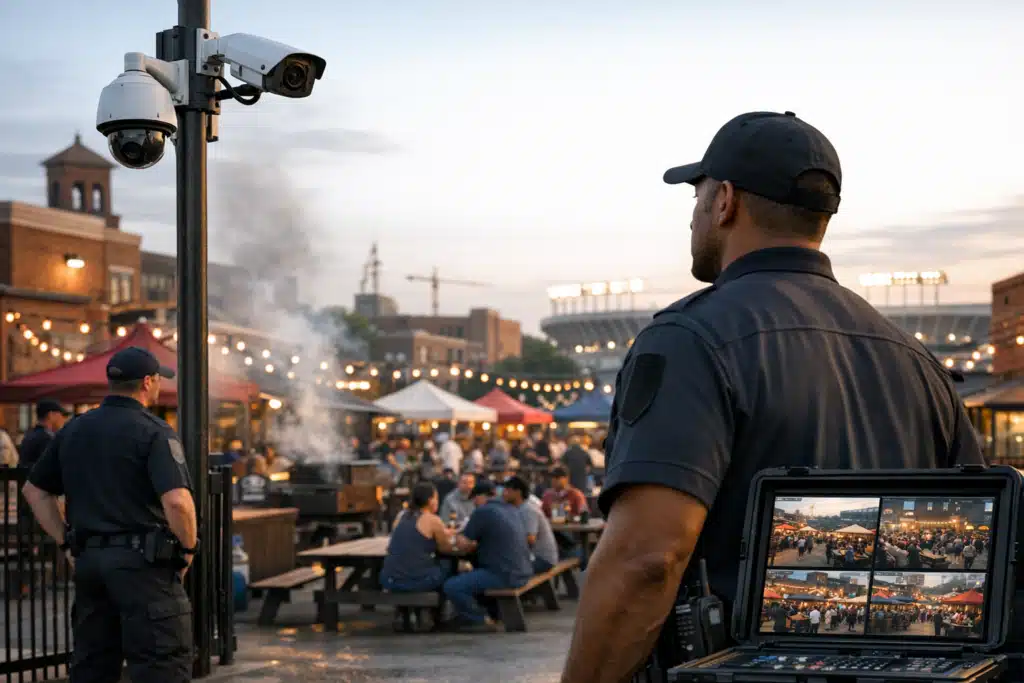
A strong plan combines four elements:
- On-site uniformed guards for visible deterrence and rapid response
- Remote video monitoring for wide-area coverage after dark
- Access and cash-handling controls at vendor booths
- Weather contingency plans for Midwest storms
Each piece covers a gap the others miss. Skip one, and you leave an opening.
Map the Layout Before the First Vendor Arrives
Walk the block two weeks out. Identify choke points, blind corners, and unlit alleys near Crossroads and the East Bottoms.
Mark every entrance, exit, and vendor cash station on a printed map. Guards and monitoring staff work from the same document during the event.
Smoke from pit setups reduces sightlines fast. Position cameras and guard posts upwind of major smokers so visibility holds.
Crowd Management Tactics for Kansas City BBQ Crowds
Kansas City food crowds cluster around popular pits. Lines back up into walkways and block emergency lanes.
Control flow with three physical measures:
- Set one-way pedestrian lanes using barricades between vendor rows
- Keep a six-foot fire lane clear down the center of each block
- Cap entry counts at fenced sections and track them at gates
Trained guards read crowd density better than volunteers. They spot pushing, intoxication, and building tension before it breaks.
Position Guards Where Money Changes Hands
Cash-heavy vendor booths draw grab-and-run theft. Station guards within sight of point-of-sale stations, not just at perimeters.
Advise vendors to run cash drops every two hours. A guard can walk drops to a locked office or safe on a set schedule.
Card readers cut cash exposure. Still, KC food events see plenty of cash, and thieves know it.
Remote Video Surveillance for BBQ District Events
Remote video surveillance covers ground that guards cannot watch at once. One monitoring operator can track a dozen camera feeds in real time.
For a multi-block food event, camera coverage should include:
- Entrances and exits for headcount and incident review
- Vendor cash zones for theft documentation
- Parking lots and side streets where vehicle break-ins happen
- Stage and seating areas for crowd surge detection
Live monitoring beats recorded-only footage. An operator who sees a fight starting can radio a guard in seconds.
Cameras That Handle Kansas City Conditions
Smoke, low light, and summer heat test camera hardware. Choose units rated for outdoor temperature swings common across Missouri and Kansas.
Infrared and low-light cameras keep working after sunset. Most food events run late, and evening hours carry the highest incident risk.
Mobile surveillance trailers work for temporary event footprints. They move in, cover a block, and leave no permanent install cost.
Planning Event Security Around Midwest Weather
Kansas City spring and summer bring severe storms and tornado warnings. An outdoor food event needs a weather plan tied to security staffing.
Build a storm response into your event security plan:
- Assign a weather monitor to track National Weather Service alerts
- Pre-identify shelter buildings within two blocks of the event
- Brief guards on evacuation routes before doors open
- Set a clear trigger for shutting down vendor operations
Guards direct crowds to shelter faster when routes are rehearsed. Panic rises when nobody knows where to go.
High winds turn tents and signage into hazards. Assign staff to secure or drop tents when warnings hit.

 Posted on Google
Missouri and Kansas Security Licensing Rules
Kansas City spans two states, and guard rules differ across the line. Event operators should confirm every guard holds proper state credentials.
Kansas City, Missouri requires private security officers to be licensed with the city regulatory board. Guards working armed carry separate permitting.
Verify these credentials before hiring:
- Current state or city guard license for the event location
- Liability insurance held by the security provider
- Documented training in crowd and conflict management
A licensed provider handles this paperwork for you. Unlicensed guards expose event organizers to liability if something goes wrong.
Coordinating With Kansas City Police and Fire
Private guards handle daily order. Police and fire handle arrests, medical calls, and structural emergencies.
Notify local precincts before large food events. Share your site map, expected attendance, and guard contact numbers.
Fire marshals inspect open-flame vendor setups and occupancy limits. Meet those requirements early to avoid a shutdown mid-event.
Build a Single Command Point
Set one command post where security leads, event staff, and public safety liaisons meet. Radios and camera feeds route to this spot.
A shared command point cuts response time. Everyone works from one picture instead of scattered phone calls.
A Step-by-Step Security Checklist for BBQ District Events
Use this sequence to build event security from scratch:
- Walk the site and map every entrance, cash zone, and blind spot
- Set guard posts at gates, cash areas, and crowd choke points
- Install cameras covering perimeters, parking, and vendor rows
- Confirm licensing for every guard on the schedule
- Notify police and fire with your site plan and headcount
- Rehearse the weather plan with all staff before opening
- Set cash-drop schedules with vendors
- Run a live-monitored command post for the full event
Follow the order. Each step builds on the one before it.
How Twin City Security Kansas City Supports BBQ District Events
Twin City Security Kansas City staffs licensed guards and runs remote video monitoring across the metro. Our teams work Crossroads, the East Bottoms, and food-event footprints on both sides of the state line.
We assess your event layout, recommend camera placement, and build a staffing plan matched to attendance and risk. Weather planning and public safety coordination come standard.
Effective BBQ district security combines on-site guards, live camera monitoring, licensed staff, and a rehearsed storm plan. Event operators who plan early avoid theft, crowd injuries, and last-minute shutdowns.
Contact Twin City Security Kansas City for an event security assessment or monitoring quote. Call 913‑831‑2525 or email Kansas@TwinCitySecurity.com.
Sources
- FBI – Uniform Crime Reporting Program
- National Weather Service – Kansas City/Pleasant Hill Forecast Office
- City of Kansas City, MO – Regulated Industries Division
- OSHA – Emergency Preparedness and Response
Effective security for Kansas City's BBQ District events is essential to manage the risks associated with large crowds and cash-heavy vendors. This guide outlines practical steps for event planners to enhance safety and security.
- Kansas City events attract large crowds, increasing the risk of theft and disorderly conduct. Security measures must include on-site guards, video monitoring, and cash-handling controls.
- Crowd management tactics are crucial, such as setting one-way pedestrian lanes and maintaining clear emergency routes. Trained guards can better assess crowd dynamics.
- Event security should also account for weather conditions, with plans for severe storms and clear evacuation routes to ensure public safety.
Recent Posts