
Ensuring Safety During Kansas City Current Game Days: A Guide for Stadium Operators
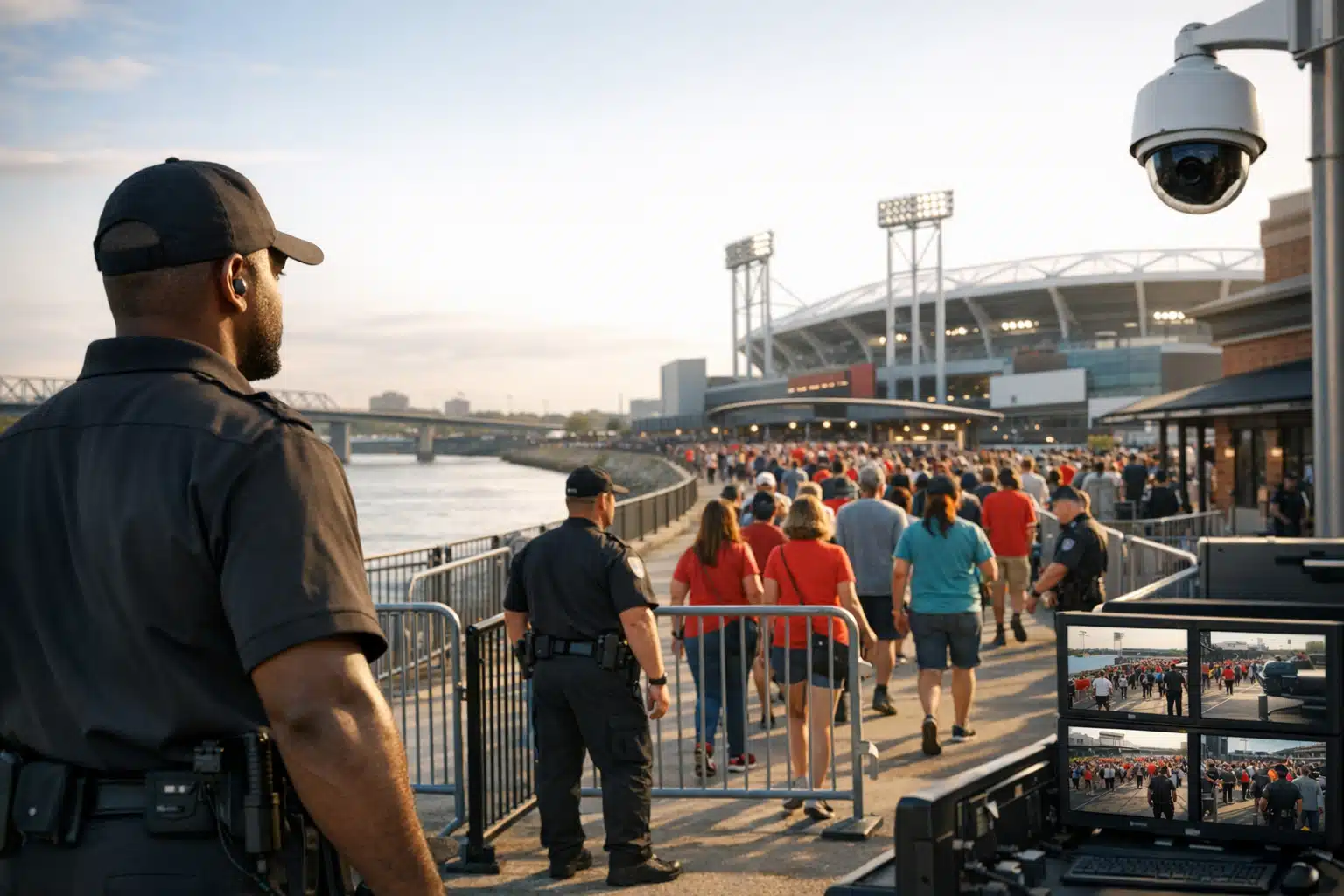
The safety guide for Kansas City Current game days aims to provide stadium operators with essential strategies and protocols to ensure a secure environment for fans and staff. It addresses potential risks and outlines best practices to maintain safety during events at CPKC Stadium.
Why Kansas City Current Game Days Demand Specialized Stadium Security
CPKC Stadium opened in March 2024 as the first venue built for a women’s professional soccer team. It seats over 11,500 fans along the Berkley Riverfront.
That milestone brought new stadium security demands to Kansas City. Sellout crowds, riverfront access points, and Midwest weather all shape how operators plan each match.
This post breaks down the game day safety planning that keeps Kansas City Current matches running smoothly. You get practical steps for crowd flow, weather response, and coordinated monitoring.
Stadium Security Starts With Crowd Flow Mapping
Stadium security requires knowing where people bottleneck before kickoff. CPKC Stadium sits near the Missouri River, which limits foot traffic to a few main approaches.
Map every entry and exit against expected crowd volume. Peak arrival hits 45 minutes before a Kansas City Current match starts.
High-Traffic Zones to Watch
- Main gate plazas where ticket scanning slows movement
- Riverfront pathways connecting parking to the stadium
- Concession concourses that jam at halftime
- Rideshare drop zones near Grand Boulevard access
Post trained guards at each pinch point. Their job is to keep lines moving and spot problems early.
Screening Without Slowing the Gate
Bag checks protect fans but create backups. Use multiple screening lanes with clear signage on prohibited items.
Staff who communicate rules calmly cut argument time at the gate. Fewer disputes mean faster entry for the full 11,500.
Coordinating On-Site Guards With Remote Video Monitoring
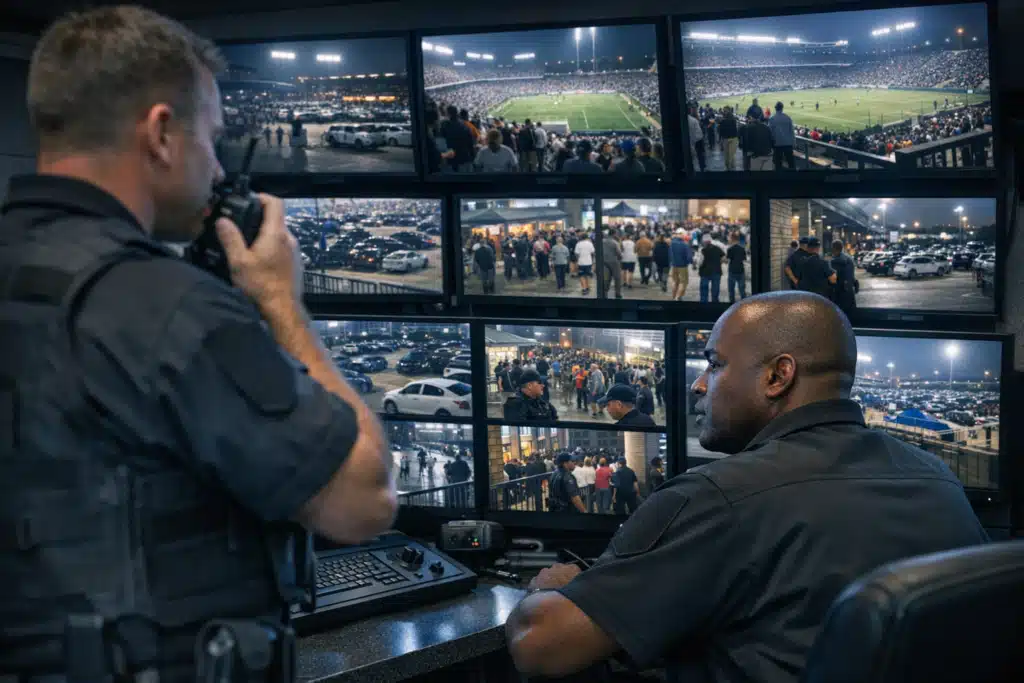
On-site guards and remote surveillance work better together than either alone. Cameras cover blind spots that a foot patrol cannot reach in time.
A monitoring team watches live feeds from a central station. They radio guards the moment a fight, spill, or medical event appears.
Where Cameras Earn Their Keep
- Parking lots where vehicle break-ins happen during matches
- Concourse chokepoints for early crowd-surge detection
- Perimeter fencing along the riverfront edge
- Loading docks used by vendors before gates open
Remote operators log timestamps for every incident. That record supports insurance claims and police reports after the match.
Planning for Kansas City Weather on Match Day
Kansas City sits in Tornado Alley, and spring soccer season overlaps peak storm months. April through June brings the highest severe weather risk.
Stadium operators need a weather trigger plan before the season opener. Waiting until dark clouds form leaves no time to move 11,500 people.
Severe Weather Response Steps
- Assign one staff member to track National Weather Service alerts
- Pre-identify indoor shelter zones inside the concourse
- Rehearse evacuation routes with guards before opening night
- Script clear PA announcements to prevent panic
- Position guards at shelter entrances to direct flow
Lightning within eight miles usually halts play. Your team should know that rule and act on it fast.
Summer heat brings its own risk. Berkley Riverfront offers little shade, so hydration stations and medical spotters matter for July matches.
Managing Tailgates and Surrounding Districts
Fans arrive early and linger near the stadium and nearby entertainment areas. The Power & Light District and Crossroads draw match-day crowds before and after kickoff.
Coordinate with venues in these areas when large matches sell out. Shared communication keeps intoxicated fans and traffic under control.
Tailgate Monitoring Tips
- Set clear boundaries for tailgate zones near the riverfront
- Watch for open flames during dry Midwest stretches
- Monitor alcohol service cutoff times
- Keep emergency lanes open for fire and EMS access
Guards who patrol tailgate areas prevent small problems from growing. A calm word early stops most conflicts.

 Posted on Google
Missouri Security Regulations Operators Should Know
Missouri requires licensing for many private security roles. Kansas City has its own permit rules for guards working public events.
Confirm that every guard on your roster holds current credentials. Unlicensed staff expose your venue to liability after any incident.
Questions to Ask a Security Provider
- Are your guards licensed under Missouri and Kansas City rules?
- Do you carry liability insurance for large events?
- Can you staff both foot patrol and remote monitoring?
- What is your response time for on-site emergencies?
Clear answers separate a real provider from a staffing agency. Ask before you sign a match-day contract.
Post-Match Crowd Dispersal and Property Checks
The final whistle brings a fresh wave of security work. Thousands leave at once, filling riverfront paths and rideshare zones.
Keep guards posted until the lot clears. Late-departing fans and empty parking areas invite vehicle theft.
Closing Checklist
- Sweep concourses for medical needs or lost persons
- Watch parking lots until vehicles thin out
- Secure gates and vendor areas after departure
- Review camera footage for any logged incidents
A steady presence during exit prevents the incidents that get missed after a win. Fans remember a safe departure as much as the match itself.
Building a Match-Day Security Plan That Holds Up
Strong game day safety combines mapping, staffing, cameras, and weather readiness. Each match at CPKC Stadium tests that plan against real crowds.
Twin City Security Kansas City staffs licensed guards and remote monitoring for sports venues across the metro. Our teams know the riverfront, the weather, and the crowd patterns of Kansas City Current match days.
Call 913‑831‑2525 or email Kansas@TwinCitySecurity.com for a Kansas City stadium security assessment. You can also visit https://www.twincitysecuritykansascity.com to request a monitoring quote.
Sources
- National Weather Service – Kansas City/Pleasant Hill Forecast Office
- Kansas City Missouri Police Department – Official Site
- Missouri Division of Professional Registration – Licensing Information
Kansas City Current game days require specialized security measures to ensure safety for fans and staff at CPKC Stadium. The planning involves crowd flow management, weather preparedness, and coordinated monitoring to handle the unique challenges of each match.
- Stadium security starts with mapping crowd flow to identify bottlenecks before kickoff. Guards are positioned at key areas to maintain smooth movement and address issues early.
- Multiple screening lanes and clear signage help expedite entry while minimizing disputes. This ensures faster access for all 11,500 fans.
- Weather preparedness is crucial, with plans for severe storms and heat. Staff must be trained on emergency protocols and evacuation routes to ensure fan safety.
Recent Posts