
How Kansas City’s Local Regulations Impact Security Guard Services
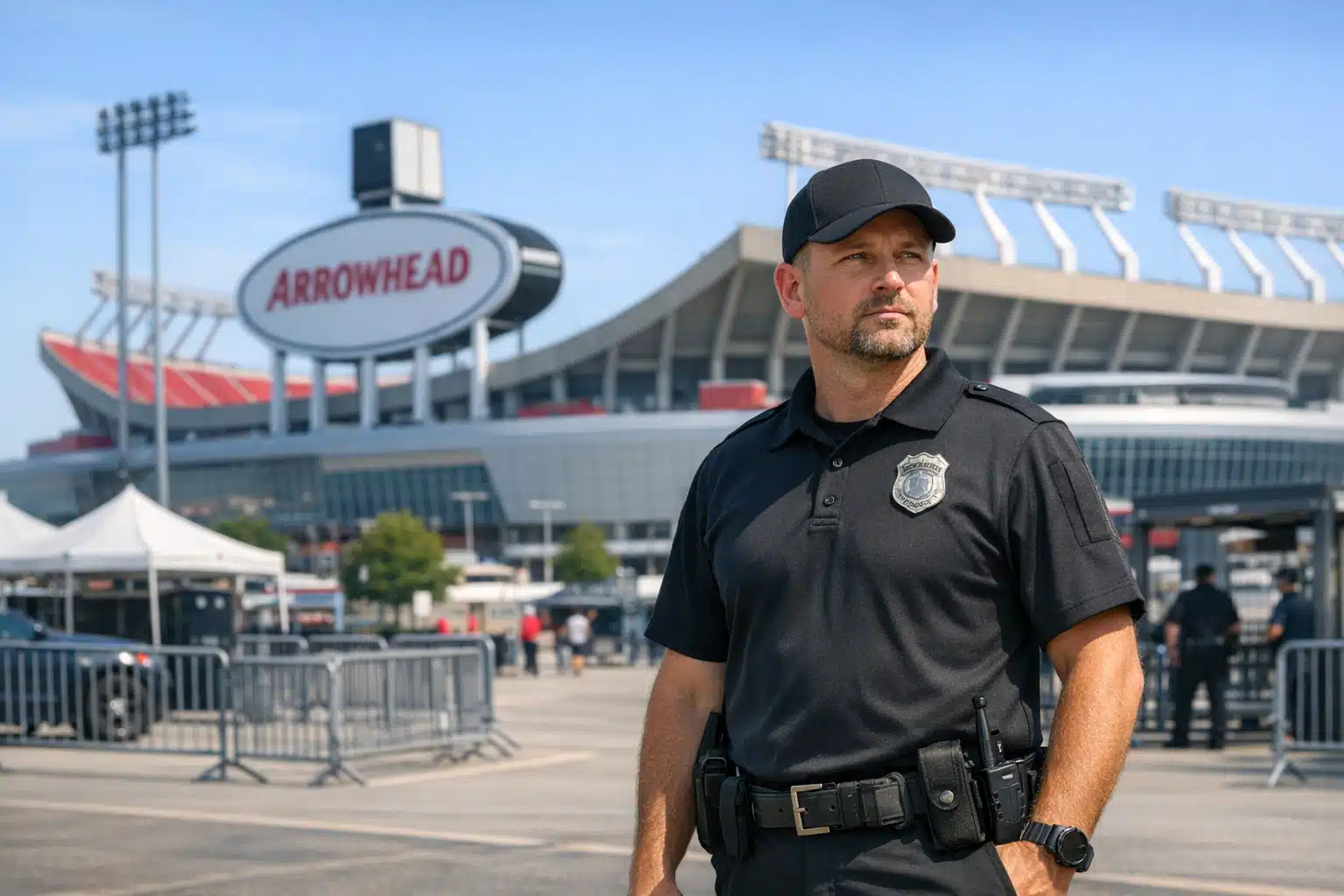
In Kansas City, all security guards must obtain proper licensing from the Missouri Department of Public Safety. This requirement guarantees that every security officer operating within the city meets established standards, ensuring a level of professionalism and reliability in protecting businesses.
Kansas City Security Guard Licensing Creates Foundation for Professional Services
Kansas City requires all security guards working within city limits to obtain proper licensing through the Missouri Department of Public Safety. This local regulations security guards framework ensures every officer protecting your business meets rigorous standards.
The licensing process involves background checks, fingerprinting, and completion of state-mandated training programs. Guards working at high-profile venues like Arrowhead Stadium or T-Mobile Center face additional scrutiny during their application review.
Local businesses benefit from these strict requirements. Licensed guards demonstrate proven competency in conflict de-escalation, emergency response, and legal authority limits.
City Ordinances Shape Security Operations in Entertainment Districts
Kansas City’s Power & Light District operates under specific security protocols that differ from standard commercial properties. The city mandates minimum security staffing levels during Chiefs games and major concerts.
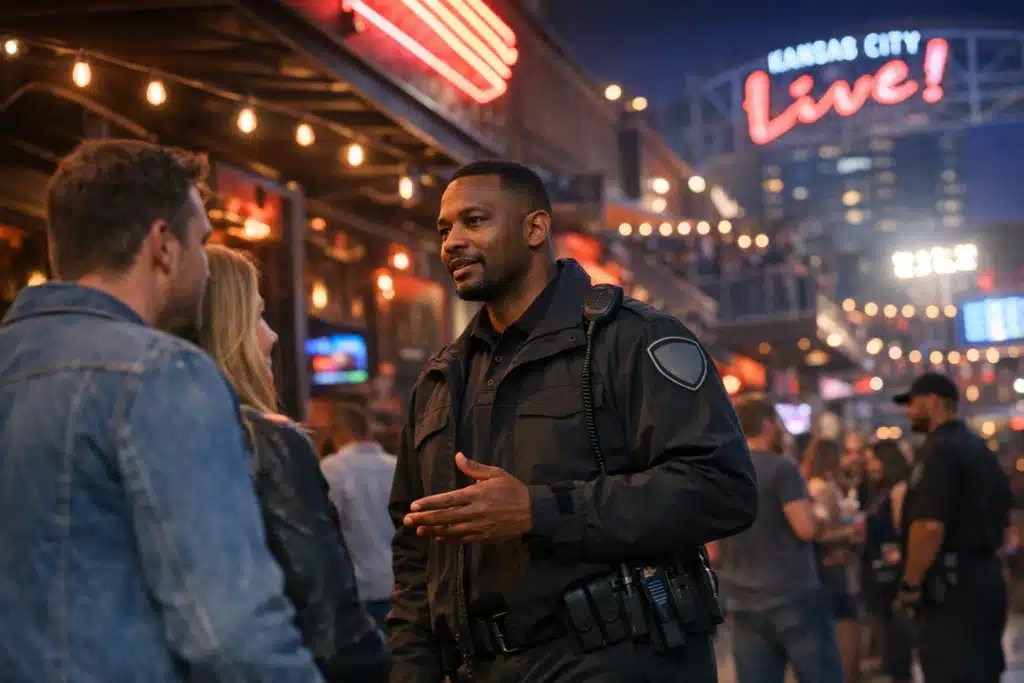
Westport entertainment venues must maintain one licensed guard per 75 patrons during peak hours. This regulation directly impacts staffing costs and scheduling for bars, clubs, and live music venues.
Key compliance requirements include:
- Mandatory incident reporting within 24 hours
- Coordination with KCPD during large events
- Specific crowd control training for entertainment districts
- Regular license renewal every two years
BBQ District Security Faces Unique Crowd Management Rules
The Crossroads Arts District and surrounding BBQ venues operate under Kansas City compliance standards designed for food festivals and outdoor events. Security guards must complete additional training for managing food vendor crowds and outdoor gathering safety.
During American Royal BBQ events, the city requires one guard per 100 attendees for outdoor venues. Indoor establishments maintain standard ratios but must demonstrate emergency evacuation planning.
Construction Site Security Regulations Vary by Kansas City Zone
Construction projects in downtown Kansas City face stricter security requirements than suburban developments. Sites within the downtown loop must maintain 24-hour security coverage and comply with additional theft prevention measures.
The city’s construction security ordinance requires guards to complete specialized training for equipment protection and site access control. This training covers Kansas-specific weather protocols, including tornado warning procedures.
Zone-specific requirements include:
- Downtown projects: 24/7 coverage mandatory
- Residential zones: Security required during non-work hours
- Industrial areas: Equipment-specific protection protocols
- Historic districts: Additional preservation compliance measures
Weather Emergency Protocols Impact Security Staffing
Kansas City’s tornado season creates unique regulatory challenges for security operations. Guards must complete severe weather training and maintain communication protocols during weather emergencies.
Construction sites in Tornado Alley require security staff trained in emergency shelter procedures. This specialized training goes beyond standard security licensing and focuses on life safety during severe weather events.
Apartment Complex Security Follows Specific Kansas City Housing Codes
Multi-family housing developments with more than 50 units must provide security services meeting Kansas City housing authority standards. These regulations affect properties in areas like Country Club Plaza and Overland Park.
Security guards at apartment complexes need additional training in tenant rights, fair housing laws, and domestic dispute response. The city requires annual recertification for guards working residential properties.
Surveillance systems at apartment complexes must comply with Missouri privacy laws while meeting Kansas City’s crime prevention requirements. Guards monitoring these systems need specialized certification in privacy compliance.
Tenant Safety Regulations Drive Security Service Standards
Kansas City mandates specific response times for security incidents at residential properties. Guards must respond to emergency calls within five minutes and document all incidents in city-approved reporting systems.
The local regulations security guards framework requires residential security to coordinate with Kansas City’s community policing initiatives. This collaboration helps reduce property crime rates in target neighborhoods.

 Posted on Google
Sports Venue Security Faces Enhanced Regulatory Oversight
Arrowhead Stadium and Kauffman Stadium operate under federal, state, and local security regulations that create complex compliance requirements. Security guards at these venues need specialized credentials and background clearances.
Game day security involves coordination between private security firms, KCPD, and federal agencies. Guards must complete anti-terrorism training and maintain security clearances for working major sporting events.
Sports venue compliance includes:
- Federal background clearance requirements
- Crowd control certification for 70,000+ attendees
- Emergency evacuation training
- Coordination protocols with multiple law enforcement agencies
Tailgating Area Security Requires Special Permits
Private security companies providing tailgating area coverage need special event permits from Kansas City. These permits require proof of adequate insurance coverage and specialized crowd management training.
Guards working tailgating areas must understand alcohol service regulations and coordinate with Kansas City’s special events division. This coordination ensures compliance with both security and public safety requirements.
Remote Surveillance Technology Must Meet Kansas City Data Requirements
Video surveillance systems operated by security companies must comply with Kansas City’s data retention and privacy regulations. Footage storage, access controls, and sharing protocols fall under strict local oversight.
Remote monitoring centers serving Kansas City clients need licenses as security service providers. Staff monitoring cameras must maintain the same licensing requirements as on-site security guards.
Cloud storage of surveillance footage requires compliance with Missouri data privacy laws. Security companies must demonstrate secure data handling and provide clear retention policies to Kansas City business clients.
Integration with City Emergency Systems Creates Compliance Benefits
Security companies that integrate their systems with Kansas City’s emergency response network gain operational advantages. This integration requires additional certifications but enables faster police response times.
Remote surveillance systems connected to city emergency services must meet specific technical standards. These standards ensure compatibility during emergency situations and multi-agency responses.
Local Regulations Security Guards Must Navigate Create Competitive Advantages
Kansas City’s comprehensive regulatory framework ensures professional security services while creating barriers for non-compliant providers. Businesses benefit from working with security companies that understand local compliance requirements.
Professional security firms maintain compliance officers who track regulatory changes and ensure ongoing adherence to Kansas City requirements. This expertise protects clients from liability issues and service interruptions.
The complexity of local regulations makes choosing an experienced, locally-focused security provider essential for Kansas City businesses.
Twin City Security Kansas City maintains full compliance with all local regulations while providing comprehensive security guard services and remote surveillance solutions. Contact our Kansas City compliance experts at 913‑831‑2525 or Kansas@TwinCitySecurity.com for a customized security assessment that meets all regulatory requirements.
Sources
- Missouri Department of Public Safety – Private Security Division
- Kansas City Missouri – Business Licenses and Permits
- Kansas City Police Department – Community Partnership Programs
- FEMA – Private Sector Emergency Preparedness
Kansas City mandates strict licensing and training for security guards to ensure high standards of service across various sectors. These regulations not only enhance public safety but also create operational challenges for local businesses.
- All security guards must obtain licensing through the Missouri Department of Public Safety, involving background checks and training.
- Specific regulations apply to different venues, such as requiring additional guards during major events and specialized training for crowd management.
- Security companies must comply with local data privacy laws and integrate with city emergency systems for improved response times.
Recent Posts