
Security Strategies for Kansas City’s Fall Construction Projects
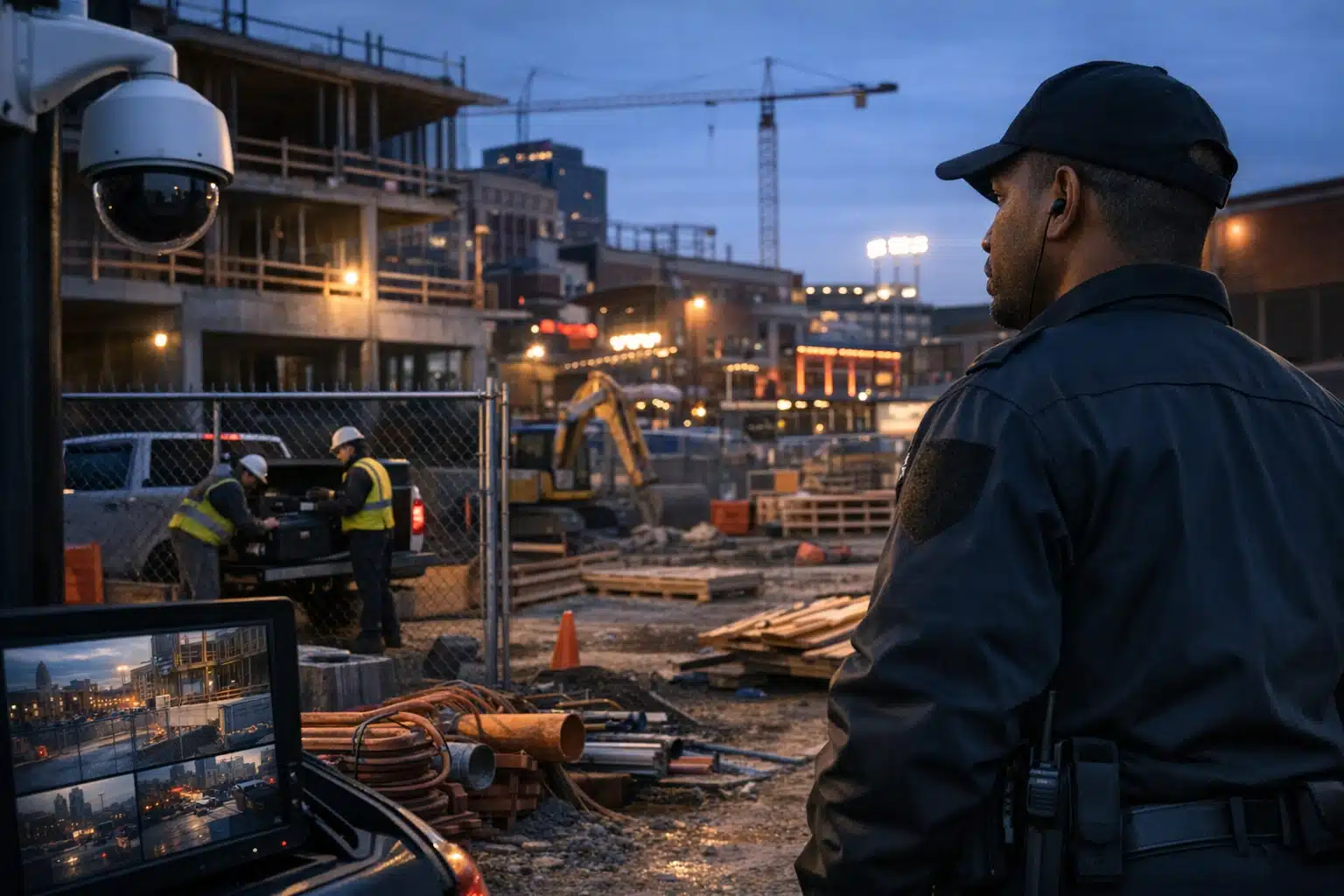
Effective security strategies for Kansas City's fall construction projects include enhancing site surveillance, utilizing security personnel, and implementing robust access controls. Additionally, securing tools and materials with lockable storage and increasing lighting can deter theft, particularly as daylight decreases and the risk of copper theft rises.
Why Fall Changes the Security Math for Kansas City Construction Sites
Copper theft spikes when daylight shrinks. Kansas City job sites lose thousands in wiring and tools each autumn.
Fall construction security in Kansas City carries risks that summer projects rarely face. Shorter days, unpredictable storms, and distracted crews create openings for theft and vandalism.
This post breaks down what changes in autumn. It covers copper and tool theft, weather threats, and how remote monitoring fills the gaps when patrols cannot.
Kansas City contractors near the Crossroads, Westport, and Overland Park face the same seasonal pattern every year. Knowing it early saves money.
The Fall Construction Security Risks Specific to Kansas City
Autumn shifts the threat profile on local job sites. Four problems stand out between September and December.
1. Copper and Catalytic Converter Theft Rise
Scrap metal prices climb heading into winter. Thieves target copper wiring, HVAC coils, and parked equipment.
A half-finished build in the Power & Light District makes an easy target. Exposed wiring sits unprotected after crews leave at 5 p.m.
Catalytic converter theft hits parked work trucks and skid loaders. A single cut takes under two minutes in a dark lot.
2. Earlier Darkness Extends the Vulnerable Window
By late October, sunset arrives before 6:30 p.m. in Kansas City. Crews pack up in fading light.
That leaves roughly 14 hours of darkness on an unguarded site. Most break-ins happen between midnight and 4 a.m.
3. Fall Storms and Early Freezes Damage Open Sites
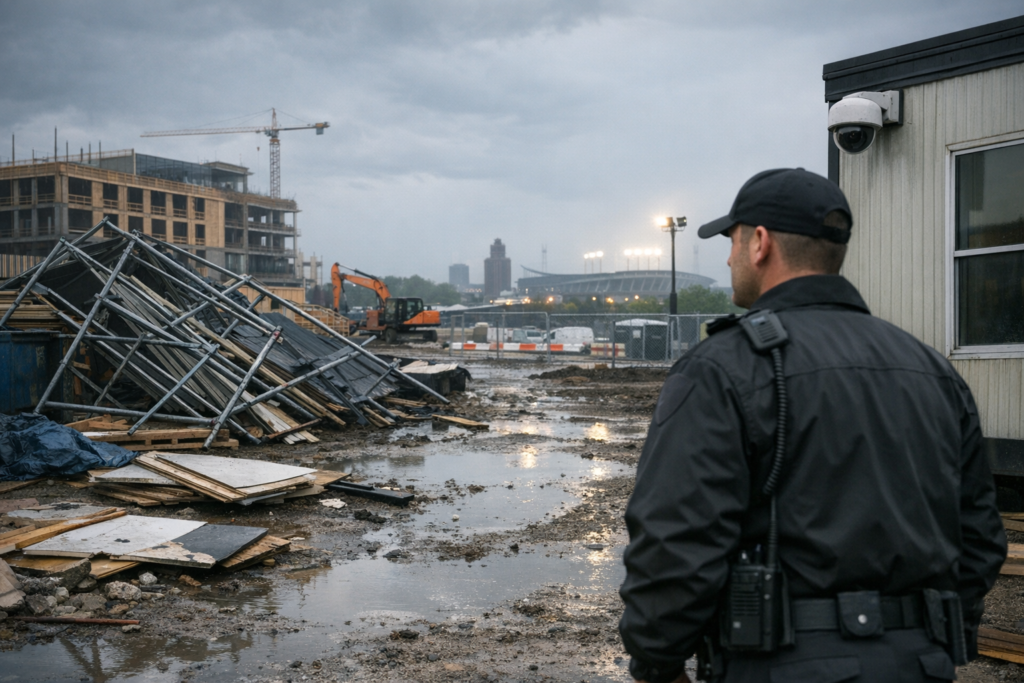
Missouri and Kansas see severe thunderstorms into November. High winds scatter materials and topple scaffolding.
An early freeze can crack exposed concrete pours. Flooding from heavy rain damages stored drywall and lumber.
4. Game Day Traffic Pulls Attention Away
Chiefs and Sporting KC home games flood nearby areas with people and vehicles. A construction site near Arrowhead sees unfamiliar foot traffic on Sundays.
Crowds give trespassers cover. Tailgate parking overflow can spill into fenced staging areas.
How to Protect Your Kansas City Construction Site This Fall
Construction site protection in autumn demands a plan built around early darkness and weather. Follow these steps.
- Lock down copper and metals daily. Store wiring and coils in a secured container, not open trailers.
- Light the perimeter. Add motion-triggered lighting at entry points and material staging zones.
- Install remote video surveillance. Place cameras covering access roads, equipment lots, and storage areas.
- Schedule patrols around dusk and pre-dawn. Cover the highest-risk hours, not just overnight.
- Secure vehicles and heavy equipment. Use wheel locks, fuel cutoffs, and GPS trackers on loaders and trucks.
- Prep for storms. Anchor scaffolding, cover open pours, and move loose materials indoors before fronts arrive.
Each step closes a gap that fall weather or early darkness opens. Skipping one leaves a predictable weakness.
Why Remote Video Surveillance Works for Fall Job Sites
Remote monitoring covers the hours when no crew is present. Live operators watch feeds and respond to motion in real time.
What Remote Monitoring Catches That Cameras Alone Miss
A recorded camera only helps after a theft. A monitored camera stops one in progress.
When an operator spots movement in a staging area at 2 a.m., they can:
- Trigger an audio warning over on-site speakers
- Activate floodlights to expose the intruder
- Call local police with a live description
- Log timestamped footage for insurance claims
Thieves leave once they know someone is watching. That deterrent matters most on dark, unguarded fall nights.
Cost Compared to On-Site Guards
Remote surveillance covers large sites at lower cost than full overnight guard coverage. One operator can monitor several camera zones at once.
Many Kansas City contractors pair the two. Guards handle daytime access control. Remote monitoring takes the overnight shift.
Matching Security to Your Project Location
Site location changes the risk level. A build in Overland Park faces different pressures than one in the Crossroads.
Urban Core Sites
Projects in the Crossroads and Power & Light District sit near heavy nightlife. Foot traffic stays high after dark on weekends.
Access control and visible cameras work best here. Trespassers blend into crowds, so clear boundaries help.
Suburban and Edge Sites
Overland Park and Lee’s Summit sites face less foot traffic but longer response times. Isolated lots attract metal thieves who expect no witnesses.
Remote monitoring with audio response fits these locations. The warning reaches intruders before anyone can arrive.
Sites Near Sports Venues
Construction near Arrowhead or Children’s Mercy Park needs a game-day plan. Expect overflow parking and wandering crowds on event days.
Temporary barriers and extra patrol coverage handle the surge. Coordinate shifts around the home schedule.

 Posted on Google
Preparing Your Site for Midwest Fall Weather
Weather protection is part of security planning in Kansas City. Storm damage and theft both stem from an unsecured site.
Before a Storm Front Arrives
- Anchor or lower scaffolding and temporary structures
- Cover fresh concrete and exposed rebar
- Move lumber, drywall, and electrical materials under cover
- Confirm cameras have battery backup during power loss
After Severe Weather
Downed fencing creates instant access points. Walk the perimeter at first light and repair gaps fast.
Thieves watch for storm-damaged sites. A broken gate becomes an open invitation within hours.
Building a Fall Security Plan That Holds
A strong plan accounts for darkness, weather, and local event traffic together. Start by mapping your highest-risk hours and weakest access points.
Then match coverage to those gaps. Early-dusk patrols, monitored cameras, and secured metals handle most fall threats.
Review the plan monthly. Sunset times, scrap prices, and the sports schedule all shift as the season moves toward winter.
Secure Your Fall Construction Project in Kansas City
Fall construction security in Kansas City comes down to shorter days, metal theft, and storm readiness. Monitored surveillance and well-timed patrols close the gaps that autumn opens.
Twin City Security Kansas City builds site protection plans around your location and schedule. Call 913‑831‑2525 or email Kansas@TwinCitySecurity.com for a Kansas City construction site assessment.
Sources
- Bureau of Justice Statistics – Property Crime Data
- National Weather Service – Kansas City/Pleasant Hill Forecast Office
- National Insurance Crime Bureau – Equipment Theft Reports
- OSHA – Construction Industry Safety Standards
Fall construction in Kansas City presents unique security challenges due to increased theft and adverse weather conditions. Contractors must adapt their security strategies to address these seasonal risks effectively.
- Copper and catalytic converter thefts rise as daylight decreases, making job sites more vulnerable. Contractors should secure metals and store materials properly.
- Shorter days lead to longer periods of darkness, increasing the likelihood of break-ins during unguarded hours. Monitoring and lighting are essential.
- Severe weather can damage open sites, necessitating proactive measures like securing scaffolding and covering materials before storms arrive.
Recent Posts