
How Kansas City’s Sports Venues Can Enhance Fan Safety with Remote Surveillance
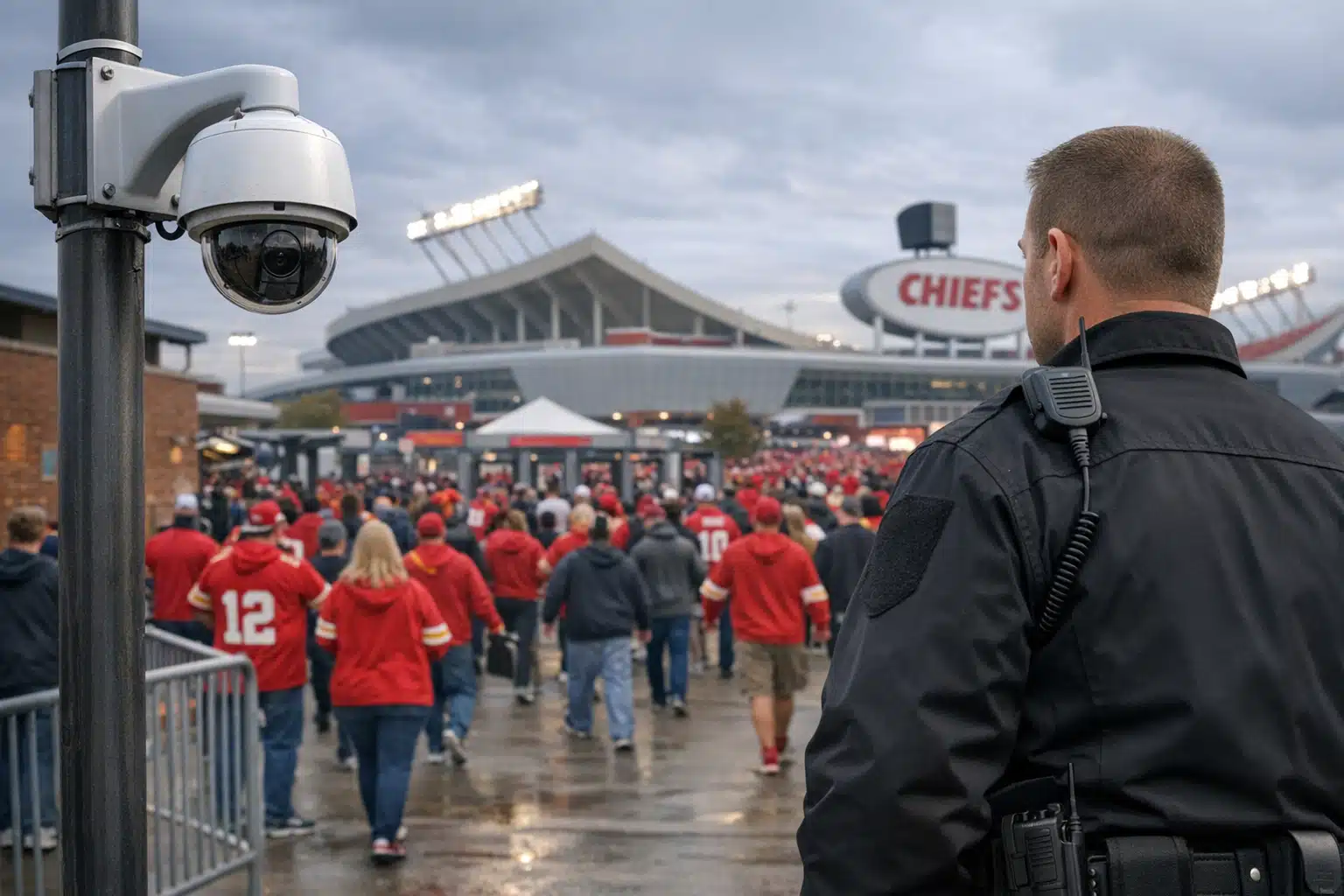
Remote surveillance enhances fan safety at Kansas City's sports venues by providing comprehensive monitoring of all areas, including gates, concourses, and parking lots. This technology allows operators to identify potential issues quickly, reduce response times, and effectively manage safety concerns related to large crowds and adverse weather conditions.
Arrowhead Stadium packs more than 76,000 fans on Chiefs game days. That kind of crowd creates blind spots no single guard can watch alone. Sports venue surveillance gives Kansas City operators a way to see every gate, concourse, and parking lot at once. This post breaks down how remote monitoring improves fan safety, cuts response times, and handles Midwest weather threats.
Whether you run a stadium, a soccer complex in Overland Park, or a tailgate lot near the Power & Light District, the same principle applies. More eyes mean faster action.
Why Sports Venue Surveillance Matters in Kansas City
Large crowds attract theft, fights, and medical emergencies. A packed venue can hide a problem until it grows serious. Remote cameras paired with trained monitoring operators shrink that gap.
Kansas City hosts a heavy sports calendar. Chiefs football, Royals baseball, Sporting KC matches, and college events fill venues most weekends across the year.
Each event brings its own risk pattern:
- Parking lot theft during tailgates near stadium gates
- Crowd crushes at entry gates before kickoff
- Concourse conflicts tied to alcohol sales
- Weather evacuations during spring storm season
Remote surveillance addresses all four from one command point.
How Remote Monitoring Works at a Venue
Cameras feed live video to a staffed monitoring center. Operators watch multiple angles in real time. When they spot trouble, they alert on-site guards or local police within seconds.
This model covers more ground than foot patrols alone. One operator can scan dozens of camera views at once.
Protecting Tailgate Lots and Parking Areas
Parking lots are the most common crime scene on game day. Cars sit empty for hours while owners watch the game. Thieves target unattended vehicles and coolers.
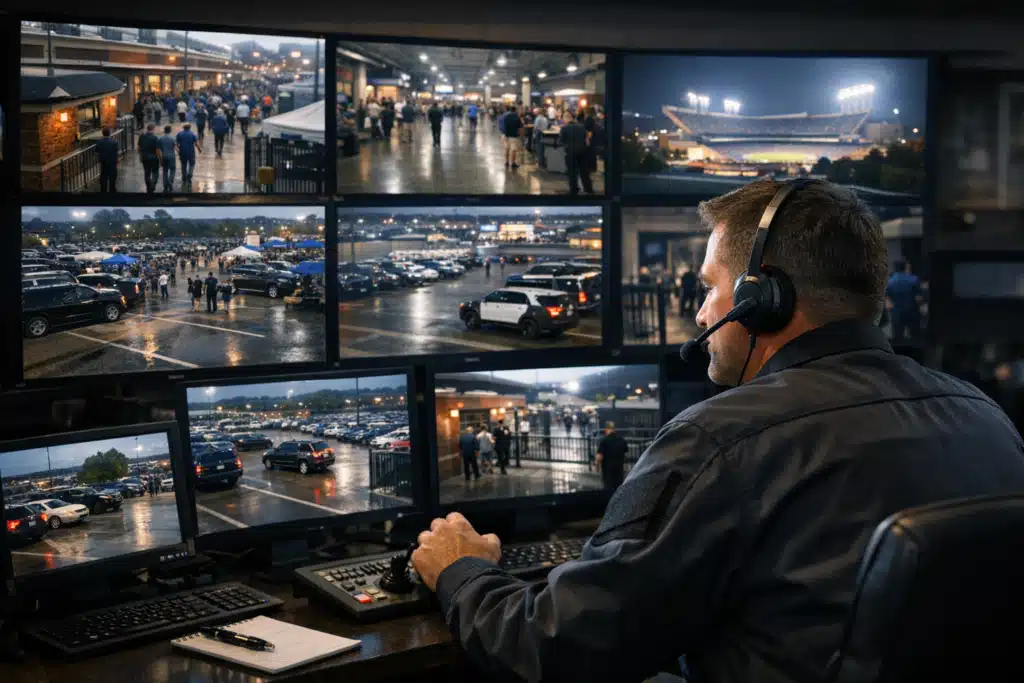
Remote cameras with motion detection flag activity in dark lot corners. Operators direct guards straight to the spot before a break-in finishes.
Steps to Secure a Kansas City Tailgate Lot
- Map the blind spots. Identify rows hidden by trees, trailers, or light poles.
- Place cameras at lot entrances. Record every plate entering and leaving.
- Add pan-tilt-zoom units for wide coverage of open pavement.
- Post visible signage. Announced monitoring cuts theft attempts.
- Coordinate with on-site guards for fast physical response.
Lots near Westport and the Crossroads carry extra risk after night events. Foot traffic mixes fans with bar crowds, raising the chance of confrontation.
Managing Crowd Flow at Entry Gates
Gate lines create pressure points. When thousands push toward a few turnstiles, crowd density climbs fast. Camera feeds let operators spot dangerous bunching early.
Operators can radio staff to open extra lanes. They can also flag a fainted fan in a crowd that guards cannot see from ground level.
Fan safety depends on catching these moments before they escalate. A single overhead camera often sees what a guard standing in the crush cannot.
Signs Operators Watch For
- Sudden crowd surges toward one gate
- People falling or being pushed
- Bottlenecks blocking exit paths
- Arguments spreading between groups
Early warnings give staff time to act. Seconds matter when a crowd tightens.
Handling Midwest Weather at Open-Air Venues
Kansas City sits in tornado alley. Spring games face sudden storms, lightning, and high winds. Fan safety plans must account for fast evacuations.
Remote cameras help staff track evacuation progress in real time. Operators confirm which sections have cleared and which still hold people.
Weather Response With Surveillance Support
- Monitor exit ramps as crowds move toward shelter.
- Spot fans who ignore warnings and stay in stands.
- Track parking lot congestion during rapid departures.
- Confirm cleared zones for emergency crews.
During a lightning delay, a monitoring operator becomes a second set of eyes for stadium managers. That view speeds every decision.
Protecting the BBQ District and Nearby Retail
Kansas City’s barbecue spots draw hungry crowds before and after games. Restaurants near stadiums face theft, vandalism, and loitering on busy nights.
Remote surveillance covers storefronts, patios, and back alleys. Operators watch for break-in attempts after closing hours.
For a BBQ district vendor, camera coverage protects both the register and the outdoor seating. Crowds spill onto sidewalks, and disputes can start fast.
What BBQ District Operators Gain
- After-hours alerts when motion trips near locked doors
- Recorded evidence for police reports and insurance claims
- Live monitoring during peak game-day rushes
- Deterrence from visible camera placement

 Posted on Google
Sports Venue Surveillance and Missouri Regulations
Missouri sets rules for private security firms and camera use. Venues must post notice of recording in many public areas. A qualified provider knows where signage is required.
Recorded footage must be stored and handled correctly to hold up in court. Chain-of-custody matters if video becomes evidence in an assault or theft case.
Working with a licensed Kansas City firm keeps your venue on the right side of both Missouri and Kansas law. Metro venues sit across both state lines, and rules differ.
Why Local Knowledge Counts
A provider based in Kansas City understands game-day traffic patterns. They know which lots near Arrowhead flood with people first. That knowledge shapes smarter camera placement.
Twin City Security Kansas City works with venue operators across the metro. Local teams respond faster and plan around real Kansas City conditions.
Combining Cameras With On-Site Guards
Cameras alone cannot stop a fight or clear a gate. Guards on the ground do that. Remote surveillance makes each guard more effective.
Operators act as a control room. They direct guards to problems and confirm resolutions. This pairing covers more space with fewer people on foot.
Sports venue surveillance reaches its full value when video and boots work together. One informs the other in real time.
A Sample Game-Day Setup
- Fixed cameras on every gate and turnstile
- PTZ cameras covering parking lots
- Remote operators scanning feeds live
- Roaming guards ready for rapid dispatch
- Direct radio links to local police
This layout balances wide coverage with quick physical response.
Measuring the Payoff for Venue Operators
Sports venue surveillance lowers liability and speeds emergency response. Recorded footage settles disputes and supports insurance claims. Fewer incidents mean better fan reviews and repeat attendance.
For an operator, the math favors prevention. One avoided injury lawsuit can cover years of monitoring costs.
Conclusion
Kansas City venues face big crowds, sudden storms, and busy game-day lots. Remote surveillance paired with trained guards catches trouble early and keeps fans safe. Local knowledge of Arrowhead, the Power & Light District, and the BBQ scene shapes smarter coverage.
Twin City Security Kansas City builds monitoring plans for stadiums, complexes, and event lots across the metro. Call 913‑831‑2525 or email Kansas@TwinCitySecurity.com for a venue security assessment.
Sources
- Federal Bureau of Investigation – Safety Resources
- Cybersecurity and Infrastructure Security Agency – Securing Public Gatherings
- National Weather Service – Kansas City/Pleasant Hill Office
- Missouri Secretary of State – Business and Licensing
Kansas City's sports venues can enhance fan safety through effective remote surveillance systems. These systems allow operators to monitor large crowds and respond quickly to incidents, improving overall safety during events.
- Remote cameras provide coverage of all areas, including gates and parking lots, reducing blind spots. Operators can quickly alert on-site guards or police when trouble arises. This system is crucial for managing crowd flow and responding to weather emergencies efficiently.
- Arrowhead Stadium packs more than 76,000 fans on Chiefs game [...] Arrowhead Stadium packs more than 76,000 fans on Chiefs game days.
- That kind of crowd creates blind spots no single guard can watch alone.
Recent Posts