
Security Measures to Protect Against Tornado Damage for Kansas City Offices
To protect Kansas City offices from tornado damage, businesses should implement measures such as reinforcing windows and doors, creating designated safe areas within the building, and developing an emergency response plan. Regular training and drills for employees can also enhance preparedness during tornado events.
Why Tornado Threats Change How Kansas City Offices Think About Security
Kansas City records some of the highest tornado activity in the country each spring. The metro sits inside Tornado Alley, where warm Gulf air collides with cold northern fronts.
Strong office building security in this region means more than locked doors and cameras. It means planning for 100-mph winds, flying debris, and post-storm chaos that follows an EF-scale twister.
This post walks Kansas City business owners and property managers through practical steps. You will learn how to protect people, secure property, and keep operations running after severe weather hits.
What Tornado Damage Prevention Means for Office Buildings
Tornado damage prevention for offices combines physical hardening, monitoring, and staff readiness. Each piece reduces injury risk and limits property loss.
A tornado threatens an office in three phases:
- Before: Early warning and shelter preparation.
- During: Structural protection and people safety.
- After: Site security against looting and hazards.
Many Kansas City firms plan for phase one and skip phase three. That gap costs them.
Hardening the Physical Structure Before Storm Season
Office building security starts with the shell of the building itself. Wind and debris cause most tornado-related damage in the metro.
Reinforce Windows and Glass Facades
Glass towers in the Crossroads and downtown loop face high debris risk. Flying gravel from nearby rooftops becomes a projectile at 90 mph.
Take these steps:
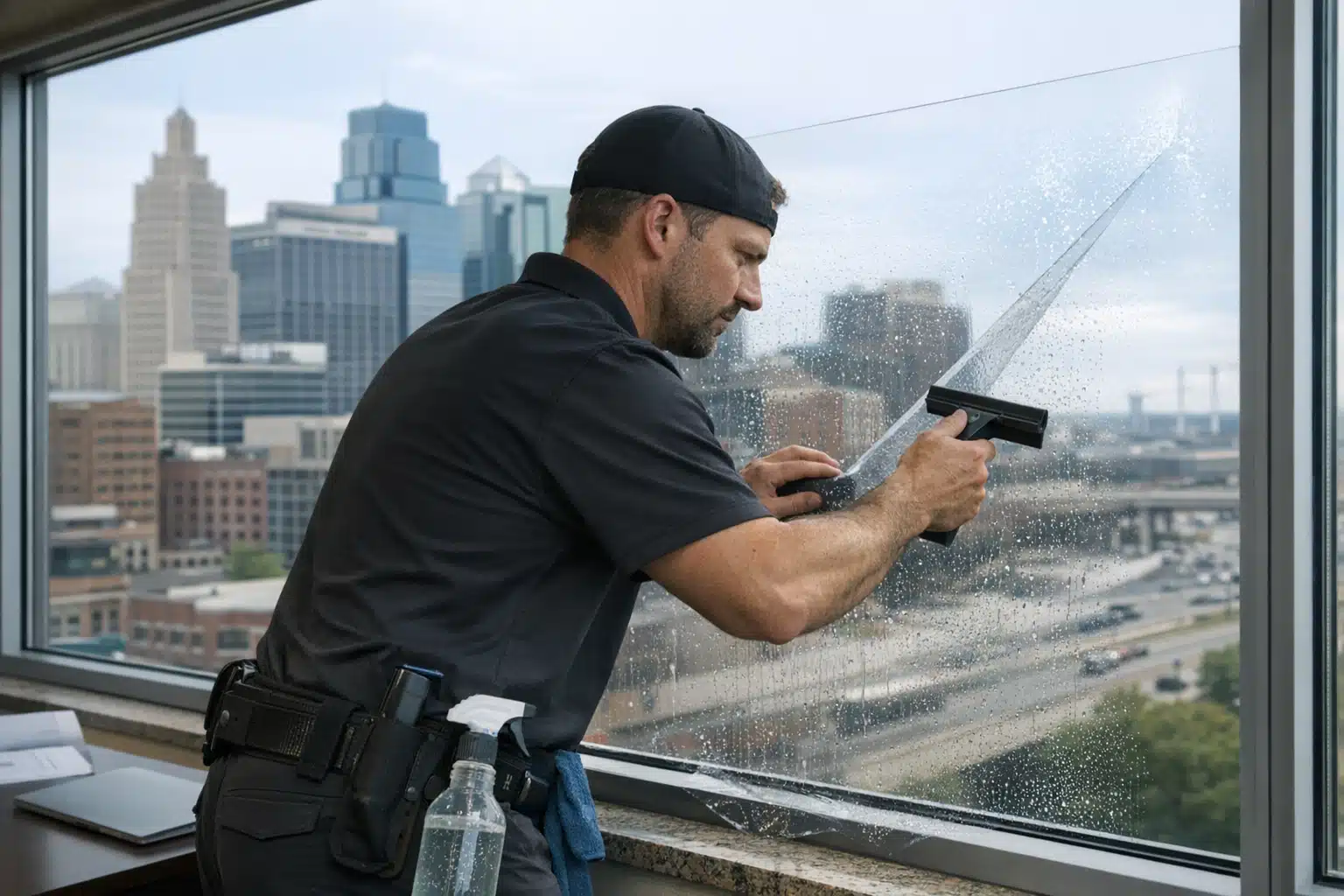
- Apply impact-resistant safety film to exterior windows.
- Replace older single-pane glass on lower floors.
- Install interior shatter barriers near open workspaces.
Safety film keeps glass in the frame when struck. That protects employees sitting near windows during a warning.
Secure the Roof and Rooftop Equipment
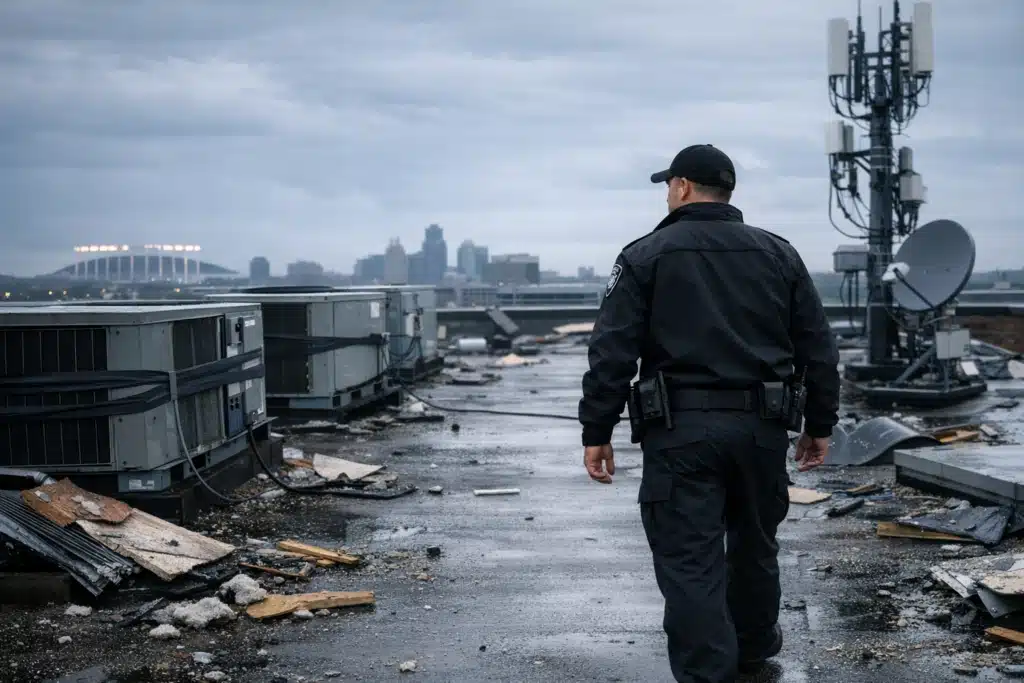
Rooftop HVAC units and antennas tear loose in high winds. Loose equipment becomes airborne and damages neighboring properties.
Have a contractor anchor units with rated tie-down straps. Inspect flashing and roof membranes each February before peak season.
Protect Entry Points and Loading Docks
Overhead doors on Overland Park office parks fail under pressure changes. A failed door lets wind inside, which lifts the roof.
Reinforce garage and dock doors with bracing kits. Keep them closed the moment a warning is issued.
Building an Internal Shelter and Alert Plan
People matter more than property during a tornado. Every Kansas City office needs a defined shelter location and alert system.
Identify the Safest Interior Space
The best shelter is a small interior room on the lowest floor. Interior stairwells, restrooms, and windowless conference rooms work well.
Avoid these areas:
- Large open rooms with wide roof spans.
- Spaces near exterior glass or windows.
- Upper floors of mid-rise buildings.
Set Up Layered Weather Alerts
NOAA weather radios still beat phone apps for reliability. Cell networks jam during regional emergencies.
Combine three alert sources:
- A NOAA weather radio in the main office.
- Wireless Emergency Alerts on staff phones.
- Jackson County outdoor siren awareness.
Assign one staff member per shift to track warnings. That person moves everyone to shelter when a tornado warning drops.
How Remote Video Surveillance Protects Offices After a Tornado
Post-storm looting is a real threat in damaged commercial districts. Broken doors and dark buildings attract theft within hours.
Remote video surveillance keeps eyes on your property when nobody can reach it. Monitoring agents watch live feeds and flag intruders.
Why On-Site Cameras Alone Fall Short
Standard cameras record footage but nobody watches in real time. After a tornado, you need active eyes, not just recordings.
Monitored surveillance adds these advantages:
- Live intervention when someone breaches a damaged wall.
- Backup power feeds that survive short outages.
- Immediate dispatch to police or on-site guards.
Cellular and Battery Backup for Downed Networks
Tornadoes cut power and internet across whole neighborhoods. Cameras tied only to building power go dark when you need them.
Systems with cellular backup and battery reserves keep watching. Twin City Security Kansas City builds this redundancy into monitored setups.

 Posted on Google
Coordinating Security Guards During Severe Weather
On-site guards do more than deter theft during storm season. They direct staff to shelter and manage the site after impact.
Guard Duties Before the Storm
Trained guards run shelter drills and confirm headcounts. They lock down entry points and close overhead doors fast.
Guard Duties After the Storm
Once winds pass, guards secure broken entrances and mark hazards. They control access so only cleared staff and crews enter.
This matters for offices near Westport and the Country Club Plaza. Crowded districts draw curiosity seekers and opportunists after damage.
Documenting Damage for Insurance and Recovery
Fast, accurate documentation speeds insurance claims. Surveillance footage and guard reports build a clear record.
After a tornado, follow this order:
- Confirm all staff are safe and accounted for.
- Photograph damage before any cleanup begins.
- Pull timestamped surveillance footage of the event.
- Log guard observations with times and locations.
- Restrict access until adjusters and inspectors clear the site.
Missouri and Kansas both see disputed storm claims each spring. Solid video and written records protect your position.
A Practical Tornado Readiness Checklist for Kansas City Offices
Use this checklist before the March-to-June peak season:
- Apply safety film to exterior glass.
- Anchor rooftop HVAC and antenna equipment.
- Brace overhead and loading dock doors.
- Mark and stock an interior shelter space.
- Install a NOAA weather radio.
- Confirm monitored surveillance has battery and cellular backup.
- Assign shelter and alert duties per shift.
- Set a post-storm documentation plan.
Review the list each year. Buildings change, staff turn over, and equipment ages.
Protect Your Kansas City Office Before the Next Warning
Tornado readiness pairs physical hardening with monitored surveillance and trained guards. Together they protect your people, property, and recovery timeline. Kansas City offices that plan ahead lose less and reopen faster.
Twin City Security Kansas City helps local businesses build storm-ready security plans. Call 913‑831‑2525 or email Kansas@TwinCitySecurity.com for a Kansas City security assessment or monitoring quote.
Sources
- National Weather Service – Kansas City/Pleasant Hill Forecast Office
- Ready.gov – Tornado Preparedness
- NOAA Storm Prediction Center – Severe Weather Data
- FEMA – Safe Rooms and Storm Shelters
Kansas City offices face significant tornado threats, necessitating robust security measures beyond basic protections. This guide outlines essential strategies for safeguarding people and property before, during, and after tornado events.
- Kansas City experiences high tornado activity, making advanced planning crucial for office safety.
- Effective tornado preparedness includes hardening structures, establishing shelters, and maintaining alert systems.
- Post-storm security measures, like remote surveillance and on-site guards, help prevent theft and ensure safety after a tornado.
Recent Posts