
The Role of Security Guards in Safeguarding Kansas City’s Warehouse District
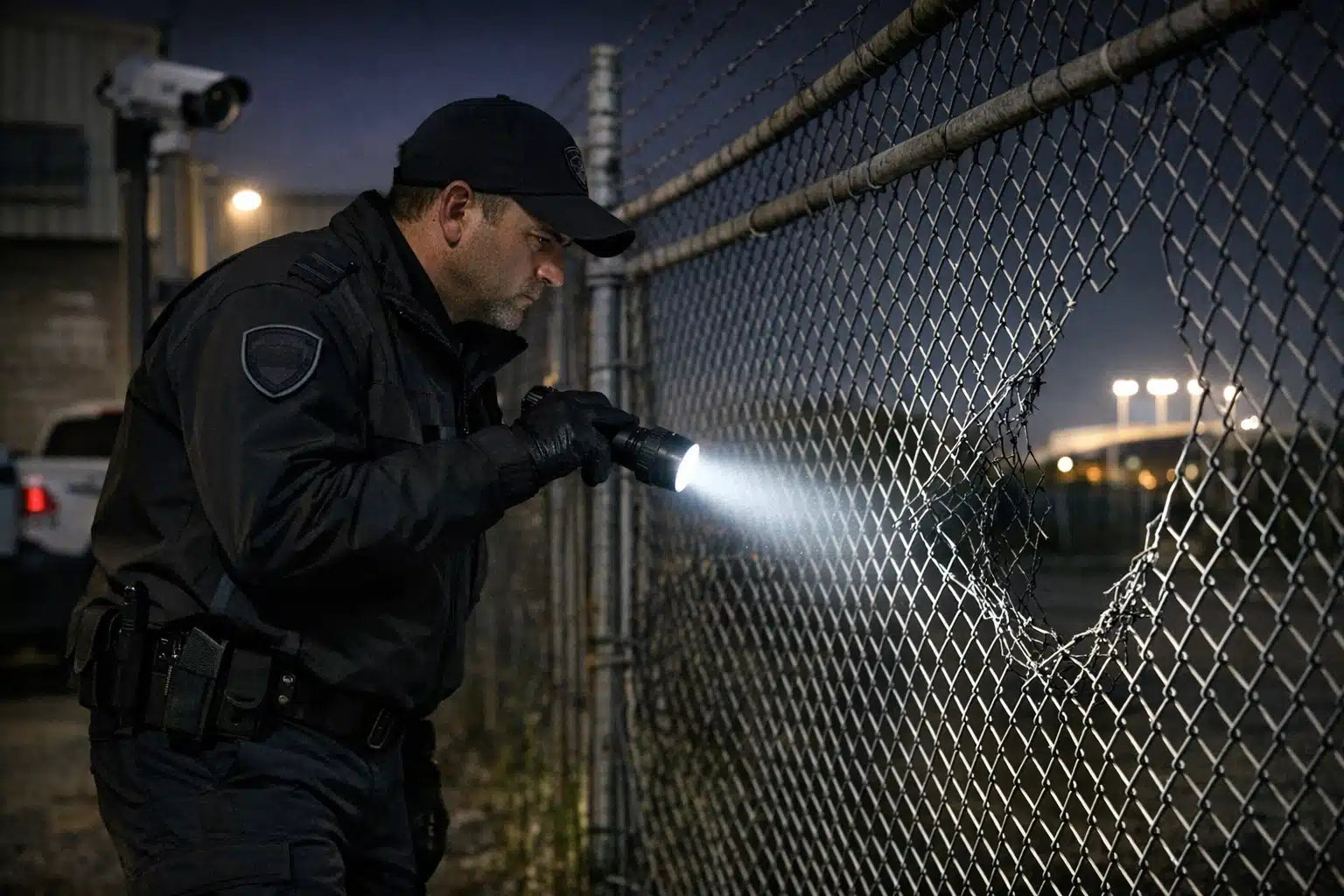
Security guards in Kansas City's Warehouse District play a vital role in protecting warehouses from various threats such as cargo theft, break-ins, and vandalism. They help deter criminal activity, monitor premises, and ensure the safety of goods and personnel, making them essential for maintaining security in this high-risk area.
Warehouse security in Kansas City faces pressure from rail-yard cargo theft, copper wire stripping, and off-hours break-ins across the East Bottoms and Central Industrial District. Missouri reported more than 100,000 property crime offenses in a recent year, and industrial corridors absorb a heavy share. This post walks warehouse owners and facility managers step by step through choosing guards who fit Kansas City’s specific risks.
Why Kansas City Warehouses Face Distinct Security Risks
Kansas City sits at the junction of two major rail networks and Interstates 35, 70, and 435. That freight volume makes local warehouses a target for organized cargo theft.
Thieves study loading dock schedules. They know when a facility runs a skeleton crew overnight.
The Central Industrial District, East Bottoms, and the warehouse clusters near Stadium Drive share three traits that attract criminal activity:
- Isolated access roads with limited foot traffic after 6 p.m.
- High-value inventory like electronics, food distribution stock, and metal.
- Wide perimeters that fencing alone cannot cover.
A single stolen trailer can cost a distributor six figures. Copper theft from HVAC units and electrical rooms adds repair costs on top of the loss.
The Rail-Yard Problem Specific to Kansas City
Warehouses near the Argentine and Knoche rail yards deal with intermodal traffic all night. Trespassers cut fence lines to reach staged containers.
Guards who know these patterns watch the gaps where rail property meets private lots. Cameras miss what a person walking the fence line catches.
What Warehouse Security Guards Do Beyond Watching Doors
Warehouse security guards protect inventory, staff, and equipment across shifts. Their duties reach further than most owners expect.
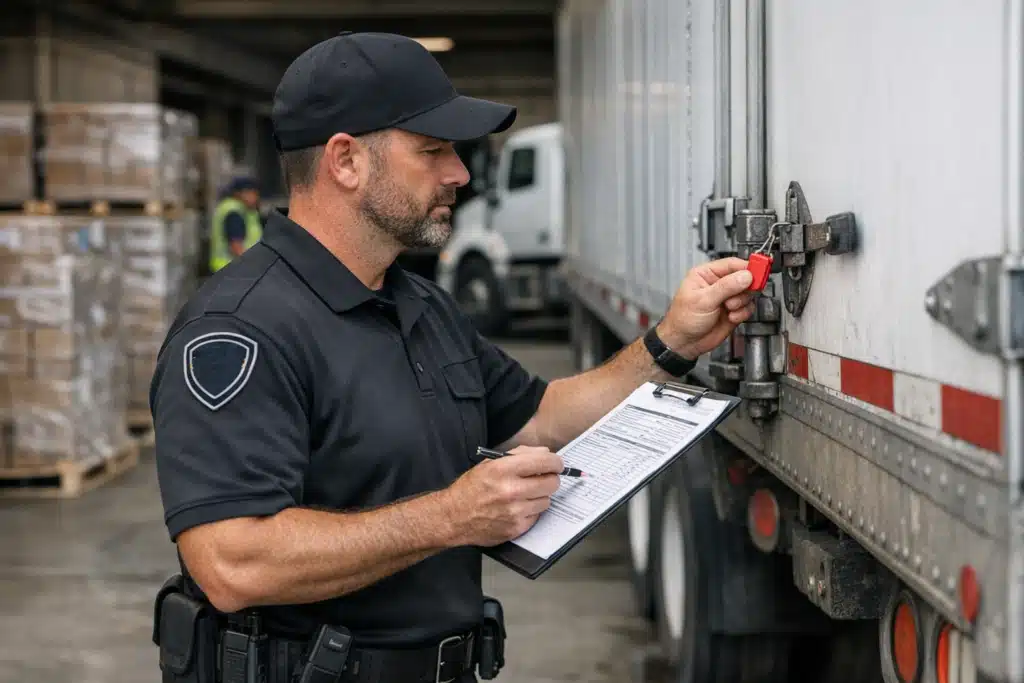
A trained guard at a Kansas City warehouse handles the following:
- Access control at driver check-in and gate entry points.
- Trailer seal verification against manifest records.
- Dock supervision during loading and unloading windows.
- Perimeter patrols on foot and by vehicle after hours.
- Incident documentation for insurance and police reports.
Seal verification matters more than people think. A driver who arrives with a broken or swapped seal signals possible tampering before the trailer ever leaves the lot.
Guards vs. Remote Video Monitoring
Both methods protect Kansas City warehouses, and many facilities run them together.
On-site guards respond in seconds, verify identities in person, and deter crews who scout for empty lots. Remote video monitoring covers wide areas at lower cost and gives verified alerts to dispatch.
A mid-size distribution center near I-435 might place a guard at the main gate and cover back docks with monitored cameras. That pairing cuts payroll without leaving blind spots.
How to Choose Warehouse Security for Your Kansas City Facility
Choosing warehouse security starts with mapping your actual risk, not copying another site’s plan. Follow these steps.
Step 1: Audit Your Weak Points
Walk your perimeter at night. Note dark corners, broken lighting, and fence gaps.
Check where trailers stage overnight and whether drivers can access the yard unsupervised.
Step 2: Match Coverage to Your Schedule
A 24-hour cold storage operation needs different staffing than a warehouse that closes at 5 p.m. List your highest-risk hours first.
Most Kansas City warehouse break-ins happen between midnight and 4 a.m. Weight your coverage toward those hours.
Step 3: Verify Licensing and Training
Missouri regulates private security at the municipal level. Kansas City requires guards to hold a valid license issued by the Board of Police Commissioners.
Ask any provider these questions:
- Are your guards licensed under Kansas City ordinance?
- Do guards carry insurance for on-site incidents?
- What training covers cargo theft and access control?
- How fast can a supervisor reach the site?
Step 4: Plan for Midwest Weather
Kansas City sits in a region hit by severe storms and tornado warnings each spring. Warehouse security plans must account for this.
Guards manage staff shelter procedures during warnings. They protect property after storms knock out power and disable alarm systems.
A dark warehouse with dead cameras during a thunderstorm invites break-ins. A guard on-site keeps eyes on the property when technology fails.
Warehouse Security Costs in Kansas City
Pricing depends on coverage hours, guard count, and whether you add remote monitoring. Owners want real numbers, so here is the shape of it.
- Unarmed guard coverage runs by the hour, priced against shift length and site size.
- Overnight-only staffing costs less than round-the-clock posts.
- Remote video monitoring spreads coverage across a wide yard at a lower per-hour rate than a live guard.
A blended plan usually costs less than staffing every gate with a live guard. Twin City Security Kansas City builds pricing around your square footage, dock count, and risk hours rather than a flat quote.
What Drives the Price Up or Down
Larger perimeters and multiple entry points raise staffing needs. Good existing lighting and fencing lower them.
A warehouse with strong camera infrastructure can lean on remote monitoring and reduce live guard hours. That mix keeps budgets manageable for growing distributors.

 Posted on Google
Local Factors That Change Your Security Plan
Kansas City warehouses do not operate in a vacuum. Nearby activity shifts your risk profile.
Facilities near the Power & Light District and the Crossroads deal with foot traffic that spills into industrial edges on event nights. Warehouses close to Arrowhead and the T-Mobile Center see traffic surges on game days that block access and strain response times.
A guard who knows Chiefs and Royals schedules plans gate staffing around those crowds. Local knowledge beats a generic patrol plan every time.
Coordinating With Kansas City Police
Response times in industrial zones stretch longer than in residential areas. A guard on-site shortens the gap between an incident and a report.
Documented, verified reports from a licensed guard carry weight with responding officers. Grainy footage with no witness slows the case.
Building a Security Plan That Holds Up
A warehouse security plan works when it matches your building, your hours, and your neighborhood. Layer these elements together:
- Physical deterrents — lighting, fencing, gate controls.
- Live guard presence at high-risk entry points.
- Remote monitoring covering wide or low-traffic zones.
- Weather protocols for storm season.
- Reporting systems that support police and insurance claims.
Review the plan twice a year. Inventory changes, staffing changes, and new construction nearby all shift your exposure.
Conclusion
Kansas City warehouses face rail-yard theft, copper stripping, and storm-season vulnerability that generic security misses. Matching licensed guards with remote monitoring covers wide perimeters without draining your budget.
Contact Twin City Security Kansas City for a site assessment and monitoring quote built around your facility. Call 913‑831‑2525 or email Kansas@TwinCitySecurity.com.
Sources
- Missouri State Highway Patrol – Crime in Missouri Data Reports
- Kansas City Missouri Police Department – Official Site
- Federal Bureau of Investigation – Cargo Theft
- National Weather Service – Kansas City/Pleasant Hill Office
Kansas City warehouses face unique security challenges due to high rates of property crime and specific risks from rail-yard theft. This guide helps warehouse owners choose the right security guards tailored to their facility's needs.
- Warehouse security is essential due to high-value inventory and isolated locations that attract crime.
- Guards perform various duties including access control, perimeter patrols, and incident documentation.
- Choosing the right security involves assessing risks, verifying guard training, and planning for local conditions.
Recent Posts