
Choosing Between Armed and Unarmed Security for Kansas City’s Restaurants
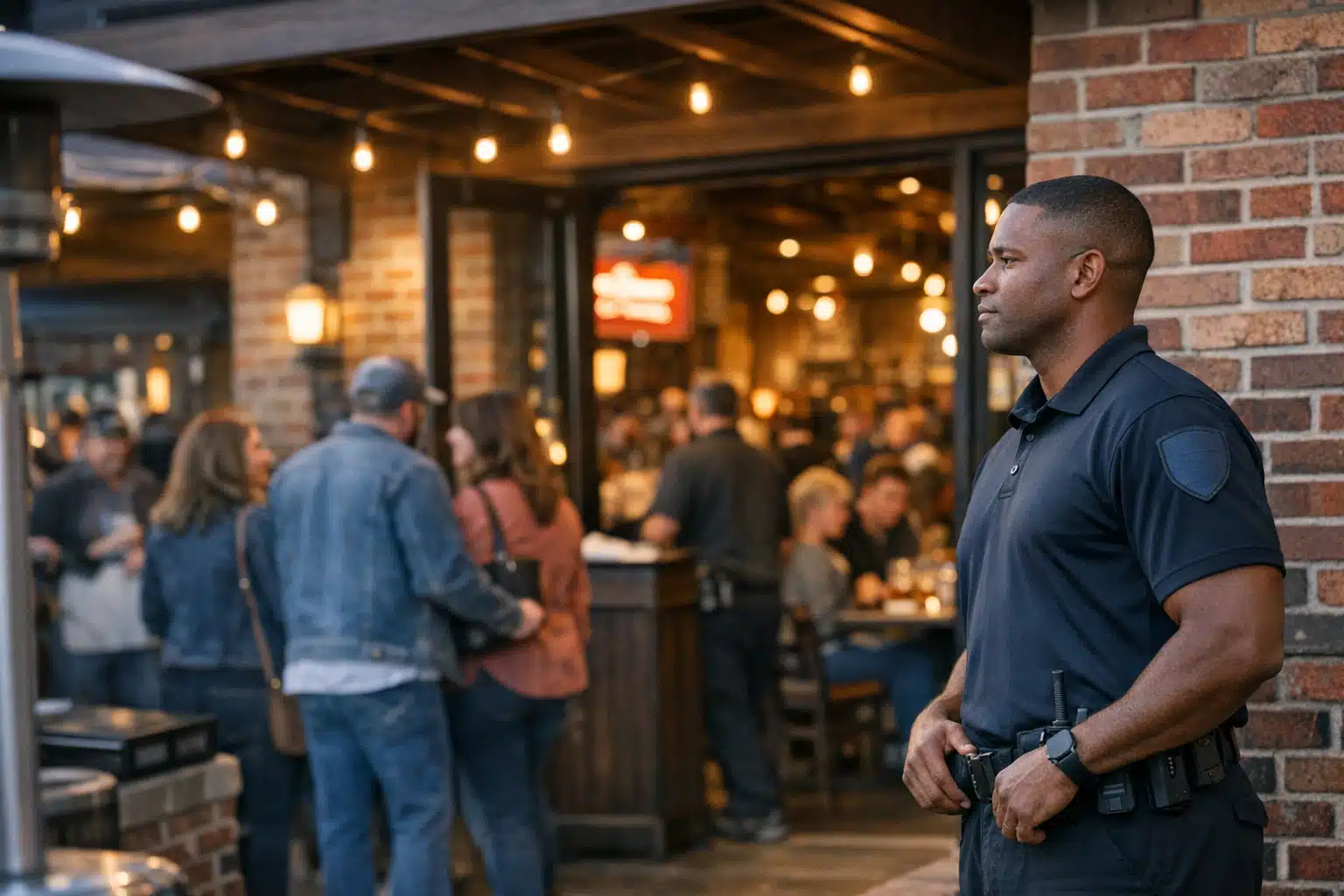
The difference between armed and unarmed security for restaurants in Kansas City lies in the level of force and presence each provides. Armed security personnel carry weapons, which can deter crime more effectively, while unarmed security focuses on surveillance and conflict resolution without firearms, making them suitable for establishments prioritizing a non-threatening atmosphere.
Why Restaurant Security Decisions Matter More in Kansas City
Kansas City restaurants face a mix of pressures few owners plan for. Late-night dining near the Power & Light District draws crowds after Chiefs and Royals games. Cash-heavy operations in the BBQ scene attract after-hours break-ins.
Choosing the right restaurant security starts with matching guard type to your actual risk. The question most Kansas City owners ask us is direct: armed or unarmed?
This post breaks down the armed vs. unarmed guards decision using local scenarios, Missouri and Kansas licensing rules, and cost realities. You will finish with a clear method for deciding what your restaurant needs.
Armed vs. Unarmed Guards: The Short Answer
Most Kansas City restaurants do fine with unarmed guards. Armed personnel make sense in specific high-risk situations, not as a default.
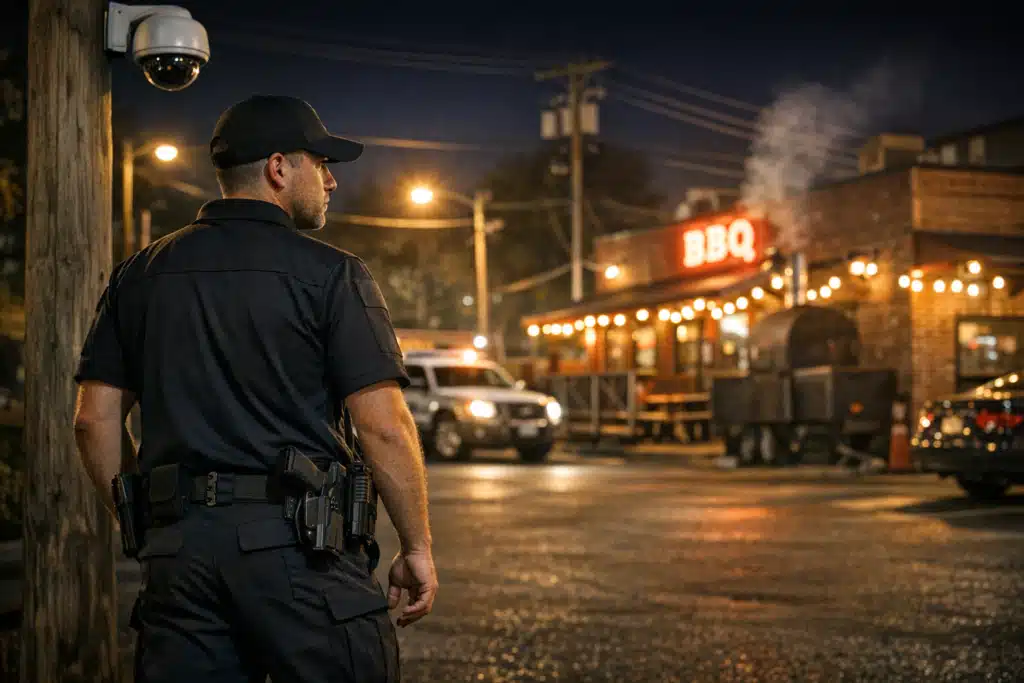
Here is the distinction that matters:
- Unarmed guards handle presence, de-escalation, crowd control, and reporting.
- Armed guards add a deterrent and response capability for cash transport, high-crime zones, or documented threats.
The wrong choice cuts both ways. Under-protecting a cash-heavy spot invites loss. Over-arming a family diner in Overland Park creates liability and unsettles guests.
When Unarmed Security Fits a Kansas City Restaurant
Unarmed guards work for most sit-down and fast-casual spots. Their value comes from visibility and calm intervention.
Situations where unarmed coverage usually suffices:
- Managing waitlist crowds during Plaza dinner rushes
- Monitoring patios in Westport on weekend nights
- Escorting closing staff to their cars after midnight
- Handling intoxicated patrons after Sporting KC matches
- Deterring dine-and-dash and parking lot theft
A visible uniform stops most problems before they start. For a Crossroads brunch spot, that presence answers nearly every real concern.
When Armed Security Makes Sense
Armed guards fit restaurants with elevated, documented risk. The decision should follow evidence, not fear.
Reasons to move to armed coverage:
- Large nightly cash deposits with no armored pickup
- A location in an area with repeat armed robberies
- Prior violent incidents on or near the property
- Late-night operations in isolated commercial strips
- Hosting private events with high-value guests
A steakhouse banking $8,000 in cash nightly has a different threat model than a coffee shop. Match the response to the exposure.
Kansas City Licensing Rules You Cannot Skip
Guard requirements differ across the state line, and this trips up owners with multiple locations. Kansas City straddles both Missouri and Kansas.
Missouri Side
In Kansas City, Missouri, private security officers are licensed by the Kansas City Board of Police Commissioners. Armed officers must complete firearms training and pass background checks before carrying on duty.
Kansas Side
Kansas regulates private security at the local level, so requirements shift by municipality. Overland Park, Olathe, and Kansas City, Kansas each set their own standards.
The practical takeaway: verify that any guard company holds proper licensing for your exact address. A guard cleared in Independence may not meet requirements across the state line.
Cost Differences Between Armed and Unarmed Guards
Armed coverage costs more per hour. The gap reflects training, insurance, and liability exposure.
General cost drivers to weigh:
- Hourly rate: Armed guards run higher than unarmed, usually a meaningful premium.
- Insurance: Armed coverage raises your liability profile and can affect premiums.
- Hours needed: A four-hour closing shift costs less than overnight coverage.
- Number of guards: A single patio may need one; a game-day rush may need several.
Many Kansas City restaurants cut cost by pairing one guard with remote video monitoring. A guard handles the floor. Cameras watch the lot, dumpster area, and rear entrance.
How Remote Surveillance Fills the Gaps
Remote video monitoring extends coverage without a second guard on payroll. This matters for restaurants with tight margins.
A monitored camera system covers blind spots that a single guard cannot watch at once. Trained operators can alert police, trigger audio warnings, or dispatch a mobile patrol.
Common restaurant uses:
- Watching parking lots during closing hours
- Recording delivery and vendor access at rear doors
- Catching after-hours break-in attempts in the Crossroads
- Documenting slip-and-fall or dispute claims for insurance
For BBQ spots closing after a late crowd, cameras keep watch on cash areas long after the last guest leaves.

 Posted on Google
A Simple Method to Decide What Your Restaurant Needs
Use this step-by-step check to reach a clear answer.
- Map your cash flow. Large nightly cash and no armored pickup pushes toward armed coverage.
- Review your address. Pull local crime reports for your block, not the whole city.
- Log past incidents. Robberies, assaults, or threats on-site change the math.
- Time your risk. Late-night and isolated locations carry higher exposure.
- Set your budget. Decide whether one guard plus cameras beats two guards.
- Confirm licensing. Match guard credentials to your Missouri or Kansas jurisdiction.
Run these six checks and the armed-or-unarmed answer usually becomes obvious.
Game Day and Event Considerations
Restaurants near Arrowhead and the Power & Light District see surges tied to the sports calendar. These spikes change staffing needs by the hour.
Plan for the crowd, not the average night:
- Add temporary guards for playoff runs and concerts
- Position staff at entrances during tailgate overflow
- Watch patios closely when alcohol sales climb
- Coordinate parking flow to prevent lot disputes
A slow Tuesday and a Chiefs Sunday call for different plans. Flexible scheduling keeps you covered without paying for coverage you do not need.
Weather and Off-Hours Risks
Midwest storms create their own security problems. Power outages during spring storm season can disable alarms and lighting.
A monitored camera system with backup power keeps eyes on your property when the grid fails. Guards can secure entrances when automatic locks lose power.
Tornado warnings clear patios fast and leave property exposed. Having a plan for these windows protects both people and assets.
Making the Final Call
Most Kansas City restaurants land on unarmed guards paired with remote monitoring. Armed coverage suits cash-heavy, high-risk, or late-night operations with documented threats.
Match the protection to your address, your hours, and your cash flow. Twin City Security Kansas City assesses restaurants across the metro and builds coverage plans that fit each location. Call 913‑831‑2525, email Kansas@TwinCitySecurity.com, or visit https://www.twincitysecuritykansascity.com for a Kansas City security assessment.
Sources
- Kansas City Missouri Police Department – Private Security Licensing
- FBI – Uniform Crime Reporting Program
- National Weather Service – Kansas City / Pleasant Hill Forecast Office
Kansas City restaurants face unique security challenges that require careful consideration of armed versus unarmed guards. This guide provides insights into making the right choice based on specific risks and local regulations.
- Most Kansas City restaurants benefit from unarmed guards for crowd control and de-escalation.
- Armed guards are recommended for locations with high cash deposits or documented threats.
- Understanding local licensing requirements is essential for compliance and effective security planning.
Recent Posts