
How to Safeguard Kansas City’s BBQ District Merchants During Fall Events
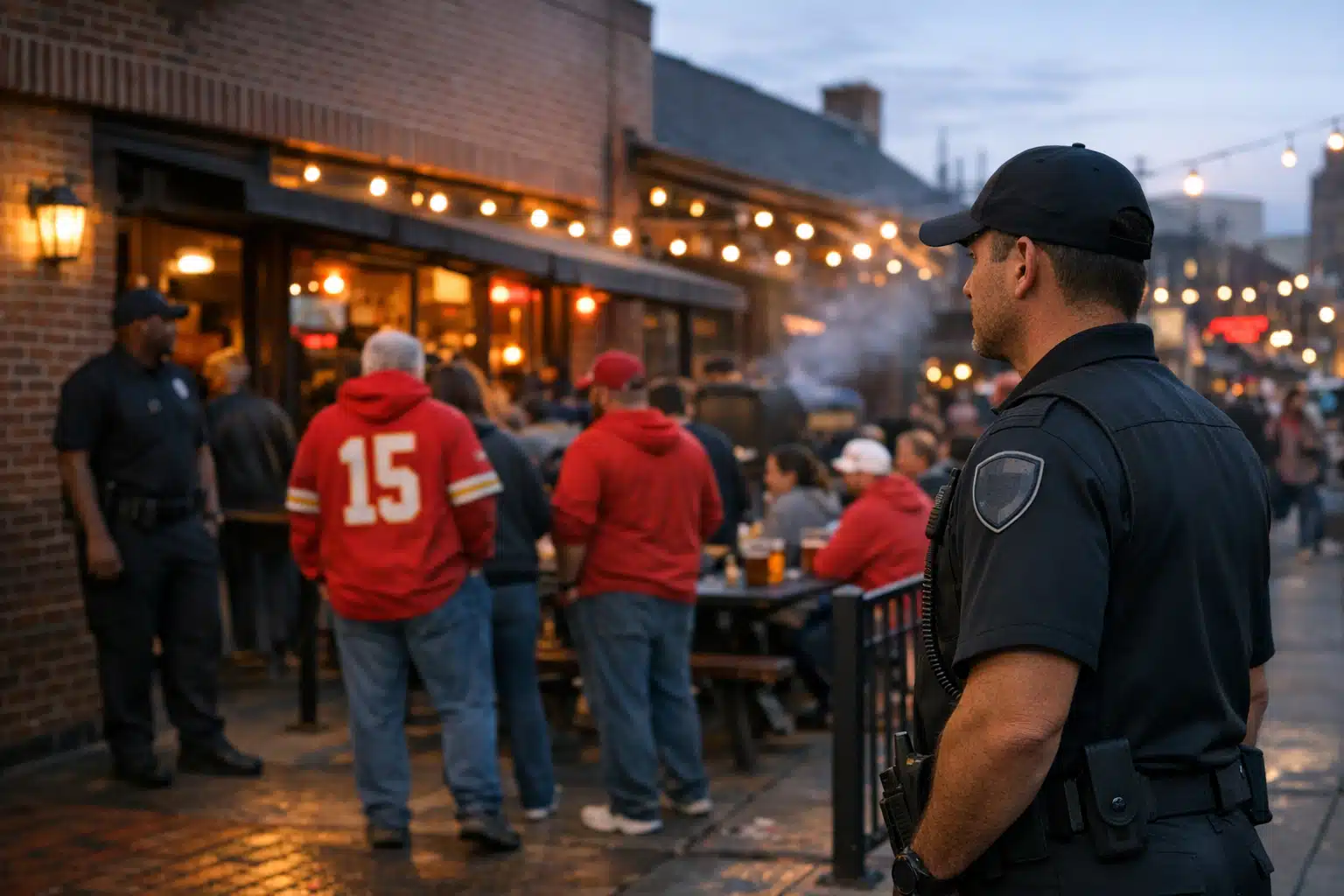
To protect Kansas City's BBQ District merchants during fall events, local authorities and business owners can implement strategies such as increased security measures, crowd management plans, and promotional activities that encourage visitors to explore the area. Collaborating with event organizers can also enhance safety and support for local businesses.
Why Fall Events Raise the Stakes for Kansas City BBQ Merchants
Kansas City draws massive crowds every fall. Chiefs home games alone pull more than 70,000 people near Arrowhead and downtown districts.
That foot traffic reaches BBQ corridors around the River Market, the Crossroads, and 18th & Vine. More customers mean more revenue, and more exposure to loss.
BBQ district security becomes a seasonal priority when sidewalks fill, parking lots overflow, and staff attention splits across hundreds of guests. Fall also brings early sunsets, giving thieves longer windows of low light.
This post covers the specific risks BBQ merchants face during fall events and the practical steps that reduce them.
The Real Risks Facing BBQ District Security During Fall Crowds
BBQ merchants deal with threats that differ from a standard retail storefront. Smoke pits, outdoor seating, and cash-heavy sales create pressure points.
Cash and Point-of-Sale Exposure
Many BBQ spots run high-volume cash transactions during game-day rushes. Registers fill fast, and bank runs get delayed when lines stay long.
Concentrated cash on-site is a top target for grab-and-run theft. Fall events stretch staff thin, making drawer skimming and till theft harder to catch.
Outdoor Equipment and Smoker Theft
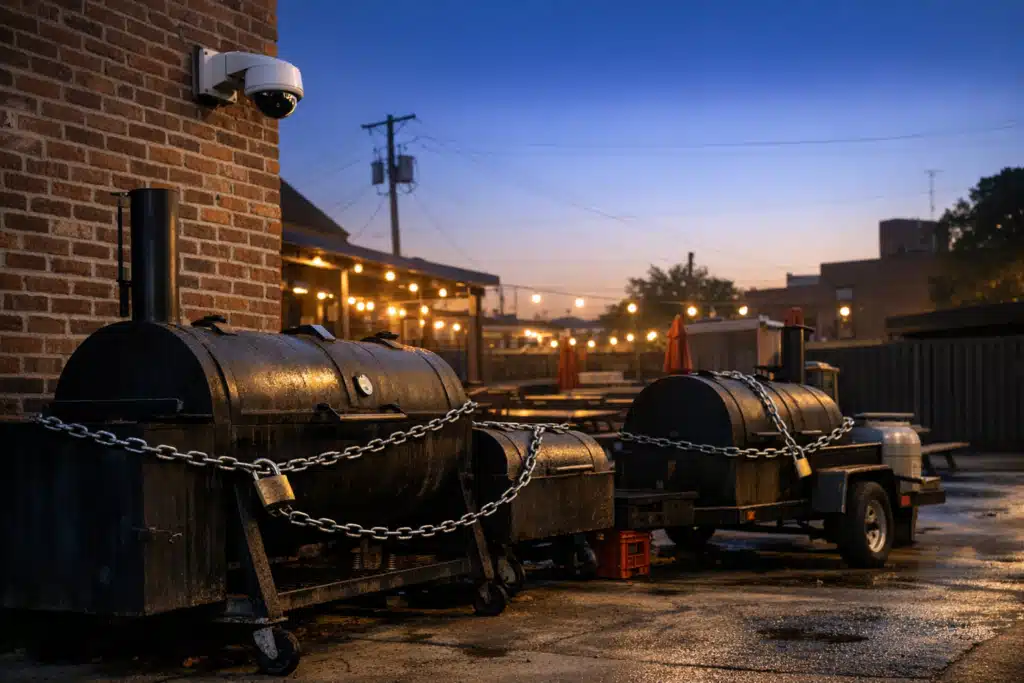
Smokers, propane tanks, and portable pits sit outside after hours. Equipment like this carries real resale value.
Crews that shut down late during a weekend festival sometimes leave gear unsecured. Overnight theft in alleys behind Crossroads and 18th & Vine kitchens is a recurring complaint.
Crowd Overflow and Property Damage
Tailgaters and event crowds spill into merchant patios and parking areas. Fights, vandalism, and trespassing climb when alcohol enters the mix.
A damaged patio or broken window the morning after a big game eats into margins fast.
How to Build BBQ District Security Before Fall Events Begin
BBQ district security works best when planned weeks ahead of peak weekends. A reactive setup leaves gaps during the busiest hours.
Follow these steps to prepare your location:
- Map your crowd windows. List every fall event that drives traffic to your area, including Chiefs and Royals schedules, festivals, and Westport nightlife peaks.
- Audit your blind spots. Walk your property at dusk. Note dark corners, unlit alleys, and unmonitored equipment zones.
- Set cash-handling rules. Schedule mid-shift drawer pulls and staggered bank drops during high-volume days.
- Secure outdoor assets. Chain smokers, lock propane cages, and move portable gear indoors overnight.
- Decide on guard coverage. Match on-site staffing to your heaviest event hours, not your average day.
On-Site Guards vs. Remote Video Surveillance for BBQ Merchants
Both approaches protect BBQ districts during fall events. The right choice depends on crowd size, hours, and budget.
When On-Site Guards Make Sense
On-site guards fit high-crowd nights with alcohol, large patios, and cash flow. A visible uniform deters theft and calms disputes before they grow.
Guards also manage line control and parking overflow during Chiefs weekends. They respond to incidents in seconds, not minutes.
When Remote Surveillance Fits Better
Remote video monitoring covers overnight equipment protection and after-hours alley watch. Trained operators watch live feeds and speak through on-site audio to warn off intruders.
This approach costs less than round-the-clock guards for locations that mainly need overnight coverage. It also creates recorded evidence for police reports and insurance claims.
Combining Both for Peak Weekends
Many BBQ merchants pair guards for event hours with remote monitoring overnight. This covers both crowd control and equipment theft without paying for 24-hour staffing.
Midwest Weather and Its Effect on Fall Event Security
Kansas City fall weather shifts fast. Severe storms still hit into October, and early cold snaps arrive without warning.
Weather changes how crowds move and how security must respond. Rain pushes outdoor diners under awnings and into tighter spaces, raising theft and conflict risk.
- Storm warnings: Guards help move patrons indoors and secure loose patio items that wind can throw.
- Early darkness: Shorter days expand low-light hours when cameras and lighting matter most.
- Cold snaps: Reduced foot patrols by neighbors mean your property needs its own eyes.
Camera systems rated for temperature swings hold up better than consumer-grade units. Confirm your equipment handles Kansas City’s range before fall sets in.

 Posted on Google
Missouri and Kansas Rules BBQ Merchants Should Know
Security staffing in the metro crosses state lines. Operations in Kansas City, Missouri and Overland Park, Kansas follow different licensing rules.
Armed and unarmed guards face separate requirements in each state. A compliant provider confirms proper licensing before any guard works your site.
Liquor-serving BBQ spots carry added liability during events. Clear incident documentation protects you if a dispute reaches court or an insurance claim.
Ask any provider for proof of licensing and liability coverage. A verified partner keeps your fall event security on the right side of state law.
A Practical Fall Event Security Checklist for BBQ Owners
Use this list to prepare each high-traffic weekend:
- Two weeks out: Confirm guard coverage and camera function.
- One week out: Test lighting, locks, and alarm response.
- Event day: Brief staff on cash drops and incident reporting.
- After close: Secure smokers and gear, then switch to overnight monitoring.
- Next morning: Review footage and log any incidents.
Consistent routines catch problems that one-off fixes miss.
How Twin City Security Kansas City Supports BBQ Districts
Twin City Security Kansas City works with merchants across the metro, from the Crossroads to 18th & Vine. Our teams know local event calendars and crowd patterns.
We assess each site for blind spots, cash exposure, and equipment risk. Then we match on-site guards, remote monitoring, or both to your fall schedule.
Our operators watch live feeds and respond in real time. Guards hold current Missouri and Kansas licensing for armed and unarmed posts.
Protect Your BBQ District Storefront This Fall
Fall events bring Kansas City BBQ merchants more customers and more risk. Planned coverage, secured equipment, and real-time monitoring keep losses down during peak weekends.
Contact Twin City Security Kansas City for a site assessment or monitoring quote. Call 913‑831‑2525 or email Kansas@TwinCitySecurity.com to prepare your location before the next big game.
Sources
- Kansas City Missouri Police Department – Crime Data
- Kansas City Chiefs – GEHA Field at Arrowhead Stadium Information
- National Weather Service – Kansas City/Pleasant Hill Forecast Office
- Missouri Division of Professional Registration – Licensing Information
Fall events in Kansas City attract large crowds, increasing both revenue and security risks for BBQ merchants. Proper planning and security measures are essential to protect against theft and property damage during this busy season.
- Kansas City BBQ merchants face unique security challenges during fall events, including cash-heavy sales and outdoor equipment theft. They must prepare for increased foot traffic and potential property damage from large crowds.
- Effective security strategies include mapping crowd windows, auditing blind spots, and securing outdoor assets like smokers and propane tanks.
- Combining on-site guards with remote video surveillance offers a comprehensive approach to managing security during peak weekends, ensuring both crowd control and equipment protection.
Recent Posts