
Security Tips for Kansas City’s Power & Light District During Fall Events
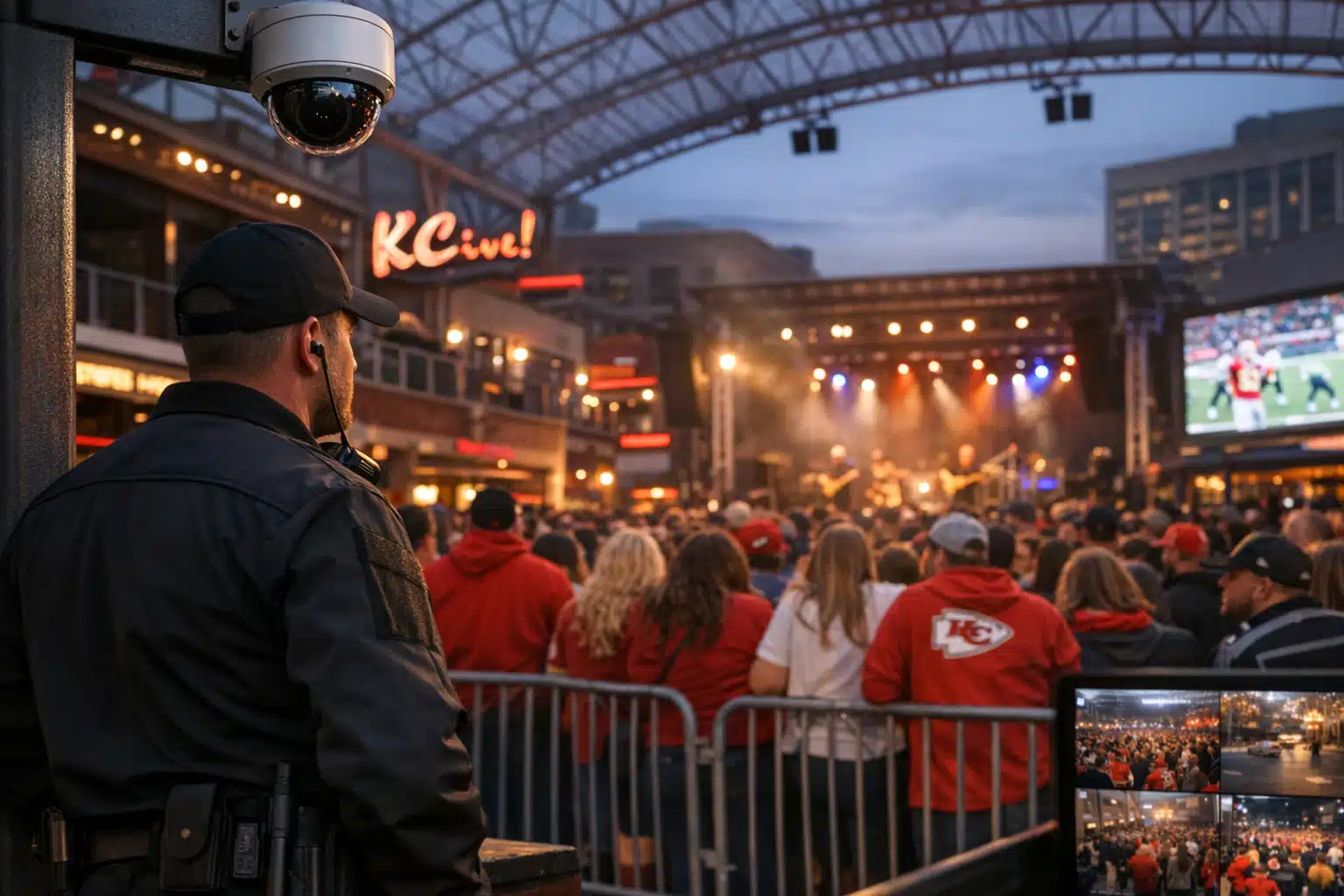
To stay safe during fall events in Kansas City's Power & Light District, be aware of your surroundings, avoid isolated areas, and keep personal belongings secure. Use well-lit paths when walking at night and consider attending events with friends. Familiarize yourself with emergency contact numbers and the locations of nearby security personnel.
Fall Events Change the Security Math in Power & Light
The Power & Light District draws its biggest crowds from September to November. Chiefs home games, Sporting KC matches, and outdoor concerts stack weekends back-to-back.
Power & Light security during this stretch is harder than summer or winter planning. Crowds grow, weather turns, and alcohol service runs late into cool nights.
This post covers what changes in fall, where risks concentrate, and how venue operators protect their spaces. The advice comes from patrol patterns across downtown Kansas City entertainment zones.
Why Fall Events Raise the Stakes Downtown
Fall combines three pressures at once. Game-day foot traffic, festival crowds, and shorter daylight hours overlap in the same blocks.
The KC Live! outdoor stage area packs thousands into an open courtyard. When the Chiefs play at 7 p.m., crowds arrive by 4 p.m. and stay past midnight.
Key fall risk shifts:
- Earlier darkness — sunset hits before 6 p.m. by late October, cutting visibility during peak arrival times.
- Dense alcohol crowds — tailgate energy moves indoors and into bars as temperatures drop.
- Weather swings — warm afternoons turn into 40-degree nights, pushing people into tight spaces.
- Overlapping events — a concert and a Chiefs game on the same Sunday double the load.
Each shift creates blind spots that summer staffing plans miss.
Crowd Management for KC Live! and the Entertainment Block
Crowd density is the number-one fall concern in Power & Light. The open courtyard fills fast when a game ends and bars absorb the flow.
Watch the Pinch Points
Certain spots jam up every busy night. Guards who know the geography stop problems before they start.
- Stage-front during concerts — monitor for crush near barriers when acts take the stage.
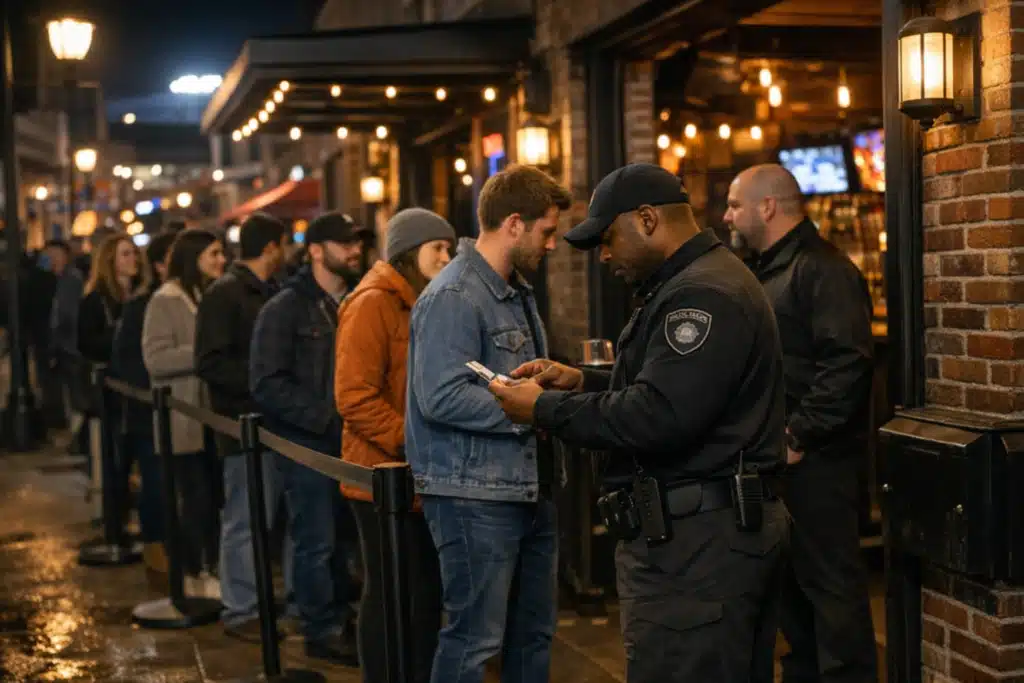
- Bar entrances — control ID lines so they do not spill into walkways.
- The 14th Street corridor — foot traffic from the stadium shuttle zones backs up here post-game.
- Stair and escalator landings — intoxicated guests stumble most on level changes.
Station guards at these points before the rush, not after it forms.
Match Staffing to the Event Calendar
A Tuesday night differs from a Chiefs Sunday. Fixed staffing wastes money on slow nights and fails on packed ones.
Pull the event schedule a month ahead. Flag double-event days and add guards for those specific windows.
Remote Video Surveillance Covers What Guards Cannot
Remote video monitoring extends coverage across a large district without posting a guard on every corner. Cameras watch parking structures, alleys, and loading docks in real time.
Where Cameras Earn Their Keep in Fall
Dark corners multiply as daylight shrinks. Monitored cameras fill the gaps that patrols cannot cover at once.
- Parking garages — vehicle break-ins climb when lots fill with game-day cars.
- Rear service areas — bars restock during events, leaving back doors exposed.
- Rooftop and patio spaces — fall patio nights draw crowds operators cannot always see.
- Transit drop-off zones — rideshare pickups cluster late and attract theft.
A trained operator watching live feeds can dispatch a guard in seconds. That response beats reviewing footage after a loss.
Combine Cameras With Boots on the Ground
Video alone does not stop a fight or move a crowd. On-site guards act on what the cameras see.
The pairing works because each covers the other’s weak spot. Operators flag the incident, guards resolve it.
Weather Response for Midwest Fall Nights
Kansas City weather turns fast in autumn. A 75-degree afternoon can drop to the 40s by the final whistle.
Severe storms still roll in during September and October. Guards need a plan before the sky changes.
Build a Weather Action Checklist
- Monitor NWS Kansas City alerts during every outdoor event.
- Identify indoor shelter points inside district buildings ahead of time.
- Assign guards to direct crowds toward cover if lightning or wind hits.
- Protect camera equipment with weatherized housings for rain and cold.
- Keep radios charged since cell networks jam when crowds panic.
Cold also thins staffing when guards rotate for warmth. Plan rotation so no post sits empty.

 Posted on Google
Protecting Retail and Food Vendors During Events
Retail shops and food stalls in the district face grab-and-run theft on busy nights. Crowds give cover to quick thieves.
Steps Vendors Can Take
- Keep registers facing staff, not open aisles.
- Limit displayed inventory near entrances during peak events.
- Request a guard walkthrough at opening and closing.
- Tie POS cameras into the monitoring feed for live coverage.
Many Kansas City BBQ and food operators lose stock during post-game rushes. A visible guard at the counter cuts that risk fast.
Coordinating With KCPD and Venue Rules
Private security supports but does not replace Kansas City Police. Clear coordination keeps both sides effective.
Missouri licenses private security officers, and guards must carry proper credentials. Verify that any firm you hire meets state requirements.
Set the Chain of Command Early
Before each event, define who calls KCPD and when. Guards handle ejections and minor disputes; police handle arrests and major incidents.
Share a single contact number across all guard posts. Confusion during an incident costs response time.
Building a Fall Security Plan That Holds
A strong plan treats each fall weekend as its own event. Match guards, cameras, and weather response to the specific calendar.
A workable Power & Light security plan includes:
- Event-by-event staffing tied to the schedule.
- Remote video coverage of garages, alleys, and docks.
- A written weather action checklist.
- Vendor theft-prevention steps.
- Defined coordination with KCPD.
Review the plan after each major game or concert. Adjust posts based on what the night revealed.
Conclusion
Fall events pack the Power & Light District with crowds, shorter days, and shifting weather that summer plans never account for. Strong Power & Light security pairs trained guards with remote monitoring and a clear weather response.
Twin City Security Kansas City builds event-specific plans for downtown venues, retail, and entertainment operators. Call 913‑831‑2525 or email Kansas@TwinCitySecurity.com for a Kansas City security assessment.
Sources
- National Weather Service – Kansas City/Pleasant Hill Forecast Office
- Missouri Division of Professional Registration – Licensing Boards
- Kansas City Missouri Police Department – Official Site
The Power & Light District experiences increased security challenges during fall events due to larger crowds, shorter daylight, and changing weather conditions. This article outlines the specific risks and strategies for effective crowd management and security during this busy season.
- Fall events bring overlapping crowds from sports and concerts, increasing density in the district. Security must adapt to earlier darkness and colder weather, which complicates crowd control. Remote video surveillance complements on-site guards, enhancing safety in high-traffic areas.
- Fall Events Change the Security Math in Power & Light [...] Fall Events Change the Security Math in Power & Light The Power & Light District draws its biggest crowds from September to November.
- Chiefs home games, Sporting KC matches, and outdoor concerts stack weekends back-to-back.
Recent Posts