
Implementing Layered Security for Kansas City’s Apartment Complexes
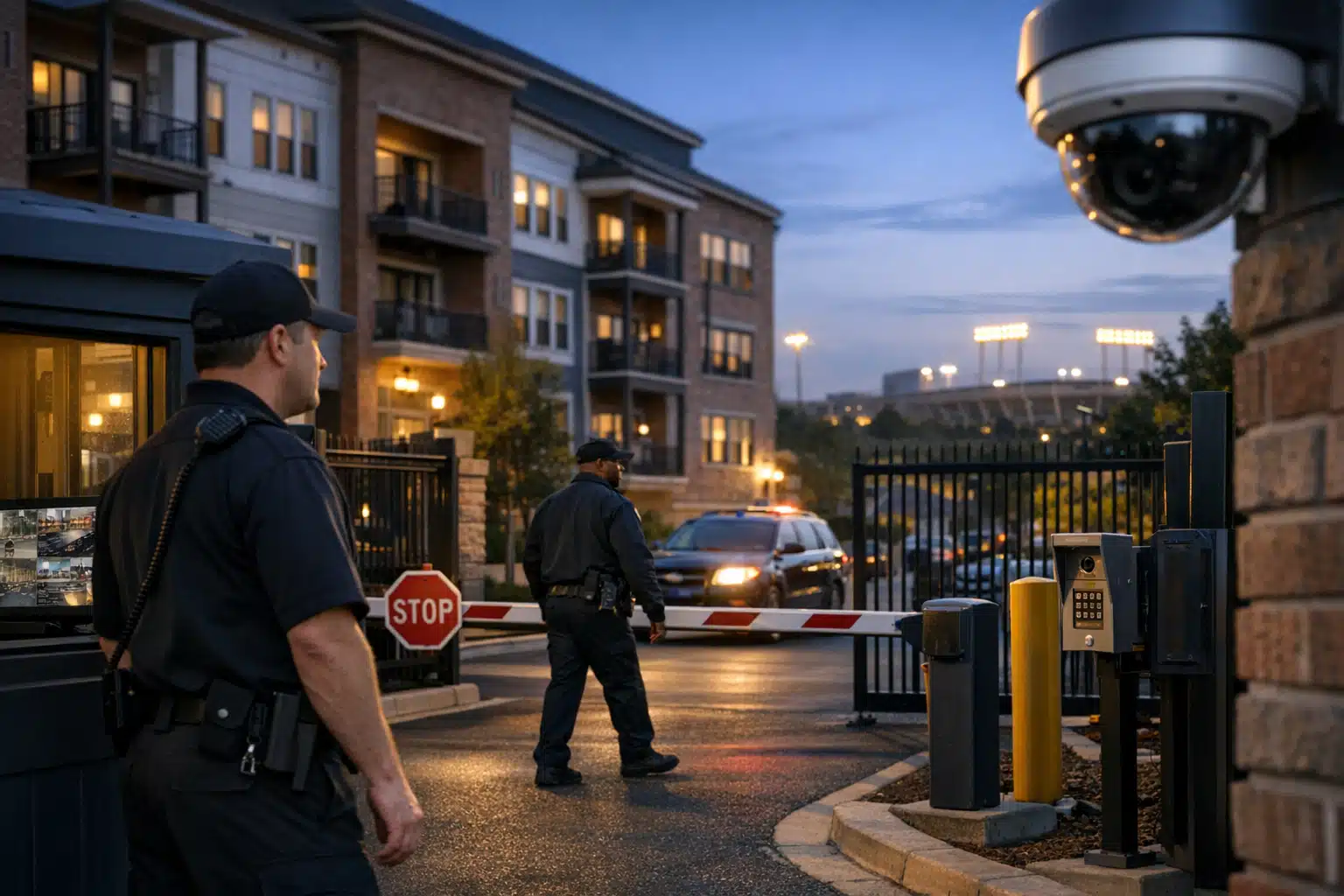
Layered security for apartment complexes involves implementing multiple security measures to protect residents and their property. This approach includes physical barriers, surveillance systems, and access controls, which work together to deter crime and enhance safety. By addressing vulnerabilities, property managers can effectively reduce incidents of theft and improve resident satisfaction.
Kansas City reported over 25,000 property crimes in recent years, and multifamily properties absorb a large share of break-ins, car thefts, and package theft. For property managers from Midtown to Overland Park, apartment security is no longer an amenity—it answers resident complaints and reduces liability. This post breaks down how layered methods stop crime before it reaches a resident’s door.
Single measures fail predictably. A gate alone gets tailgated. A camera alone records crime without stopping it. Layered methods stack defenses so attackers must beat several systems at once.
Why Apartment Security in Kansas City Demands Layers
Kansas City apartment properties face threats that shift by season and neighborhood. A one-size approach ignores how these risks stack.
Common local pressure points include:
- Car break-ins in open surface lots near Westport and the Plaza
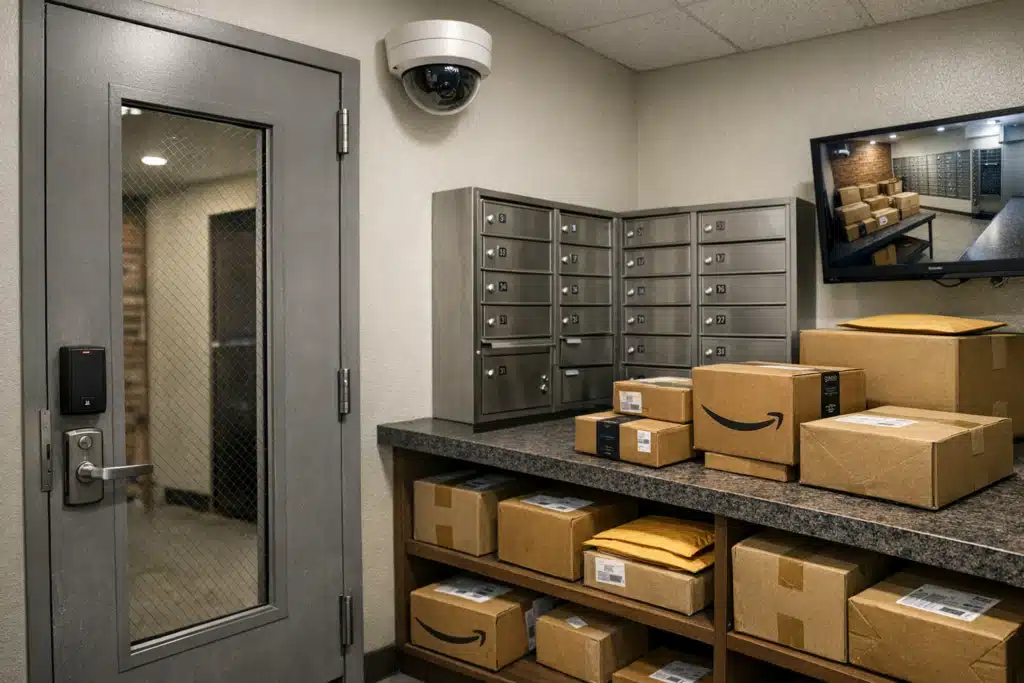
- Package theft at buildings with unsecured mailrooms
- Tailgating at controlled gates during busy move-in weekends
- Tornado and storm damage that knocks out power to cameras and gates
- Trespassing in pools, fitness rooms, and parking decks after hours
Layered protection means no single failure exposes the whole property. When one defense drops, the next catches the gap.
What Layered Protection Means for a Property
Layered protection stacks four defense types: deterrence, detection, delay, and response. Each layer buys time and shifts risk away from residents.
- Deterrence — lighting, signage, visible guards, and marked patrols
- Detection — cameras, motion sensors, and remote monitoring
- Delay — gates, fencing, access control, and locked common areas
- Response — on-site guards or monitored dispatch that acts fast
Layer One: Perimeter and Access Control
The perimeter stops most opportunistic crime. Many Kansas City break-ins happen because an outsider walked straight into an unsecured lot or breezeway.
Start with controlled entry points. Gated vehicle access, fob-controlled doors, and fenced pool areas filter who gets in.
Tailgating defeats gates fast. During move-in weekends near UMKC, residents prop doors and wave cars through. A guard posted at peak entry hours closes that hole.
Lighting That Removes Hiding Spots
Dark stairwells and shaded parking decks invite theft. Audit your property after sunset, not during a daytime walkthrough.
- Light every stairwell, entry, and mailroom
- Replace yellow sodium bulbs with white LED for sharper camera footage
- Trim landscaping that blocks sightlines near ground-floor windows
Layer Two: Remote Video Surveillance
Cameras without monitoring record crime instead of stopping it. Remote video surveillance adds a live set of eyes that reacts in real time.
Monitored cameras catch activity as it happens. A trained operator sees a person checking car handles at 2 a.m. and triggers a voice-down warning or calls police.
This matters most in overnight hours when no staff is present. A monitored system covers the gap between a leasing office closing and reopening.
Where Cameras Earn Their Keep
Place coverage where crime concentrates, not evenly across the map.
- Parking lots and decks — the top location for apartment property crime
- Mailrooms and package lockers — a growing theft target
- Entry gates and pedestrian doors — to catch tailgating
- Pool and amenity areas — for after-hours trespassing and liability
Weatherproofing for Midwest Storms
Kansas City storm season tests every outdoor camera. High winds, hail, and power loss knock cheap systems offline exactly when you need them.
Specify weather-rated housings and battery backup. A monitored system should flag its own outage so you learn about a dead camera before a tenant does.
Layer Three: On-Site Security Guards
Guards add judgment that no camera matches. They read a situation, talk to residents, and respond on foot within seconds.
A visible guard presence lowers nuisance activity. Loitering, open drinking, and vehicle prowling drop when patrols run on an unpredictable schedule.
Fixed patrol times fail. Offenders learn the pattern. Vary routes and timing so no one predicts coverage gaps.
When Guards Make the Most Sense
On-site officers fit specific situations rather than every property.
- Large complexes with multiple buildings and open parking
- Properties with recent incident spikes or resident safety complaints
- High-turnover move-in and move-out weekends
- Communities near nightlife zones like the Power & Light District or Westport
Pairing Guards With Monitoring
A guard and a remote operator cover more ground than either alone. The operator watches 30 cameras and directs the guard to the one that matters.
This split lowers cost. One monitored hub plus a single roving officer can cover a property that would otherwise need three stationary guards.
Layer Four: Resident Coordination and Response
Residents are part of the system. A locked gate fails if a tenant props it open for a food delivery.
Clear policies make residents allies. Simple rules reduce the self-inflicted gaps that undo paid security.
- Share how to report suspicious activity and who to call
- Post reminders near gates and doors about tailgating
- Give residents a direct line to the monitoring team after hours
Storm and Emergency Planning
Tornado warnings hit Kansas City every spring. A security plan should account for shelter points and post-storm access control.
After a storm, damaged gates and dark lots invite looters. A monitored property keeps watch while power and repairs catch up.

 Posted on Google
Building Your Layered Plan: A Step-by-Step Order
Roll out defenses in sequence. Fix the cheapest, highest-impact gaps first.
- Assess — walk the property at night and log every dark corner and open entry
- Harden the perimeter — repair gates, fencing, and door hardware
- Add lighting — the lowest-cost deterrent with the fastest payback
- Install monitored cameras — target parking, mailrooms, and entries
- Add guards or patrols — match hours to your incident data
- Train residents — close the human gaps that undo equipment
- Review quarterly — adjust as crime patterns and seasons shift
Measuring Whether It Works
Track incidents before and after each layer. Logged data shows which measures cut crime and justifies budget to ownership.
- Monthly incident counts by type and location
- Response times from alert to action
- Resident complaints and lease-renewal feedback
Common Mistakes Kansas City Properties Make
Many budgets go to one visible fix while the real gaps stay open.
- Buying cameras without monitoring — footage helps police after the fact, not before
- One daytime lighting audit — problems only show at night
- Predictable patrol schedules — offenders time the gaps
- Ignoring mailrooms — package theft drives resident churn
- No storm backup — systems fail during the exact events that raise risk
Conclusion
Layered protection stops apartment crime because every defense backs up the next—lighting, access control, monitored cameras, and guards working together. Kansas City properties that stack these layers see fewer break-ins, calmer residents, and stronger renewals.
Twin City Security Kansas City designs apartment security plans built on local crime patterns and Midwest weather risk. Call 913‑831‑2525, email Kansas@TwinCitySecurity.com, or visit https://www.twincitysecuritykansascity.com for a property assessment.
Sources
- FBI – Uniform Crime Reporting (UCR) Program
- Kansas City Missouri Police Department – Crime Statistics
- National Weather Service – Kansas City/Pleasant Hill Forecast Office
- Cybersecurity and Infrastructure Security Agency – Physical Security
Kansas City apartment complexes face significant security challenges due to high property crime rates. Implementing layered security measures can effectively reduce risks and enhance resident safety.
- Layered security combines deterrence, detection, delay, and response to create multiple defenses against crime.
- Common threats include car break-ins, package theft, and unauthorized access to amenities, which require tailored solutions.
- Regular assessments and resident involvement are key to maintaining effective security and adapting to changing crime patterns.
Recent Posts