
Securing Kansas City’s Downtown During Chiefs Game Days
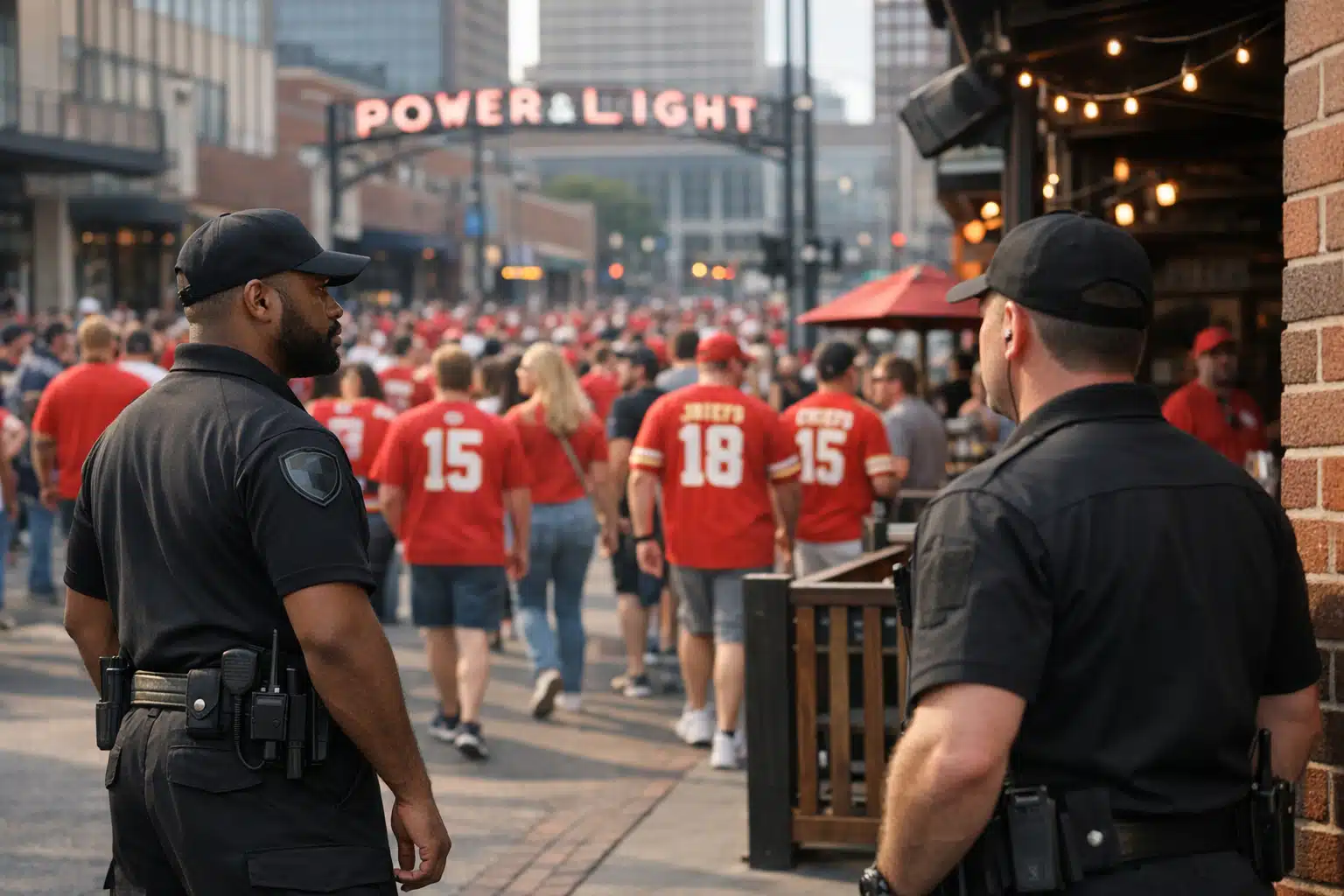
On Chiefs game days, downtown Kansas City experiences a significant influx of visitors as fans from Arrowhead Stadium, which accommodates over 76,000 people, gather in areas like the Power & Light District and Westport. This surge in crowd activity necessitates enhanced security measures to ensure public safety.
Why Chiefs Game Days Change Downtown Kansas City’s Security Picture
Arrowhead Stadium holds more than 76,000 people. On Chiefs game days, that crowd spills across downtown, the Power & Light District, and Westport.
Game day security becomes a different animal when 76,000 fans move between parking lots, bars, and businesses within a few hours.
Business owners near the Truman Sports Complex face foot traffic surges that start six hours before kickoff. Property managers in the Crossroads and P&L District deal with the aftermath long after the final whistle.
This post breaks down what happens to downtown Kansas City on Chiefs Sundays and how local businesses keep property, staff, and customers safe.
What Game Day Security Looks Like in Downtown Kansas City
Game day security covers crowd movement, property protection, and fast response during high-volume hours. The pressure runs from pre-game tailgates to post-game departures.
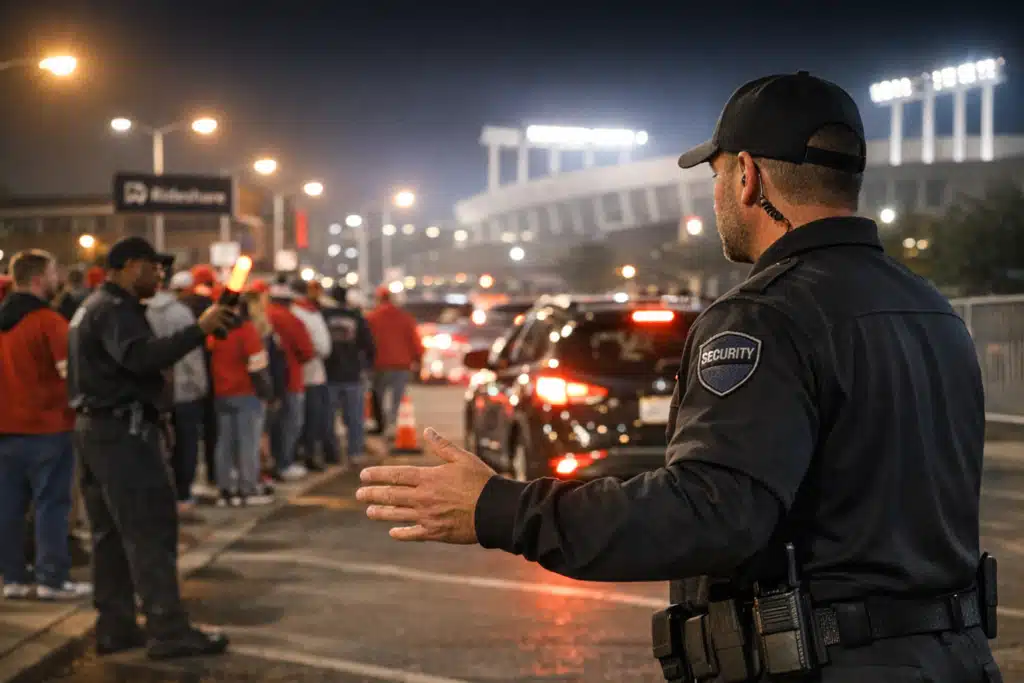
The challenge is not one big event. It is thousands of small risks happening at once across a packed downtown grid.
The Traffic Pattern Problem
Fans do not go straight to Arrowhead. Many park downtown and use rideshare or the streetcar to reach the stadium area.
This creates heavy pedestrian flow around the Power & Light District before and after games. Restaurants, retail shops, and parking garages all feel the pressure.
Key pressure points on Chiefs Sundays:
- Parking garages near Grand Boulevard and the P&L District
- Street-level retail along Main Street and Walnut
- Bar and restaurant entrances handling long lines
- Rideshare pickup zones that jam up after games
The Timing Window
A 1:00 p.m. kickoff means crowds build by 8:00 a.m. A Sunday or Monday night game pushes the risk window past midnight.
Night games bring tired crowds, more alcohol, and lower visibility. Security staffing has to match the kickoff time, not a standard shift.
Common Security Risks During Kansas City Chiefs Game Days
Crowd events bring predictable problems. Knowing them ahead of time lets owners plan staffing and camera coverage.
Property Theft and Vehicle Break-Ins
Packed parking garages attract theft. Fans leave tailgate coolers, electronics, and merchandise in parked cars for hours.
Thieves work fast during the game window. With owners inside stadiums or bars, cars sit unwatched for four to five hours.
After-Hours Property Damage
Win or lose, large crowds leave a mark. Broken bottles, damaged signage, and vandalism show up on Monday morning.
Entertainment areas like Westport see the heaviest post-game foot traffic. Business owners there deal with cleanup and repair costs weekly during the season.
Overwhelmed Staff and Entry Control
Restaurant and bar staff cannot watch the door and serve a full house at once. Lines form, and non-paying crowds press at entrances.
Trained guards at entry points keep capacity controlled and tempers calm.
How to Protect Your Downtown Business on Chiefs Game Days
Game day security works best with a plan built around kickoff time. Follow these steps to prepare your property.
- Check the schedule early. Note kickoff times and plan staffing six hours ahead of the game.
- Assign guards to entry points. Control capacity and screen crowds at bars, restaurants, and retail doors.
- Cover your parking areas. Garages and lots need both cameras and visible patrols.
- Light dark corners. Night games demand strong lighting at entrances and loading docks.
- Set a post-game sweep. Walk the property after crowds thin to catch damage and lingering risks.
On-Site Guards vs. Remote Monitoring
Both methods work on game days. The right mix depends on your property type and crowd exposure.
On-site guards handle direct crowd contact. They manage entries, calm disputes, and give customers a visible safety presence.
Remote video monitoring watches parking lots, back entrances, and empty storefronts. Trained operators flag problems and call for response in real time.
Many downtown businesses use both. Guards cover the front door, cameras cover the blind spots.
Why Remote Surveillance Fits Kansas City Game Day Crowds
Remote monitoring covers ground that guards cannot reach alone. One operator watches multiple camera feeds across a property at once.
For game day security, this matters during peak hours when risk spreads across many spots.
What remote monitoring handles on Chiefs Sundays:
- Parking garage coverage during the full game window
- After-hours watch once crowds leave and stores close
- Loading dock and alley monitoring away from foot traffic
- Live response when a camera catches trouble starting
Video evidence helps later too. Clear footage supports police reports and insurance claims after an incident.

 Posted on Google
Midwest Weather Adds Another Layer
Kansas City weather shifts fast. Early-season games bring heat, late-season games bring ice and cold.
December and January games push fans into bars and covered spaces faster. Crowd density indoors climbs, and entry control gets tighter.
Severe storms can disrupt a game day without warning. Spring and early fall games carry a real risk of sudden rain and wind.
Security plans should account for crowds seeking shelter in your business during bad weather. Guards help direct people and keep exits clear.
Planning Ahead for the Full Chiefs Season
A single-game plan falls short. The Chiefs play a full home schedule, plus possible playoff dates.
Downtown businesses benefit from a season-long security agreement. Staffing scales up for high-profile games and holiday weekend matchups.
Steps for season-long planning:
- Map your home game calendar as soon as the schedule drops.
- Flag high-risk dates like night games and rivalry matchups.
- Lock in guard coverage early before demand peaks.
- Review footage monthly to spot repeat problem areas.
Playoff runs add unscheduled high-traffic days. A standing agreement means coverage is ready when the Chiefs advance.
What This Means for Kansas City Business Owners
Chiefs game days drive revenue downtown. They also bring crowd, theft, and property risks that standard security misses.
A plan built around kickoff times and crowd patterns keeps your property and customers protected. On-site guards and remote monitoring together cover both the crowd and the blind spots.
Twin City Security Kansas City works with downtown businesses, venues, and property managers on game day coverage. For a Kansas City security assessment or monitoring quote, call 913‑831‑2525 or email Kansas@TwinCitySecurity.com.
Sources
- Kansas City Chiefs – GEHA Field at Arrowhead Stadium
- Kansas City Missouri Police Department – Crime Data
- National Weather Service – Kansas City/Pleasant Hill Forecast Office
Chiefs game days significantly impact downtown Kansas City's security landscape as thousands of fans move through the area. Local businesses must adapt their security measures to protect property, staff, and customers during these high-traffic events.
- Crowd movement and property protection are key focuses on game days. Businesses face challenges from pre-game to post-game as fans navigate downtown.
- Common risks include theft in parking garages and property damage after large crowds leave. Planning ahead helps mitigate these issues.
- A combination of on-site guards and remote monitoring enhances security coverage. Businesses benefit from tailored plans that account for game schedules and crowd patterns.
Recent Posts