
Understanding the Benefits of Security Trailers for Kansas City’s Large Events
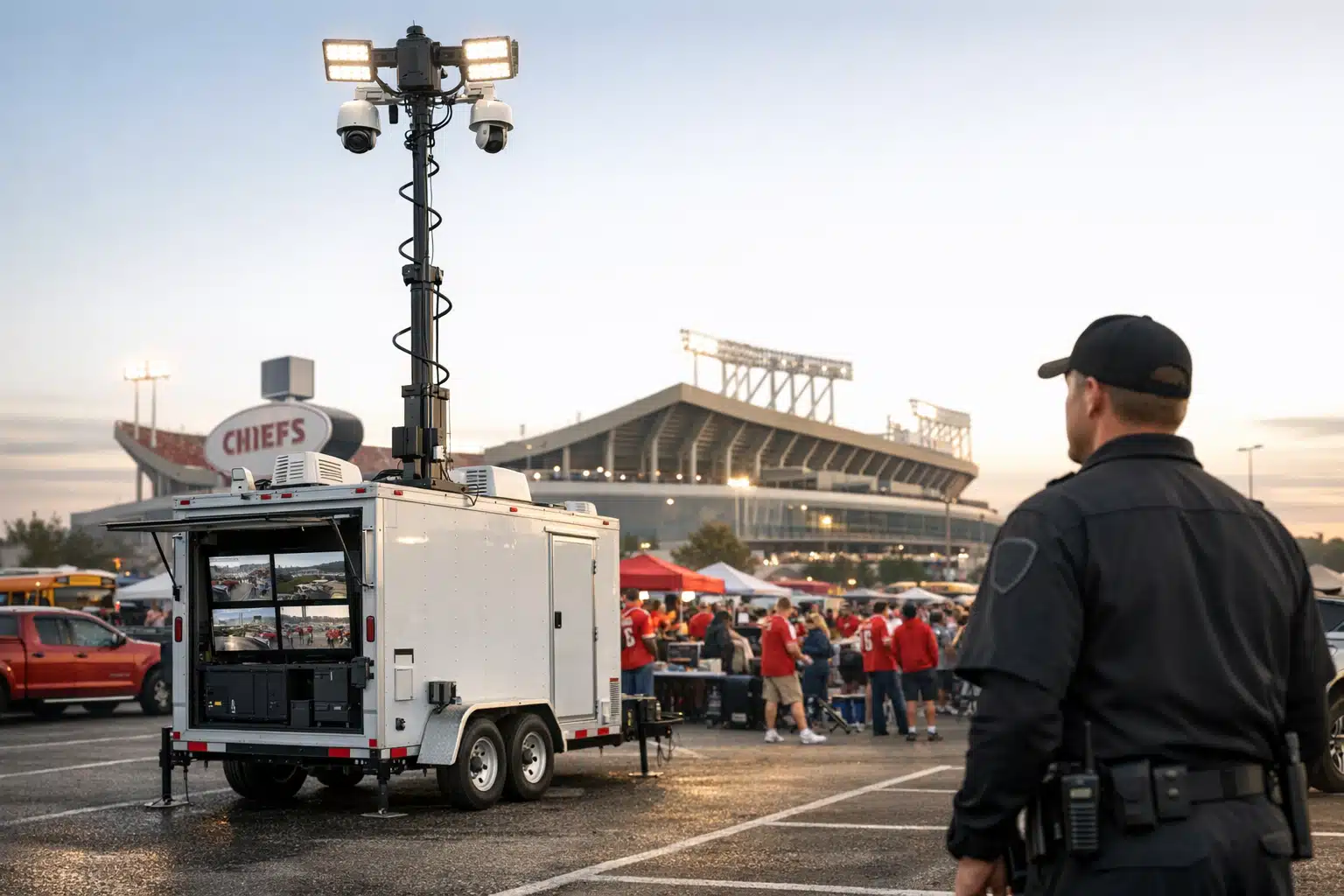
Security trailers provide essential safety and monitoring solutions for large events in Kansas City, such as those at Arrowhead Stadium. They enhance crowd control, offer a mobile command center for law enforcement, and improve overall event security by ensuring quick responses to incidents, thereby creating a safer environment for attendees.
Why Large Kansas City Events Need Mobile Security Coverage
Arrowhead Stadium holds more than 76,000 fans on Chiefs game days. Parking lots stretch across acres of open ground.
Security trailers solve a problem that fixed cameras and foot patrols cannot: covering wide, temporary event spaces from a single elevated point. They combine cameras, lighting, and live monitoring on a mobile platform.
For Kansas City venue operators, that mobility changes how event security works. This post breaks down the logistical advantages, real local scenarios, and what to check before booking one.
What a Security Trailer Actually Includes
A security trailer is a self-contained surveillance unit mounted on a towable frame. It parks anywhere a vehicle can reach.
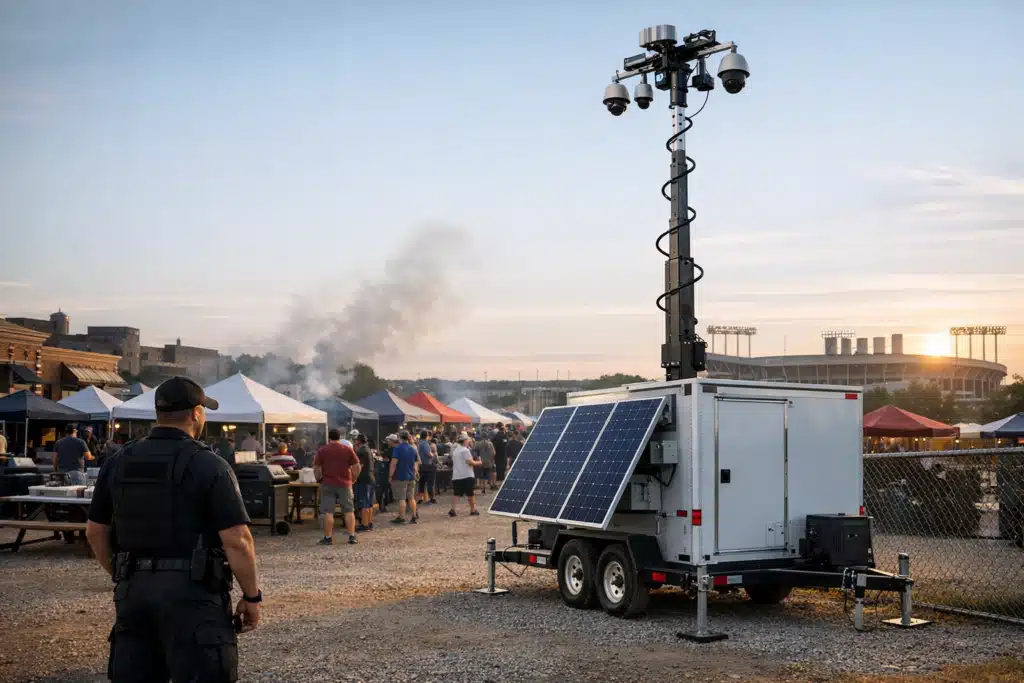
Most units carry the following equipment:
- Pan-tilt-zoom cameras mounted on a mast, usually 15 to 30 feet high
- LED floodlights that cover parking areas and entry points
- On-board recording with remote video access
- Solar panels or generators for off-grid power
- Loudspeakers and sirens for live voice-down warnings
- Motion sensors that trigger alerts after hours
The raised mast matters most for big events. One camera at 25 feet sees more ground than ten cameras at eye level.
Logistical Advantages of Security Trailers for Expansive Event Areas
Kansas City events sprawl. The Kansas City BBQ competition circuit, Boulevardia in the Crossroads, and Chiefs tailgates all spread across large open lots.
Fixed infrastructure cannot follow a crowd that moves. A security trailer can.
Fast Setup Without Permanent Wiring
A trailer arrives towed behind a truck. Crews position it, raise the mast, and start monitoring within an hour.
No trenching. No conduit. No electrician scheduling delays before a weekend festival.
Coverage That Moves With the Event Footprint
Tailgate zones shift week to week at Arrowhead. Vendor rows in the Power & Light District change layout for different festivals.
Trailers reposition between events in minutes. You cover this weekend’s layout, then relocate for the next.
Fewer Guards Across More Ground
A single monitored trailer watches areas that would need several patrol officers. Guards then focus on entry points and incident response instead of walking empty lots.
That math helps event budgets. You get eyes on more ground for less labor cost.
Kansas City Scenarios Where Security Trailers Earn Their Keep
The right placement depends on the event type. Here are local situations where trailers outperform standard patrols.
Chiefs and Royals Game Day Parking
Vehicle break-ins spike in stadium lots during long games. Fans leave for four hours, and lots sit unattended.
A trailer parked mid-lot with a raised camera deters theft. Live voice-down warnings stop suspicious activity before it escalates.
BBQ District and Food Festival Vendor Protection
Vendors bring cash, smokers, and equipment worth thousands. Overnight festival grounds are easy targets between event days.
A trailer with motion alerts guards vendor rows after closing. Owners sleep instead of guarding their own tents.
Construction Staging for Event Buildouts
Large events need stages, fencing, and rental equipment staged days ahead. Copper wire and generators disappear from unsecured Crossroads lots.
One trailer covers the staging yard until the event opens.
Handling Midwest Weather at Outdoor Events
Kansas City weather does not cooperate with outdoor events. Trailers hold up where temporary setups fail.
Consider what a spring storm brings:
- High winds that topple pop-up tents and light stands
- Heavy rain that shorts out exposed electrical runs
- Tornado watches that clear crowds fast and leave property behind
Security trailers use weather-rated housings and stabilized masts. When a lot evacuates during a storm warning, cameras keep recording the emptied grounds.
That coverage matters. Abandoned equipment during an evacuation is a theft magnet.
How Security Trailers Compare to Traditional Event Security
Both methods have a place. The best plans mix them.
Guards Alone
Officers respond to incidents and manage crowds face to face. But they cover limited ground and cannot see every corner of a 40-acre lot at once.
Fixed Cameras Alone
Permanent cameras work for venues with year-round operation. They fail temporary event sites that lack mounting points and power.
Security Trailers Plus Guards
This pairing covers the most ground. Trailers watch wide open areas. Guards handle direct contact and rapid response.
For event security across large Kansas City venues, that combination stretches every dollar further.

 Posted on Google
What to Ask Before Booking a Security Trailer
Not every trailer offers the same capability. Ask direct questions before you sign.
- Is the camera feed monitored live or only recorded for later review?
- What is the power source, and how long does it run without a refuel?
- Does the unit include voice-down speakers for real-time warnings?
- How fast can crews reposition it between event days?
- Is footage stored locally, remotely, or both for evidence needs?
Live monitoring is the difference between watching a crime happen and stopping it. Confirm that first.
Placement Tips for Maximum Coverage
Where you park the trailer decides how much it sees. Use these placement rules for open event lots.
- Position at lot corners for the widest camera sweep
- Face masts toward main entry and exit points where crowds funnel
- Keep sightlines clear of trailers, tents, and parked buses
- Add a second unit for lots larger than 10 acres
- Aim floodlights at dark perimeter zones that patrols reach last
A poorly placed trailer wastes its range. A well-placed one covers ground that would take a full patrol team.
Local Regulations Kansas City Operators Should Know
Missouri and Kansas both license security personnel. Verify that your provider staffs monitored trailers with credentialed operators.
Event permits in Kansas City may require documented security plans for large gatherings. A monitored trailer with recorded footage supports those filings.
Check with the city venue office and your insurer. Recorded surveillance often lowers liability exposure for outdoor events.
Conclusion
Security trailers cover the wide, shifting footprints that Kansas City events create, from Arrowhead lots to Crossroads festival grounds. They pair mobile surveillance and lighting with live monitoring to stretch security budgets across more ground.
Twin City Security Kansas City places and monitors security trailers for large events across the metro. Call 913‑831‑2525 or email Kansas@TwinCitySecurity.com for an event security assessment.
Sources
- Kansas City Police Department – Crime Data
- National Weather Service – Kansas City/Pleasant Hill Forecast Office
- Missouri Division of Professional Registration – Watchmakers and Guards
Security trailers provide effective mobile surveillance for large events in Kansas City, addressing the challenges of expansive and shifting event spaces. They combine advanced technology with quick setup, enhancing security while reducing labor costs.
- Security trailers are equipped with high-mounted cameras and lighting, allowing for broad coverage of large areas. They can be quickly deployed and repositioned, adapting to changing event layouts.
- These trailers help deter theft and protect valuable vendor equipment during events, offering peace of mind to both organizers and attendees.
- Combining security trailers with on-site guards maximizes coverage and response capabilities, ensuring safety at various Kansas City venues.
Recent Posts