Effectively Using Remote Surveillance for Kansas City’s Tornado Warnings
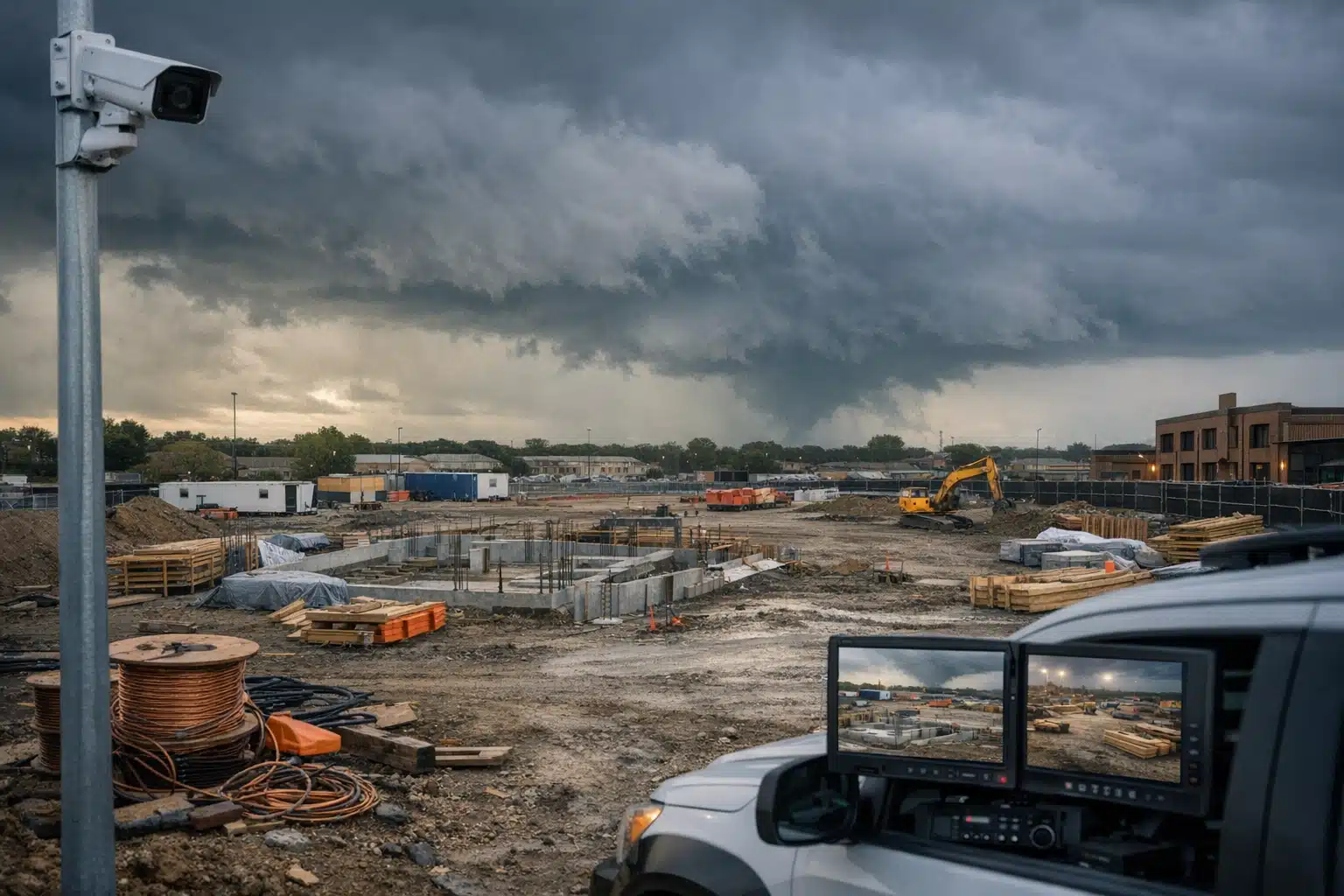
Remote surveillance enhances tornado warnings in Kansas City by providing real-time data and monitoring of weather conditions. This technology allows for quicker detection of tornado formation, enabling timely alerts to residents and emergency services, which is crucial for ensuring public safety during severe weather events.
Why Tornado Season Changes How Kansas City Properties Stay Protected
Kansas City sits inside Tornado Alley’s eastern edge. The metro averages several severe weather days each spring.
When a tornado warning sounds, people leave. Workers shelter, venues clear out, and construction crews abandon open sites.
Remote surveillance keeps eyes on your property when no one can safely stay. Cameras, sensors, and off-site monitoring continue working after the parking lot empties.
This post explains how Kansas City business owners use remote monitoring during severe weather. You get practical steps for sites across the Plaza, Crossroads, and beyond.
What Happens to Your Property During a Kansas City Tornado Warning
A tornado warning triggers immediate evacuation. Your staff follow safety protocol and move to shelter.
That leaves gaps. Empty buildings, open gates, and unattended inventory become easy targets.
Common Vulnerabilities After Evacuation
- Construction sites in Overland Park and the Crossroads sit exposed with tools and copper wiring.
- BBQ district storefronts lose foot traffic that normally deters theft.
- Apartment communities empty their leasing offices and amenity areas.
- Sports venues near the Power & Light District clear thousands of people fast.
Looting during severe weather is rare but real. Opportunists know police respond to storm damage first.
Wind and debris also cause damage you cannot see until you return. Remote cameras document conditions in real time.
How Remote Surveillance Works When Staff Evacuate
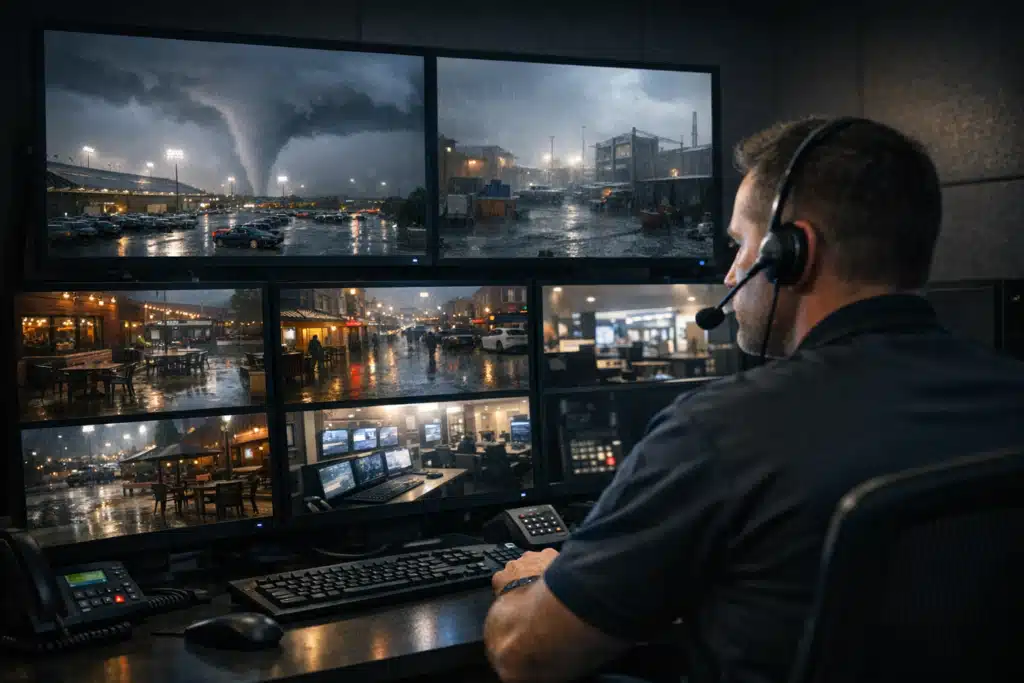
Remote surveillance uses cameras connected to an off-site monitoring center. Trained operators watch feeds from a protected location miles away.
When a tornado warning hits Kansas City, your on-site team shelters. The monitoring center keeps watching without physical risk.
The Monitoring Workflow During Severe Weather
- Weather alert triggers readiness. Operators flag properties in the warning zone.
- On-site staff evacuate and confirm shelter status.
- Remote operators take full visual control of the site.
- Live feeds record structural damage, intrusions, and debris.
- Operators dispatch police or fire crews if they spot a problem.
- Post-storm review gives you footage for insurance claims.
This workflow protects people first and property second. No guard stands outside during 70 mph winds.
Protecting Kansas City Construction Sites During Tornado Warnings
Construction sites face the highest storm risk in the metro. Open framing, loose materials, and expensive equipment sit unguarded.
A spring storm can scatter a Crossroads job site in minutes. Theft follows when the gates swing open in high wind.
Steps to Secure a Site Before the Season
- Install weatherproof cameras rated for Midwest wind and rain.
- Position units to cover material staging and equipment yards.
- Connect feeds to a monitoring center with battery backup.
- Add motion sensors at perimeter access points.
- Document equipment serial numbers for faster recovery.
Battery and cellular backup matter most here. Kansas City storms knock out power and cut landline internet.
Cameras that fail during an outage give you nothing. Ask any provider how their system behaves when the grid drops.
Severe Weather Monitoring for Sports Venues and Entertainment Areas
Sports venue security requires planning for fast crowd movement. A warning during a Chiefs tailgate or Royals game clears lots quickly.
Remote cameras track crowd flow as people leave for shelter. Operators spot bottlenecks, abandoned vehicles, and unsecured gates.
Entertainment District Concerns
The Power & Light District packs bars, restaurants, and open plazas. A sudden tornado warning empties patios and sidewalks.
Remote surveillance watches entrances after crowds disperse. Operators flag broken doors, propped exits, or theft at vendor stands.
Westport faces the same pattern on busy nights. Monitored cameras cover the gap between evacuation and reopening.

 Posted on Google
Apartment Communities and BBQ District Retail
Apartment property managers carry a heavy responsibility during warnings. Residents shelter, but amenity areas and offices sit open.
Remote monitoring covers pools, gyms, and parking garages. Operators watch for storm damage and after-hours intrusion.
Protecting Small Retail in the BBQ Corridor
Family-owned shops along the BBQ district run thin on staff. One owner cannot watch the store and shelter safely at once.
Remote cameras let that owner leave without leaving the business blind. Footage captures any break-in during the warning window.
Insurance adjusters accept timestamped video for faster claims. That footage separates storm damage from vandalism.
What to Ask Before Hiring a Kansas City Remote Monitoring Provider
Not every camera setup counts as true remote surveillance. Recorded-only systems miss live events as they happen.
Questions That Reveal Real Capability
- Do operators watch feeds live during warnings? Passive recording does not stop a theft in progress.
- What is the backup power runtime? Kansas City outages can last hours.
- How fast do operators contact police? Response time decides whether you lose equipment.
- Are cameras rated for Midwest weather? Hail and 60 mph gusts test every mount.
- Can you review footage for insurance? Claims move faster with clear records.
Missouri and Kansas both allow video monitoring of commercial property. Audio recording carries stricter rules under each state’s consent laws.
A local provider knows these boundaries. They set up systems that hold up in a claim or dispute.
Combining On-Site Guards With Remote Surveillance
On-site guards and remote monitoring work together year-round. During calm weather, guards patrol and cameras support them.
When a tornado warning sounds, the roles shift. Guards move to shelter, and remote operators hold the line.
This split keeps people safe and property watched. You never choose between staff safety and site protection.
A Real Kansas City Scenario
A Crossroads construction site loses power during an April warning. The on-site guard shelters in a nearby building.
Cellular cameras stay live on battery backup. A monitoring operator spots two people cutting the fence.
Police arrive before the storm passes. The equipment yard stays intact, and footage supports the arrest.
Conclusion
Tornado warnings force Kansas City properties to empty fast, but remote surveillance keeps watching when staff cannot. Live monitoring protects construction sites, venues, apartments, and BBQ district shops during the metro’s worst weather.
Twin City Security Kansas City builds monitoring setups for severe weather and everyday risk. Call 913‑831‑2525 or email Kansas@TwinCitySecurity.com for a Kansas City security assessment.
Sources
- National Weather Service – Kansas City/Pleasant Hill Forecast Office
- NOAA Storm Prediction Center – Severe Weather Outlooks
- Ready.gov – Tornado Preparedness
- NOAA National Centers for Environmental Information – U.S. Tornado Climatology
Kansas City properties face unique challenges during tornado warnings, necessitating effective remote surveillance to protect against theft and damage. This article outlines how businesses can implement remote monitoring systems to safeguard their assets when staff must evacuate.
- Tornado warnings lead to immediate evacuations, leaving properties vulnerable. Remote surveillance allows for continuous monitoring of empty sites, ensuring safety and security.
- Cameras and sensors connected to off-site monitoring centers provide real-time oversight during severe weather. This helps document conditions and dispatch assistance when needed.
- Businesses should invest in weatherproof cameras and backup power systems to maintain surveillance during storms. This proactive approach minimizes risks and aids in insurance claims.
Recent Posts